
Infusion therapy is one of the most complex areas of healthcare documentation. Nurses and clinicians must record medication preparation, dose, infusion rate, titration, monitoring, and patient response. Each step must be accurate and timely.
However, traditional documentation methods are often manual, fragmented, and time-consuming. This creates risks for patient safety, compliance, and billing accuracy.
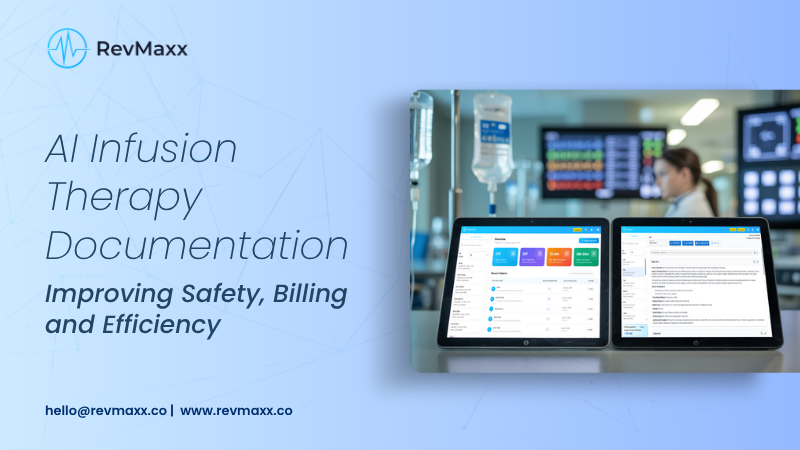
AI infusion therapy documentation is changing this reality. With real-time visit captures, structured data, and automation, healthcare teams can improve safety, billing compliance, and operational efficiency in infusion centers and hospitals.
So read this blog carefully and learn how AI-driven documentation works in infusion therapy and how it improves outcomes across clinical, financial, and operational domains.
The Documentation Burden in Infusion Therapy
Infusion therapy documentation is uniquely complex compared to many other clinical workflows. It involves continuous medication delivery, frequent adjustments, and ongoing monitoring.
Why Infusion Documentation is Complex
Infusion documentation must capture multiple variables:
- Medication and dose
- Dilution and preparation details
- Start and stop times
- Infusion rate and titration changes
- IV site and line details
- Monitoring observations
- Adverse reactions
- Patient response
Unlike single-dose medications, infusions evolve over time. This requires repeated entries during a single treatment session.
High Error Rates in Infusion Documentation
Research shows documentation errors are one of the biggest risks in infusion therapy practice.
Documentation discrepancies account for 92.7% of infusion-related errors in critical care settings. Around 11.5% of infusions contain errors, with many linked to documentation deviations. Even some studies show that up to 60% of infusions have at least one administration error.
These findings show that documentation, not drug preparation or administration, is often the weakest link.
Real-World Consequences of Poor Documentation
Incomplete infusion documentation can lead to:
- Wrong infusion rate adjustments
- Duplicate dosing
- Missed titration changes
- Billing denials
- Compliance violations
- Medication safety risks
Even small documentation gaps can affect patient care decisions and reimbursement accuracy.
What is AI Infusion Therapy Documentation
AI infusion therapy documentation refers to the use of artificial intelligence to capture, structure, and automate infusion-related clinical information in real-time during infusion therapy treatment. Instead of relying on manual charting after or between infusion steps, AI systems listen to clinical conversations, track workflow events, and convert them into structured infusion records inside the EHR.
These platforms typically combine ambient AI listening, workflow automation, structured infusion templates, EHR integration, and clinical decision support. The goal is to ensure infusion therapy is documented accurately and completely without adding to clinician workload. Studies show nurses spend about 15–35% of their time on documentation tasks rather than direct patient care, and infusion therapy often requires repeated time-based entries during a single session.
It can automatically capture infusion start and stop times, medication and dose details, rate changes, and monitoring observations as care happens. Speech or workflow inputs are converted into structured notes with timestamps and infusion parameters, and the final documentation is synchronized with EHR and billing systems to support compliance. This approach shifts infusion documentation from manual entry to assisted automation, which is important because documentation discrepancies account for over 90% of infusion-related errors in some clinical settings (National Center for Biotechnology Information). By reducing omissions and delays, AI infusion therapy documentation improves accuracy while easing the documentation burden on clinicians.
How AI Improves Patient Safety in Infusion Therapy
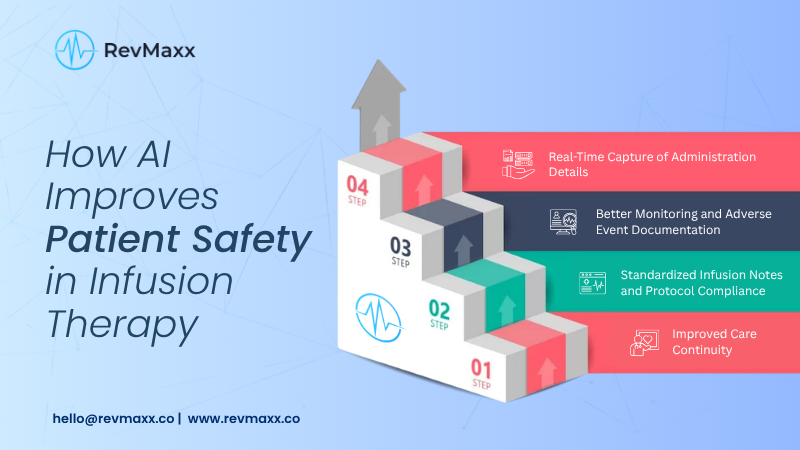
Patient safety is the most critical outcome of better infusion documentation. AI helps reduce documentation gaps and clinical risks.
Real-Time Capture of Administration Details
AI in infusion therapy documentation improves safety by recording infusion details as they happen during care. Medication name, dose, route, start time, stop time, and rate changes are captured automatically and saved with extra timestamps.
This reduces the need for nurses to remember or enter details later, which is when errors often occur. Automated duration tracking also ensures accurate infusion time records. Because the documentation is created in real time, clinicians can trust that the infusion history is complete and precise, supporting safer treatment decisions.
Better Monitoring and Adverse Event Documentation
AI infusion therapy documentation supports safer monitoring by prompting clinicians to record vitals, symptoms, and patient responses at the right intervals. If required safety information is missing, the system can alert staff before the record is finalized. It also helps capture infusion reactions in a structured way, such as rash, shortness of breath, or blood pressure changes.
This ensures adverse events are documented clearly and consistently. Better monitoring records help clinicians recognize patterns, respond quickly to complications, and maintain safer infusion care.
Standardized Infusion Notes and Protocol Compliance
AI infusion therapy documentation uses protocol-based templates that guide clinicians through required safety steps. These templates include mandatory fields for pre-medications, drug verification, monitoring checks, and high-risk medication precautions.
Built-in checklists ensure important steps are not skipped during busy infusion sessions. Because every clinician follows the same structured format, documentation becomes consistent across staff and shifts. Standardized notes make it easier to confirm that protocols were followed, which strengthens medication safety and reduces variation in infusion practices.
Improved Care Continuity
AI infusion therapy documentation improves continuity by creating clear, complete infusion records that are easy for other clinicians to review. The next shift or provider can quickly see what medication was given, how the patient tolerated it, and whether any dose changes were made.
Historical infusion tolerance and reactions are also visible across visits. This helps clinicians plan future infusions safely and avoid repeating adverse events. Clear documentation also supports faster provider review and more confident clinical decisions.
AI Infusion Therapy Documentation and Billing Accuracy
Infusion therapy billing depends heavily on documentation precision. Missing details lead to revenue loss and audit risk. Here is how AI infusion therapy documentation helps in maintaining accuracy.
Automated Time-Based Coding Support
AI infusion therapy documentation helps ensure infusion services are coded correctly by capturing precise start and stop times automatically. It clearly distinguishes between injections and time-based infusions and identifies initial versus subsequent infusion periods within the same session. Automated duration tracking supports accurate CPT unit calculation, which is essential for compliant billing. By removing manual time estimation, clinicians and coders can rely on consistent infusion timing data, reducing coding errors and improving reimbursement accuracy.
Drug Administration and Units Capture
AI infusion therapy documentation records medication details, dose, and administration method in structured fields that align with billing requirements. It can map drugs to HCPCS codes, capture wastage amounts, and calculate billing units automatically based on dose and concentration. This is especially helpful when multiple drugs are given during one infusion visit. Clear documentation of each medication and its units ensures accurate charge capture and prevents underbilling or confusion during coding and claims submission.
Reduced Claim Denials and Audits
Incomplete infusion documentation is a common reason for claim denials. AI infusion therapy documentation reduces this risk by ensuring required billing elements are present before records are finalized. Start and stop times, drug details, and medical necessity notes are captured clearly and consistently. Structured documentation also aligns with payer rules and compliance standards. When records are complete and verifiable, organizations face fewer denials, lower audit risk, and a stronger defense if claims are reviewed.
Support for Revenue Cycle Teams
AI infusion therapy documentation creates structured, billing-ready notes that make coding faster and easier for revenue cycle teams. Key coding details—such as infusion duration, drug units, and sequence—are clearly organized and easy to extract. This reduces the need for coders to search through narrative notes or request clarifications from clinicians. With fewer documentation gaps and cleaner data, charge entry becomes quicker, claim submission improves, and overall revenue cycle efficiency increases.
Key Features of Effective AI Infusion Therapy Documentation
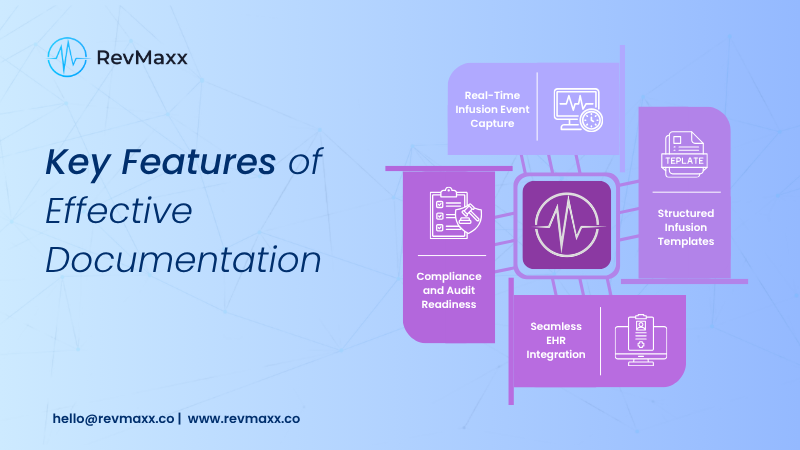
Not all AI documentation tools are designed for infusion care. Infusion therapy has unique workflows, time tracking needs, and safety requirements. Effective AI infusion therapy documentation solutions must capture detailed infusion events, support structured medication data, and integrate smoothly with clinical and billing systems. The right features ensure documentation is accurate, compliant, and useful for both clinicians and revenue teams.
Real-Time Infusion Event Capture
Effective AI infusion therapy documentation should record infusion events as they happen during care. This includes start and stop times, rate adjustments, titration steps, bag changes, and IV line changes. Real-time capture removes the need for delayed charting and reduces missed details. Accurate timestamps are critical for both patient safety and time-based billing. When infusion events are tracked automatically, clinicians can focus on monitoring patients rather than remembering or entering information later.
Structured Infusion Templates
Structured templates are essential in AI infusion therapy documentation because infusion care involves many required data points. Templates should capture drug name, dose, diluent, route, infusion site, duration, and monitoring details in consistent fields. Structured data makes documentation clear and complete across all staff. It also supports compliance reporting, analytics, and billing accuracy. When infusion notes follow a standard format, clinicians and coders can quickly understand what was administered and how the patient responded.
EHR Integration
AI infusion therapy documentation must integrate directly with EHR systems to avoid duplicate work and data gaps. Integration allows medication orders to sync automatically, MAR records to update, and structured infusion notes to populate in the patient chart. It also ensures billing and coding systems receive accurate infusion data. When AI documentation works inside existing clinical workflows, staff do not need to re-enter information, which reduces errors and improves documentation reliability.
Infusion-Specific Clinical Prompts
Good AI infusion therapy documentation should guide clinicians through required safety checks during infusion care. The system can prompt for vital signs at set intervals, reaction monitoring, post-infusion assessments, and IV line verification. These reminders help ensure important observations are documented before the session ends. Prompts reduce the chance of missed safety steps, especially in busy infusion settings. This structured guidance supports consistent monitoring and safer infusion practices across all clinicians.
Compliance and Audit Readiness
AI infusion therapy documentation should produce records that meet billing, regulatory, and accreditation requirements. This includes accurate timing, medication details, monitoring documentation, and protocol adherence. Audit-ready records contain clear timestamps, standardized fields, and complete infusion data. When documentation aligns with payer rules and medication safety standards, organizations face fewer compliance risks. Strong documentation also supports audits, quality reviews, and legal protection if infusion care is questioned later.
Final Thoughts
AI infusion therapy documentation is not a futuristic concept. It’s already being used in infusion centers, hospital outpatient departments, and specialty clinics across the country — and it’s delivering real results. The data is clear. Better documentation means fewer errors, faster reimbursement, and more time for patient care. For any infusion center still relying on manual documentation, the risks are real — and the opportunity to improve is significant.
If you’re considering making the switch, start by auditing your current documentation gaps. Look at your denial rates, your error logs, and the time your nurses spend on charting. That baseline will help you measure the impact of any new system you implement.
AI infusion therapy documentation won’t solve every challenge in your practice. But it’s one of the most effective tools available right now to improve safety, billing accuracy, and day-to-day efficiency — all at once.
Sign up now in RevMaxx and avail infusion therapy AI scribe.