Healthcare documentation has quietly become one of the biggest challenges in modern care delivery. Physicians today spend almost as much time documenting as they do treating patients. This imbalance affects provider well-being, coding accuracy, compliance, and even healthcare revenue.
That is why AI clinical documentation improvement is quickly becoming a priority for hospitals and clinics. AI is helping healthcare organizations turn documentation from a burden into a strategic asset—improving both clinical quality and financial performance.
In this article, we will explore how AI is transforming clinical documentation improvement (CDI), the benefits for providers and health systems, and what healthcare leaders should know before adopting these solutions.
What is AI Clinical Documentation Improvement (CDI)?
Clinical documentation improvement (CDI) ensures patient records are accurate, complete, and compliant so they support correct coding, billing, and care decisions. Traditional CDI relies on manual reviews and queries after visits.
AI-enabled CDI improves documentation during the encounter using technologies like natural language processing (NLP), speech recognition, ambient listening, and automation. The goal is not to replace clinicians but to assist them. This is helping capture care details correctly while reducing documentation burden and improving record quality.
How AI Clinical Documentation Improvement Works?
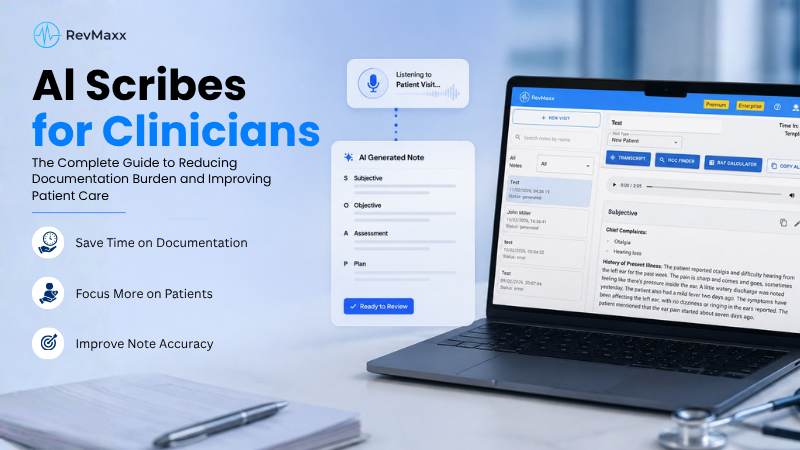
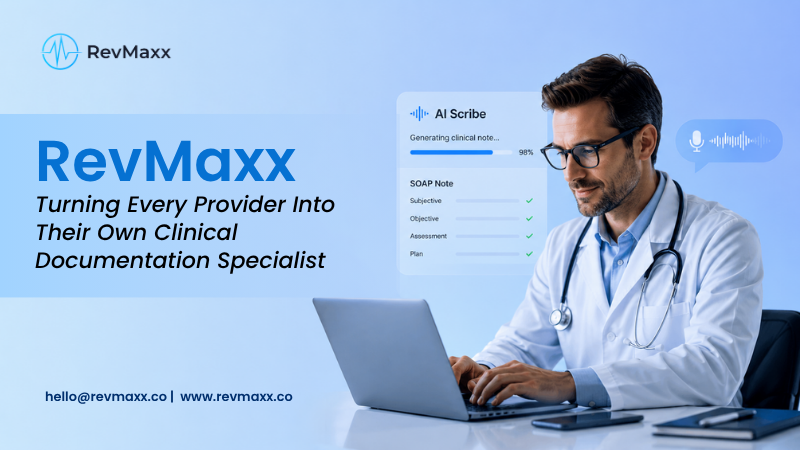
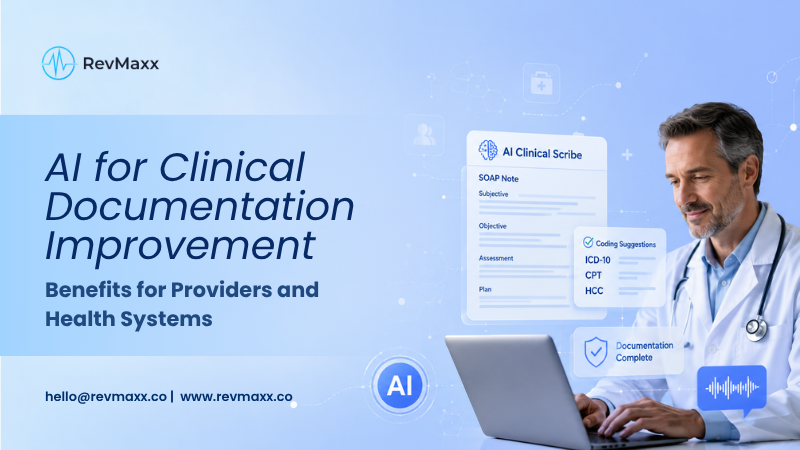
AI Clinical Documentation Improvement (CDI) uses advanced technologies such as ambient listening, natural language processing (NLP), speech recognition, and machine learning to capture and analyze clinical conversations in real time. During patient encounters, AI automatically identifies relevant medical information, generates structured clinical notes, suggests accurate ICD-10, CPT, and HCC codes, and highlights missing documentation elements that may impact compliance or reimbursement. By integrating directly with electronic health records (EHRs), AI streamlines workflows, reduces administrative burden, and helps ensure documentation is complete, accurate, and compliant from the start.
Real-Time Clinical Conversation Capture
AI can ambiently listen to the patient-clinician conversation during the visit. It identifies key medical details such as symptoms, diagnoses, and procedures as they are discussed. These details are organized into clinical notes automatically. Because information is captured in real time, clinicians spend less time typing or remembering details later. This helps ensure documentation is complete, accurate, and finished sooner after the encounter.
Structured Data and Coding Support
AI converts clinical notes into structured medical data that supports coding and billing. It maps documented conditions and services to ICD-10, CPT, and HCC codes.
The system also detects when documentation lacks specificity, such as missing severity or laterality. It then suggests clearer, compliant clinical terms. This helps clinicians document at the right level of detail, improves coding accuracy, and reduces the risk of denials or compliance issues.
EHR Integration and Workflow Automation
AI clinical documentation tools are seamlessly integrated with the electronic health record (EHR) system. Information captured during the visit can automatically populate progress notes, problem lists, summaries, and orders.
This reduces repetitive data entry and extra clicks. Clinicians do not need to switch between systems or retype information. Integrated AI documentation supports smoother workflows, faster chart completion, and more consistent records across the care team.
Why Clinical Documentation Improvement Matters?
Clinical documentation now drives revenue, compliance, quality reporting, and care coordination. As payment models become data-driven, accurate and complete records are essential for financial stability, regulatory safety, and better patient outcomes.
Financial Impact of Documentation Quality
Clinical documentation directly affects healthcare revenue. When notes are incomplete or lack detail, services may be under-coded, leading to lost reimbursement. Poor documentation also increases claim denials and audit risk because payers cannot verify medical necessity.
In value-based care models, payment depends on accurate documentation of patient conditions and complexity. Strong documentation ensures organizations are paid correctly for the care delivered and protects financial stability.
Provider Burnout from Documentation Burden
Clinicians today spend a large part of their day working in the EHR instead of with patients. Many finish notes after hours, often called “pajama time.” This ongoing documentation workload adds stress and reduces work-life balance.
Administrative tasks such as typing, coding details, and data entry create overload. Over time, this burden contributes to burnout, job dissatisfaction, and even clinicians leaving practice. Improving documentation workflows is essential to support provider well-being.
Compliance and Regulatory Pressures
Healthcare documentation must meet strict regulatory standards. Payers such as Medicare and other insurers review records to confirm medical necessity and correct coding. If documentation does not clearly support services billed, organizations face denials or repayment demands.
Clinical records also serve as legal documents during disputes or audits. Accurate, complete documentation protects providers and organizations by demonstrating appropriate care decisions and compliance with regulations.
Key Benefits of AI Clinical Documentation Improvement for Providers
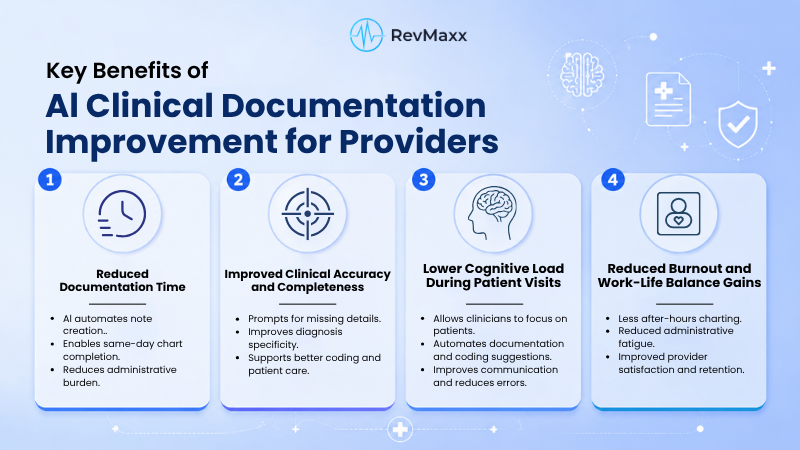
Reduced Documentation Time
AI captures patient encounters automatically, reducing the need for manual typing. Notes are completed faster, allowing same-day chart closure. Providers save time on repetitive documentation tasks and can focus on delivering care. By streamlining workflows, AI helps clinicians finish notes more efficiently without sacrificing quality, giving them more time with patients and less stress from administrative duties.
Improved Clinical Accuracy and Completeness
AI prompts clinicians when details are missing, helping ensure notes include all necessary information. It improves diagnosis specificity and tracks patient history over time for better context. This leads to more complete, accurate records that reflect true patient conditions, supporting better clinical decisions, accurate coding, and safer patient care. Providers can trust that documentation is thorough and aligned with standards.
Lower Cognitive Load During Patient Visits
AI reduces the mental burden of remembering every detail while documenting care. Clinicians can focus entirely on patient interactions without juggling EHR tasks. By automating note-taking and coding suggestions, AI supports a smoother workflow. Patients experience better attention and engagement, while providers feel less distracted, leading to improved communication, more meaningful encounters, and fewer errors during documentation.
Reduced Burnout and Work-Life Balance Gains
With AI handling much of the documentation, clinicians spend less time charting after hours. This reduces emotional stress and administrative fatigue. Providers enjoy better work-life balance and feel relief from clerical pressures. Lower burnout supports higher job satisfaction, improved retention, and overall well-being, making healthcare teams more sustainable and resilient.
Benefits of AI Clinical Documentation Improvement for Health Systems
AI Clinical Documentation Improvement (CDI) delivers significant operational, financial, and clinical advantages for health systems. By improving documentation accuracy at the point of care, AI helps organizations capture appropriate reimbursement, reduce claim denials, strengthen compliance, and streamline clinical workflows. It also standardizes documentation across departments and facilities, enabling better care coordination, higher coding accuracy, and improved efficiency while reducing administrative burden on providers and coding teams.
Increased Revenue Capture and Case Mix Index (CMI)
AI ensures documentation accurately reflects patient conditions and services. This improves coding accuracy and HCC capture, reducing underbilling and revenue loss. Health systems see higher case mix indices, which support appropriate reimbursement and fair compensation for care complexity. Automated documentation helps organizations capture all billable services efficiently, enhancing financial performance.
Fewer Claim Denials and Audit Risks
AI ensures records support medical necessity and comply with coding standards. Documentation is complete, accurate, and defensible, reducing claim denials and audit issues. Health systems can rely on standardized notes that withstand regulatory scrutiny, protect revenue, and maintain trust with payers and auditors.
Operational Efficiency and Staff Optimization
AI reduces the need for manual CDI reviews and minimizes coder rework. Notes are accurate on the first pass, speeding up billing cycles. Staff can focus on complex cases rather than repetitive documentation tasks, making operations more efficient. Overall, workflows are streamlined, costs are lowered, and administrative staff are freed for higher-value work.
Scalable Documentation Quality Across Sites
AI standardizes documentation practices across multiple facilities, ensuring consistent coding and note quality. Health systems can maintain uniform compliance and clinical accuracy regardless of location. This scalable approach simplifies training, improves reporting, and aligns documentation processes, supporting cohesive operations across large networks or multi-site organizations.
AI Clinical Documentation Improvement vs Traditional CDI Programs
AI-driven CDI improves accuracy, speed, and efficiency compared to traditional manual CDI. It supports real-time documentation, reduces errors, streamlines coding, and eases provider workload while maintaining compliance.
Features | Traditional CDI | AI Clinical Documentation Improvement |
Timing | Retrospective, after visits | Real-time, during encounters |
Documentation Accuracy | Dependent on manual review | Enhanced with AI prompts and NLP |
Coding Support | Manual queries, slower | Automated mapping to ICD-10, CPT and HCC |
Efficiency | Time-consuming, high admin burden | Faster notes, reduced provider workload |
Compliance | Risk of missing details | Real-time guidance ensures completeness |
Implementation Considerations for AI Clinical Documentation Improvement
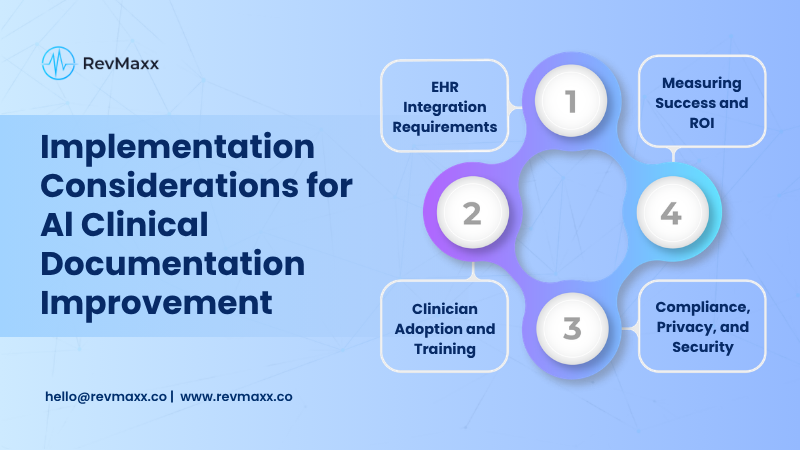
EHR Integration Requirements
AI documentation tools must connect smoothly with the EHR to be useful. Organizations should evaluate whether the AI works natively inside the EHR or as an overlay. The solution must match existing clinical workflows and avoid extra steps. Strong data interoperability ensures patient information moves correctly between systems without duplication. Good integration allows clinicians to document naturally while AI captures and structures information in the background.
Clinician Adoption and Training
Successful AI CDI depends on clinician acceptance. The system should be easy to use and require minimal changes to daily workflow. If documentation feels slower or confusing, adoption drops quickly. Training should focus on practical use during real patient encounters. Transparency about how AI creates notes builds trust. When clinicians feel confident reviewing and editing AI documentation, they are more likely to rely on it consistently.
Compliance, Privacy, and Security
AI documentation systems must protect patient information at every step. Healthcare organizations should confirm HIPAA compliance, strong encryption, and secure data storage. Clear data governance policies define how information is used and accessed. Audit trails should show who created or edited documentation and when. These safeguards ensure AI documentation remains legally reliable, protects patient privacy, and meets regulatory expectations across care settings.
Measuring Success and ROI
Organizations need clear metrics to evaluate AI CDI impact. Common measures include reduction in documentation time, faster chart completion, and improved clinician satisfaction. Financial indicators such as revenue lift, coding accuracy, and denial rate changes show business value. Monitoring these outcomes helps leaders understand return on investment and identify workflow improvements. Regular measurement ensures AI documentation continues delivering clinical and operational benefits.
Implementation Considerations for AI Clinical Documentation Improvement
The future of AI Clinical Documentation Improvement (CDI) extends beyond automated note-taking to intelligent, proactive clinical documentation that enhances care delivery and operational efficiency. As AI technologies continue to evolve, healthcare organizations will benefit from more accurate real-time documentation, predictive clinical insights, seamless EHR integration, and enterprise-wide documentation intelligence. These advancements will enable clinicians to spend more time with patients, reduce administrative burden, improve coding accuracy, and support better clinical, financial, and regulatory outcomes across the healthcare ecosystem.
Autonomous Clinical Documentation
AI documentation is moving toward fully ambient encounters where conversations automatically become structured clinical notes. Clinicians may only review and approve records rather than create them. Minimal manual editing will be needed as accuracy improves. AI-generated documentation will include diagnoses, orders, and summaries in standardized formats. This shift could significantly reduce administrative workload and allow clinicians to focus almost entirely on patient care.
Predictive and Proactive Documentation Support
Future AI systems will not only record care but also anticipate documentation needs. Based on patient history and visit context, AI may suggest likely diagnoses or remind clinicians of care gaps. Real-time prompts could ensure required details are captured during the encounter. Integrated clinical decision support will connect documentation with care guidance, helping clinicians document accurately while supporting safer, more complete patient management.
Enterprise-Wide Documentation Intelligence
Health systems will use AI to analyze documentation quality across all sites and specialties. Dashboards will show completeness, coding accuracy, and compliance trends. Leaders can identify gaps and target training or workflow improvements. Continuous feedback loops will refine documentation practices over time. This enterprise-level insight will help organizations maintain consistent documentation standards, improve reporting accuracy, and support system-wide quality improvement efforts.
The Conclusion
Clinical documentation affects revenue, compliance, and care quality across healthcare. AI clinical documentation improvement tools like RevMaxx reduces the burden of note creation while increasing accuracy and completeness. Providers gain time, less stress, and better patient interactions. Health systems benefit from stronger financial performance and operational efficiency. As healthcare becomes more data-driven, AI-enabled documentation is quickly becoming essential infrastructure for modern, sustainable care delivery.