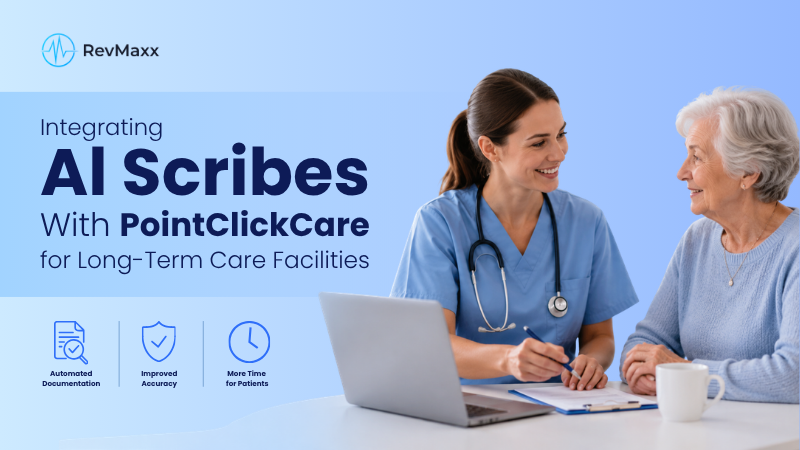
Homecare looks nothing like a hospital visit. There is no front desk, no exam room, no second nurse nearby to help with notes. It is one caregiver, one patient, usually at a kitchen table. That setup is exactly why documentation has become such a heavy burden for agencies and why AI scribes for homecare are quickly becoming a standard tool rather than a novelty.
Today, in this blog post, we are going to discuss why agencies are adopting AI scribes, what they actually do, and what to look for before choosing one.
The Growing Documentation Burden in Homecare
Documentation has always been part of homecare, but the volume has grown faster than staffing has kept up. Nurses and aides now juggle detailed visit notes, compliance forms, and care plan updates, often between multiple homes in a single day. That extra load is becoming one of the biggest reasons caregivers leave the field, which makes it a business problem, not just a workflow annoyance.
Why Home Healthcare Documentation Takes So Much TIme
A visit itself might take under an hour, but the paperwork stretches far beyond that. Studies show nurses spend close to 36 minutes charting for every 30 minutes spent with a patient. In-home nurses lose additional time on record-keeping layered on top of driving between visits, leaving less room for actual patient care.
Administrative Work Is Contributing to Caregiver Burnout
Burnout in caregiving is not rare anymore; it is close to universal. A 2025 survey found 78% of caregivers report experiencing burnout, often weekly or daily. A separate 2026 survey found 90% of family caregivers report burnout symptoms, with 20% calling it severe. Unpaid “pajama time” spent finishing notes at home is a major driver of that exhaustion.
The Impact of Manual Documentation on Patient Care
When a caregiver is focused on writing notes instead of watching the patient, small but important details get missed. A change in gait, skin color, or mood can matter far more in a home setting, where there is no other clinician nearby to catch it later. Manual documentation also delays how quickly information reached the care team, slowing decisions on medication changes.
What Are AI Scribes for Homecare?
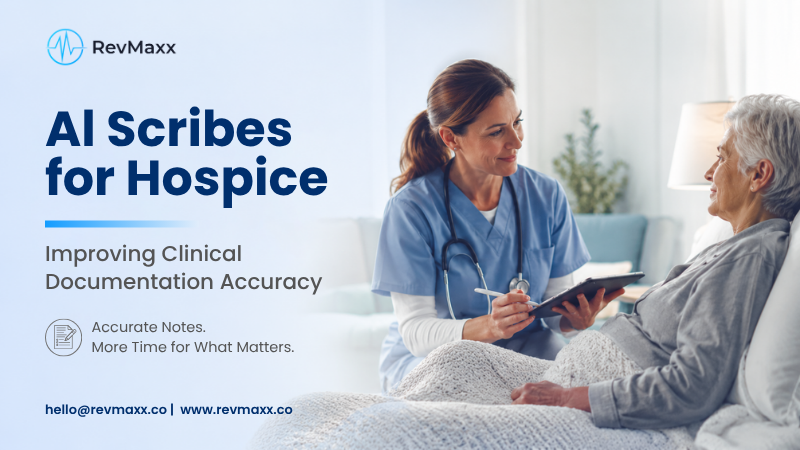
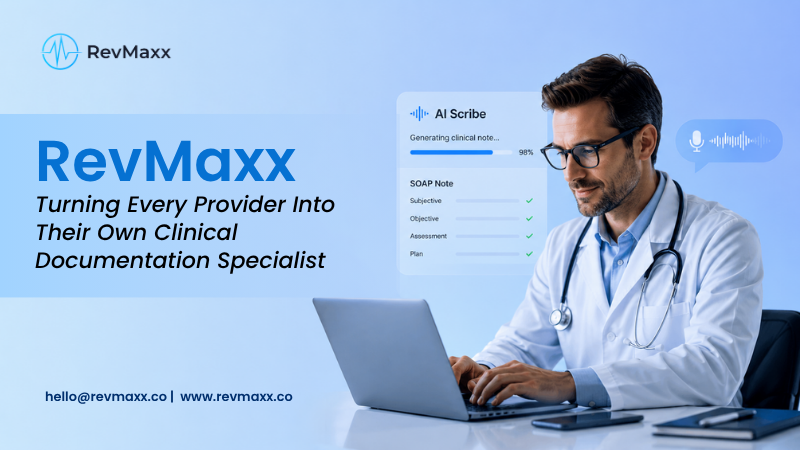
AI scribes for homecare are tools built specifically for the realities of in-home visits, not adapted from hospital software. They listen during a visit, capture the conversation naturally, and turn it into a structured clinical note without the caregiver typing anything during the encounter. The goal is simple: let the caregiver focus on the person in front of them, not the screen.
Understanding Ambient AI Scribe Technology
Ambient scribing means the tool works quietly in the background rather than requiring commands or pauses. It uses speech recognition trained on clinical language, along with natural language processing, to understand context. This matters in homecare, where conversations mix small talk, family updates, and clinical details in the same breath.
How AI Scribes Capture Conversations During Home Visits
During a visit, the caregiver simply talks with the patient as normal. The AI scribe, running on a phone, tablet or dedicated device, picks up the audio and processes it securely. There is no need to stop and dictate findings separately. The recording ends when the visit does, and the system moves straight into generating a note.
From Voice to Structured Clinical Documentation
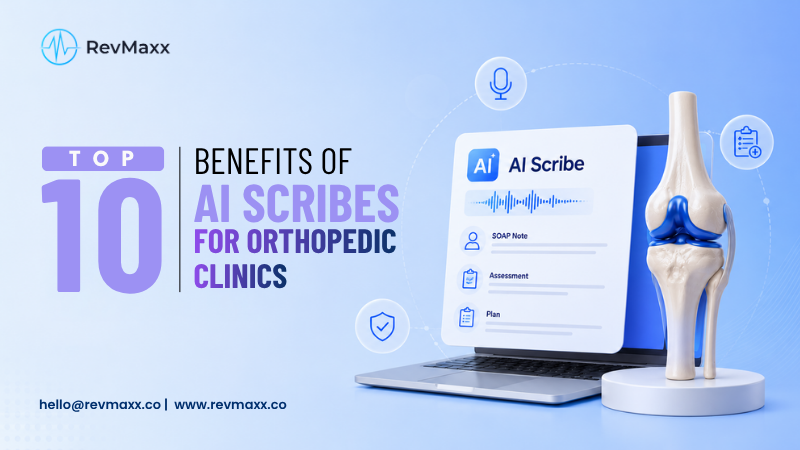
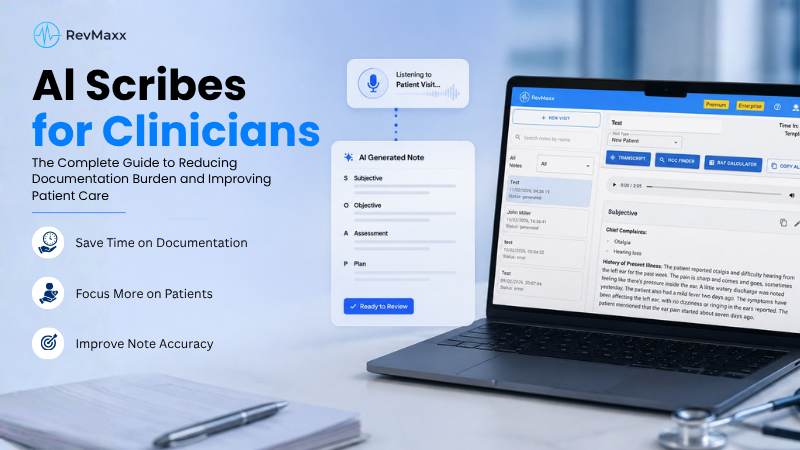
Once captured, the system organizes the conversation into a structured clinical format, often SOAP style, pulling out symptoms, observations, and care plan updates. The caregiver reviews the draft and signs off. What used to take 20-30 minutes of typing becomes a few minutes of review, adding up fast across a full day of visits.
Why Clinicians Are Turning to AI Scribes
Clinicians are adopting AI scribes for clinicians because documentation has become unsustainable. Charting now eats into personal time, family time, and even sleep. AI scribes promise to give that time back without lowering the quality of medical records, which is why adoption has grown quickly across primary care, speciality practices, and telehealth in the last few years.
The Growing Documentation Burden
Documentation has grown heavier every year due to billing requirements, compliance rules, and longer patient histories. A 2016 study report found that physicians spend nearly 2-3 hours on EHR and desk work for every one hour of direct patient care. That ratio has stayed a problem for healthcare ever since.
Administrative Work After Clinic Hours
Many doctors finish their last patient and then start a second shift of typing, often called “pajama time.” Research says that primary care physicians spend an average of 2.7 hours of personal time on the EHR outside of scheduled patient hours. AI scribes for clinicians directly target this unpaid extra work.
Physician Burnout and Cognitive Load
Typing while listening to a patient splits attention and increases mental fatigue. Studies link this directly to burnout, which now affects more than half of practising physicians in some surveys. When a tool like RevMaxx AI Scribe takes over the writing, clinicians can give full attention to the patient, lowering the constant background stress of multitasking through every single visit.
Why Homecare Agencies are Adopting AI Scribes for Homecare
Agencies are not adopting this technology because it is trendy. They are adopting it because the math on caregiver time, turnover costs, and compliance risk has become too hard to ignore. Every minute saved on paperwork is a minute a caregiver can spend with a patient or simply go home on time instead of finishing notes after hours.
Reduce Documentation Time After Patient Visits
The most immediate benefit agencies see is time back in the caregiver’s day. Ambient AI scribes have been shown to cut documentation time by 60-70% in clinical settings broadly. For homecare, where nurses already spend hours traveling between visits, that saved time often means an extra visit fits into the same shift without extending hours.
Improve Caregiver Productivity
Full-time home health nurses average close to 18 visits a week, with LPNs conducting around 25 visits a week alongside nearly two hours of daily travlke time. When documentation time drops, caregivers can absorb more visits without feeling stretched thinner.
Increase Face-to-Face Patient Interaction
Less time typing means more time actually looking at the patient. In one nursing observation study, caregivers spent about 50% of an eight-hour shift on indirect activities like paperwork and only 38% on direct patient contact. Shifting that balance back toward direct care is one of the clearest wins ambient scribes offer.
Standardize Clinical Documentation Across Teams
Every caregiver has their own shorthand and style, which makes notes inconsistent across a team. AI scribes apply the same structure and terminology every time, regardless of who conducted the visit. That consistency makes it easier for supervisors, billers, and other clinicians to read a chart quickly and trust that nothing important was left out or phrased ambiguously.
Support Compliance and Audit Readiness
Homecare agencies face frequent audits tied to Medicare and Medicaid billing. Notes that are complete, timestamped, and consistently formatted hold up far better under review than rushed, inconsistent handwritten or typed entries. Ambient scribes create a documentation trail that is easier to defend if a claim is questioned later, reducing the risk of denied reimbursements.
Key Benefits of AI Scribes for Homecare Agencies
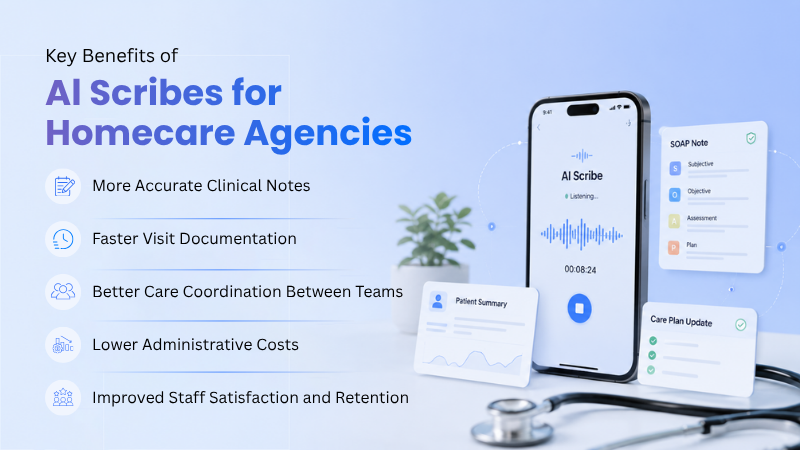
Beyond the day-to-day time savings, agencies report a handful of consistent benefits once ambient scribes are rolled out across a team. These are not isolated wins for one department; they touch clinical quality, cost, and staff retention all at once, which is why adoption tends to spread quickly once one team sees results.
More Accurate Clinical Notes
Because the scribe captures the actual conversation instead of relying on a caregiver’s memory afterward, details are less likely to be dropped. This matters most for complex patients with multiple medications or comorbidities, where a small omission can turn into a bigger problem for the next clinician who reads the chart.
Faster Visit Documentation
Notes that used to sit unfinished for a day or two now get completed within minutes of the visit ending. That speed matters when a coordinator needs updated information quickly, especially for patients whose condition is changing and needs a fast response.
Better Care Coordination Between Teams
Homecare rarely involves just one clinician. Nurses, aides, therapists, and physicians all need visibility into the same record. When notes are completed quickly and formatted consistently, coordination between these roles improves, cutting down on the phone calls that used to fill documentation gaps.
Lower Administrative Costs
Reducing time spent on notes lowers overtime costs and cuts the need to hire extra staff to catch up on backlogged charts. AI scribe costs typically run a fraction of the price of added human documentation support, letting agencies redirect that budget toward caregiver pay instead.
Improved Staff Satisfaction and Retention
Turnover in home health nursing runs high, with average annual separation rates over 30% between 2016 and 2019. Since excessive documentation is a known driver of job dissatisfaction in home health nursing, cutting that burden directly addresses one of the more fixable reasons caregivers quit.
Common Documentation Challenges AI Scribes Help Solve
Every agency runs into the same handful of documentation problems eventually. They tend to show up as missed details, late charts, inconsistent formatting, or clunky manual entry into the EHR. Ambient AI scribes were built specifically to target these recurring pain points rather than solve a single narrow issue.
Missed Clinical Details
When a caregiver rushes to finish notes between visits, small observations get left out. An ambient scribe captures the full conversation as it happens, so symptoms, mood changes, or family concerns aren’t lost simply because there wasn’t time to write them down in the moment.
Delayed Chart Completion
Charts left unfinished for days create real risk, especially if a patient’s condition changes before the note catches up. Since ambient scribes generate a draft within minutes, charts get completed same-day far more consistently, keeping the record current for anyone who needs it.
Inconsistent Documentation Standards
Different caregivers write notes differently, some brief, some overly detailed, and some missing key sections. AI scribes apply a consistent structure across every visit and caregiver, making audits and quality reviews far simpler for supervisors comparing notes across a team.
Manual Data Entry Into EHR Systems
Typing the same information twice, once by hand and once into the EHR, wastes time and invites errors. AI scribes that integrate directly with the agency’s EHR eliminate that duplicate step, pushing structured notes straight into the record automatically.
How Ambient AI Scribes Improve Patient Experience
Documentation tools aren’t just about efficiency for the agency; they change what the visit feels like for the patient too. When a caregiver isn’t buried in a laptop or notepad, the visit feels more like a conversation and less like an intake form, which matters for older patients who already feel like just another chart.
More Natural Patient Conversations
Patients notice when someone is only half-listening because they’re typing. Ambient scribes remove that distraction, letting the caregiver stay present throughout the visit instead of splitting attention between the patient and a keyboard.
Less Screen Time During Home Visits
A home visit should feel personal, not clinical in the cold sense. When a caregiver is not staring at a tablet, the interaction feels warmer, and patients are more likely to open up about symptoms they might otherwise downplay.
Better Trust and Communication
Over time, patients build trust with caregivers who seem genuinely engaged rather than rushed. That trust often translates into more honest symptom reporting, better medication adherence, and fewer surprises for the care team.
Why RevMaxx AI Scribe Is Built for Modern Homecare Agencies
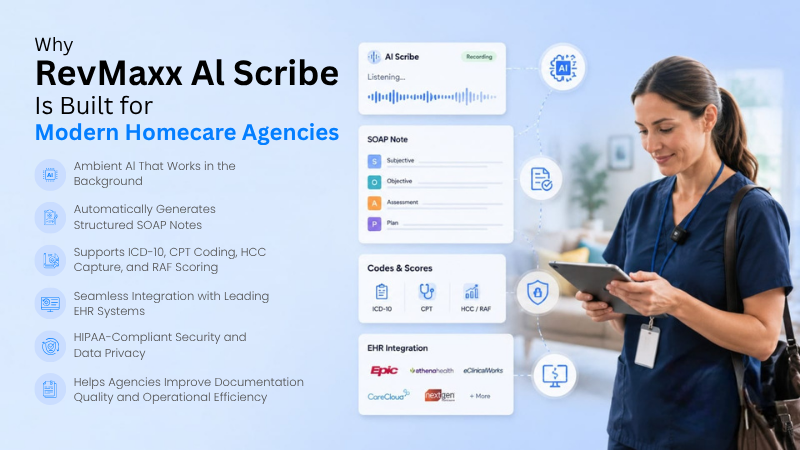
Not every ambient scribe on the market was designed with homecare’s specific workflow in mind. RevMaxx AI Scribe application was built around the realities of in-home visits, from spotty connectivity to the need for fast, accurate coding that supports both clinical quality and reimbursement.
Ambient AI That Works in the Background
RevMaxx listens quietly during the visit without requiring the caregiver to change how they talk to patients. There’s no need to pause for dictation or repeat findings out loud. The system runs in the background, letting the visit unfold naturally while documentation gets handled behind the scenes.
Automatically Generates Structured SOAP Notes
Once the visit ends, RevMaxx converts the conversation into a structured SOAP note, organized and ready for review. Caregivers spend a few minutes checking the draft instead of building a note from scratch, which is where most time savings come from across a full day of visits.
Documentation Quality
Dictated notes can be messy, repetitive, or missing structure unless the clinician dictates carefully. AI scribes automatically apply the SOAP format, so notes come out organized and clinically complete from the very first draft, without extra formatting work needed afterward.
Supports ICD-10, CPT Coding, HCC Capture, and RAF Scoring
Accurate coding matters as much as accurate notes, especially for agencies managing value-based contracts. RevMaxx supports ICD-10 and CPT coding alongside HCC capture and RAF scoring, helping agencies document conditions completely and reduce under-coding risk.
Seamless Integration with Leading EHR Systems
Notes generated by RevMaxx flow directly into the agency’s existing EHR, without a separate copy-paste step. That removes one of the biggest friction points agencies run into with standalone tools sitting outside the main system of record.
HIPAA-Compliant Security and Data Privacy
Patient conversations captured in the home carry the same privacy requirements as any clinical encounter. RevMaxx is built with HIPAA-compliant security standards, encrypting data in transit and at rest, so agencies can adopt it without adding compliance risk.
Helps Agencies Improve Documentation Quality and Operational Efficiency
Beyond individual visits, RevMaxx helps agencies improve documentation quality at a system level, supporting consistent notes, faster billing cycles, and better audit readiness across every caregiver, not just the strongest writers.
Features to Look for When Choosing AI Scribes for Homecare
Not every tool on the market delivers the same results, and picking the wrong one can create more friction than it removes. Agencies evaluating options should look past the marketing and focus on a handful of practical features that actually matter day to day.
High Clinical Documentation Accuracy
Accuracy should be backed by published data, not just a vendor’s claim. Ask for specific error-rate numbers and how the tool handles complex, multi-condition patients, since a scribe that struggles with nuance creates more correction work than it saves.
Specialty-Specific Templates
Homecare covers a wide range of conditions, from wound care to chronic disease management. A scribe with templates built for these scenarios produces notes needing far less editing than a generic format borrowed from an unrelated clinical setting.
Real-Time Note Generation
The faster a draft note appears after a visit, the sooner it’s useful to the rest of the care team. Look for tools generating notes within minutes, not ones requiring overnight batch processing, especially for patients whose conditions change quickly.
Secure Cloud-Based Infrastructure
Caregivers move between homes all day, often with inconsistent internet access. A cloud-based system that syncs securely once connectivity returns keeps documentation moving without forcing anyone to wait for a stable connection.
Easy EHR Integration
Integration should mean notes flow directly into the existing system, not a separate export-and-upload process. Ask vendors exactly how integration works before signing anything, since a bad integration adds back the manual work the tool was supposed to remove.
Simple User Experience for Clinicians
If a tool requires extensive training or a dedicated IT contact just to get started, adoption stalls. The best AI scribes for homecare are simple enough that a caregiver can use them confidently within a single shift.
The Future of Homecare Documentation with Ambient AI
Ambient scribing is still early in its adoption curve, but the direction is clear. As more agencies adopt these tools, documentation is shifting from a burden caregivers dread to a background process that mostly takes care of itself, freeing up time and attention for the part of the job that actually matters most: the patient.
AI-Assisted Clinical Workflows
Ambient scribes are just the first step. Vendors are already expanding into referral letters, care plan updates, and automated alerts for care gaps, moving beyond simple note-taking into broader workflow support that touches more of a caregiver’s day than documentation alone.
Smarter Documentation and Quality Reporting
As these tools mature, they’re increasingly able to flag missing information or inconsistent coding before a note is finalized. That kind of built-in quality check helps agencies catch problems before an audit does, rather than discovering gaps after a claim has already been submitted.
Supporting Value-Based Care in Home Healthcare
Value-based care models depend on complete, accurate documentation to reflect the true complexity of a patient’s condition. As homecare shifts further toward these models, tools that capture HCC codes and RAF scores accurately will matter more, not less, making ambient AI scribes less of a convenience and more of a core part of how agencies stay financially sustainable.
The Conclusion
Clinical documentation was never supposed to be the hardest part of the caregiving process, yet most homecare agencies are facing the challenges. To address this issue, ambient AI gives a practical way. By easing the documentation burden, this tool is giving caregivers back their crucial time, energy and focus they need to spend on what matters most to them: their patients.
As tools like RevMaxx AI scribe continue to mature, documentation becomes faster, easier and less stress-free for healthcare providers.
So, for agencies who are still relying on the manual note-taking process, the question is whether to adopt ambient AI scribes, but how soon can they start? Let’s experience this for free with RevMaxx.