Orthopedic surgeons see a lot of patients. Fractures, joint pain, sports injuries, spine problems—the list never stops. But behind every visit sits a mountain of paperwork. Studies show physicians now spend close to 2-3 hours on the EHR for every hour they spend with patients, and a large share of that work spills into evenings and weekends. For orthopedic doctors, who juggle detailed musculoskeletal exams, imaging notes, and post-op follow-ups, this burden is even heavier.
This is exactly why more clinics are turning to AI scribes for orthopedic clinics. These tools listen during the visit and turn the conversation into a clean, structured note. No typing during the exam. No catching up on notes at midnight.
So, today, in this guide, you’ll learn what AI scribes are, why orthopedic practices need them, and the top 10 benefits they bring to your clinic.
What Are AI Scribes for Orthopedic Clinics?
AI scribes for orthopedics are ambient listening tools that sit in the room during a patient visit. They pick up the natural conversation between doctor and patient, then convert it into a structured clinical note. There is no need to dictate separately or stop to type. The AI works quietly in the background, and the note is ready for review once the visit ends. Accuracy on these tools has improved a lot in recent years, making them close to ready for daily clinical use.
How AI Scribes Support Orthopedic Clinics
Orthopedic visits involve very specific details- range of motion, joint stability, gait, swelling, and injury history. AI scribes are built to catch this kind of language. They document musculoskeletal exam findings, note fractures and joint conditions, and track changes across follow-up visits.
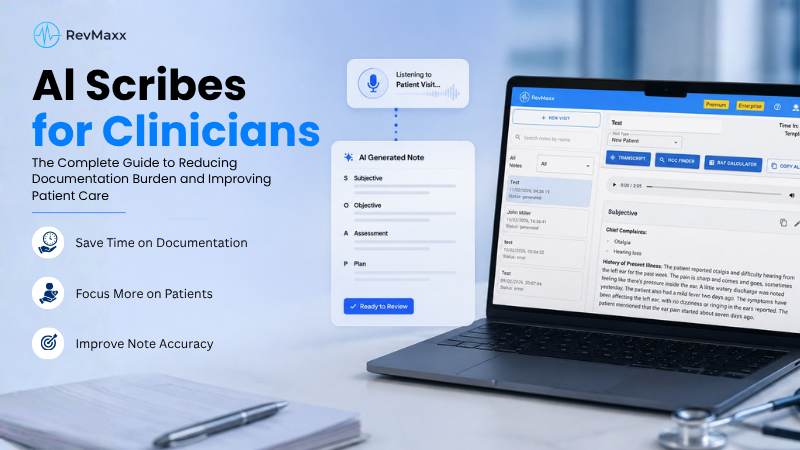
Most importantly, they organize everything into a proper SOAP note format automatically, so the doctor does not have to build the structure by hand every single time.
Why Orthopedic Clinics Need AI Scribes
Orthopedic practices face a mix of pressures that make documentation especially hard. Patient volumes keep climbing. Notes require a lot of specific clinical detail. And on top of that, physicians are dealing with burnout at troubling rates—41.9% of physicians reported experiencing at least one symptom of burnout in 2025. Orthopedic clinics need a faster, more accurate way to document care and that is where AI scribes step in.
Top 10 Benefits of AI Scribes for Orthopedic Clinics
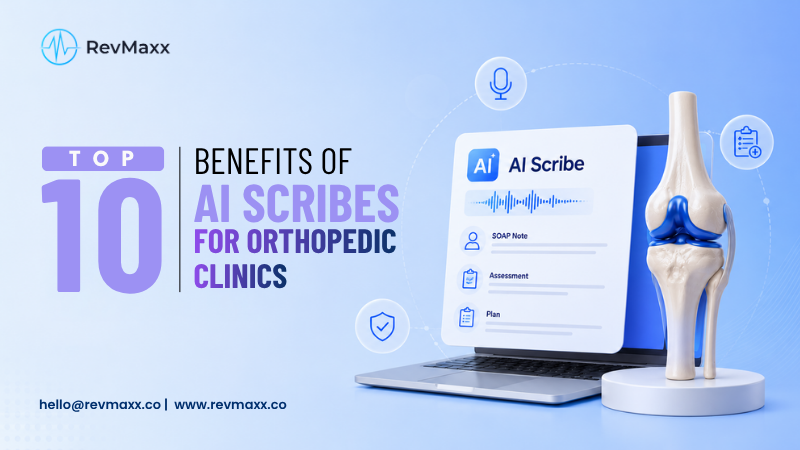
AI scribes are transforming orthopedic documentation by reducing charting time, improving note accuracy, supporting better coding, and helping physicians focus more on patient care. Explore the top 10 benefits for modern orthopedic practices.
1. Significantly Reduce Documentation Time
This is the biggest reason clinics adopt AI scribes for orthopedic care. AI documentation tools have reduced physician charting time by approximately 40-45% in practices that use them. Notes get finished faster, during or right after the visit, instead of piling up. This also means less “pajama time” spent finishing charts after the clinic closes for the day.
2. Improve Accuracy of Orthopedic Clinical Notes
Manual notes vary from doctor to doctor and can miss small details, especially during a busy clinic day. AI scribes create consistent documentation every time, capturing diagnoses, exam findings, and treatment plans in the same structured way. Research also shows that AI scribes have lowered clinical note error rates by 25 to 30 percent in institutions that use them, which matters a lot for complex orthopedic cases.
3. Allow Orthopedic Surgeons to Focus More on Patients
When a doctor is not typing during the visit, they can actually look at the patient, watch how they move, and listen more closely. This builds trust and improves the overall visit experience. Many physicians using ambient AI scribes say the tool has become part of how they practice now—one health system leader even noted that turning the tool off would likely upset a large share of their doctors, showing how deeply the workflow has changed.
4. Reduce Physician Burnout
Administrative overload is one of the top drivers of physician burnout, and documentation is often named as the single biggest contributor. For every 15 minutes a physician spends with a patient, research shows they spend about nine more minutes charting in the EHR afterward. AI scribes cut into that ratio directly, giving orthopedic surgeons back time for rest, family, and recovery—all of which support better long-term well-being.
5. Automatically Generate Structured SOAP Notes
Instead of building a note from scratch, AI scribes organize the patient-provider conversation into the structured SOAP format—Subjective, Objective, Assessment, and Plan—in real time. This keeps every orthopedic visit documented the same consistent way, whether it is a fracture check, a knee evaluation, or a spine consult. Standardized notes are also easier for other providers to review later.
6. Improve ICD-10, CPT and E/M Coding Accuracy
Detailed, structured notes make coding far easier and more accurate. When documentation clearly captures the exam and treatment plan, coders and billers have what they need without guessing. This reduces claim errors and supports stronger reimbursement. A UCSF study found physicians who adopted AI scribes generated 1.81 additional relative value units and saw roughly one more patient per week, with no increase in claim denials, adding meaningful revenue per provider.
7. Speed Up Clinical Workflow
Faster note completion means faster chart closure, which means the clinic can move through patients more smoothly. Providers are not stuck finishing yesterday’s charts before starting today’s patients. Over time, this adds up to real gains in daily throughput and less bottleneck at the front desk and in the exam room.
8. Simplify Documentation for Complex Orthopedic Cases
Orthopedic care covers a wide range of complex visit types—joint replacements, sports injuries, spine conditions, fracture management, and post-operative follow-ups. Each has its own documentation requirements. AI scribes are built to capture this level of clinical detail accurately, so surgeons don’t have to manually reconstruct complex case notes after every visit.
9. Integrate with Existing EHR Systems
A good AI scribe does not force a clinic to change its entire tech setup. Most tools now connect directly with existing EHR systems, reducing duplicate data entry and keeping records in one place. This kind of deep EHR integration has become a standard expectation, with major EHR vendors including Epic, Cerner, Meditech, and Allscripts all improving their compatibility with AI documentation tools.
10. Improve Practice Revenue and Operational Efficiency
Cleaner documentation supports fewer denied claims, more accurate billing and better overall reimbursement. Combined with the extra patient volume physicians can handle once documentation time drops, AI scribes contribute directly to practice revenue. The AI medical scribe market itself reflects this shift—the U.S. segment alone is projected to grow from $397.05 million in 2024 to $2955.72 million by 2033, showing just how fast clinics are adopting this technology.
Common Orthopedic Visits Where AI Scribes Deliver the Most Value
AI scribes for orthopedic clinics prove especially useful during:
- Initial consultations
- Fracture evaluations
- Sports medicine appointments
- Joint replacement consultations
- Knee and hip pain assessments
- Shoulder injuries
- Spine evaluations
- Post-operative follow-up visits
- Physical therapy referrals
Each of these visit types involves detailed exam findings and treatment history, which is exactly where ambient documentation saves the most time and keeps records the most accurate.
How RevMaxx AI Scribes for Orthopedic Clinics Improve Documentation
Ambient AI Documentation Built for Orthopedic Workflows
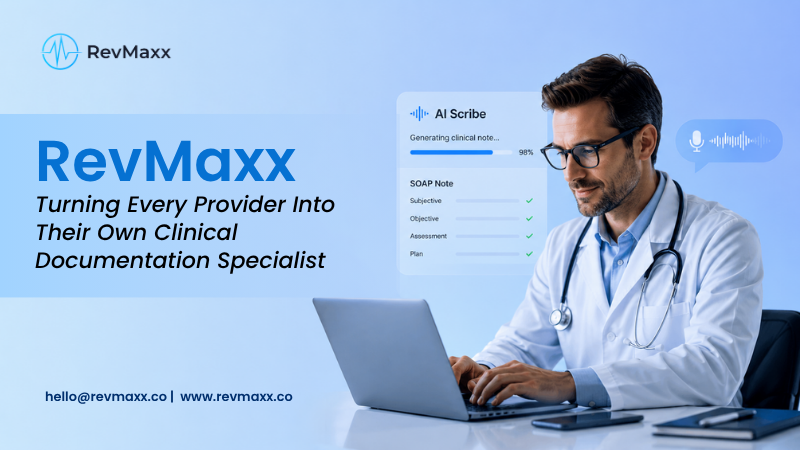
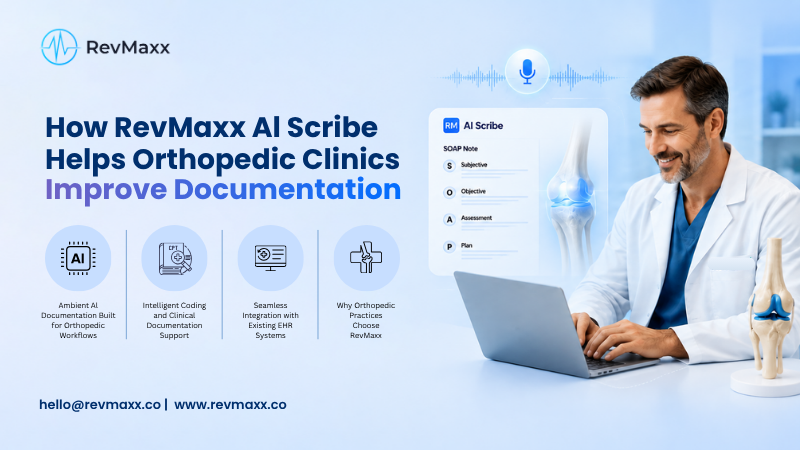
RevMaxx AI Scribe listens to doctor-patient conversations in real time and turns them into structured SOAP notes automatically. This removes most of the manual documentation work orthopedic surgeons deal with every day, letting them focus on patient care instead of typing notes between visits.
Intelligent Coding and Clinical Documentation Support
Beyond note-taking, RevMaxx assists with ICD-10, CPT, and E/M coding, helping build complete and compliant documentation for every visit. This supports cleaner claims, fewer denials, and more accurate reimbursement for the practice over time.
Seamless Integration with Existing EHR Systems
RevMaxx ambient scribe fits into the orthopedic workflows clinics already use, minimizing disruption to daily operations. There’s no need to overhaul existing systems—the tool works alongside them, helping providers finish documentation faster without extra steps.
Why Orthopedic Practices Choose RevMaxx
Clinics choose RevMaxx because it reduces administrative burden, improves provider efficiency, and enhances the overall patient interaction. It’s also built to scale, supporting orthopedic practices as they grow their patient base and add new providers.
Best Practices for Implementing AI Scribes for Orthopedic Clinics
Successful AI scribe implementation starts with the right workflow. From evaluating documentation needs to EHR integration and ongoing quality monitoring, these best practices help orthopedic clinics maximize efficiency and adoption.
Evaluate Documentation Needs
Start by reviewing where your practice loses the most time — is it exam documentation, coding, or chart closure? Understanding this helps you choose a tool that solves your clinic’s specific pain points instead of adding another system to manage.
Train Providers on AI-Assisted Workflows
Even the best AI scribe needs a short adjustment period. Give providers time to learn how to review and edit notes, and set clear expectations for how the tool fits into daily visits. A brief training session upfront prevents confusion later.
Integrate with Your EHR
Make sure the AI scribe connects cleanly with your existing EHR system before going live. Poor integration creates extra work instead of saving time, so this step deserves careful testing before a full clinic rollout.
Monitor Documentation Quality and Coding Accuracy
Track note quality and coding accuracy regularly after implementation. This helps catch any gaps early and ensures the AI scribe is actually improving documentation, not just changing how it’s produced.
Continuously Optimize Clinical Workflows
Treat AI scribe adoption as an ongoing process, not a one-time setup. Gather feedback from providers, adjust templates as needed, and keep refining how the tool fits into your clinic’s daily rhythm.
Conclusion
Documentation shouldn’t be the reason orthopedic surgeons stay late or lose time with patients. AI scribes for orthopedic clinics tackle this problem directly—cutting charting time, improving note accuracy, supporting better coding, and giving physicians more room to focus on actual patient care. The benefits stack up across the entire practice, from reduced burnout to stronger revenue and cleaner claims.
As adoption continues to grow across U.S. healthcare, orthopedic clinics that adopt tools like RevMaxx AI Scribe put themselves in a strong position—not just to keep up with rising patient volumes, but to build a more sustainable, efficient practice for the long run.