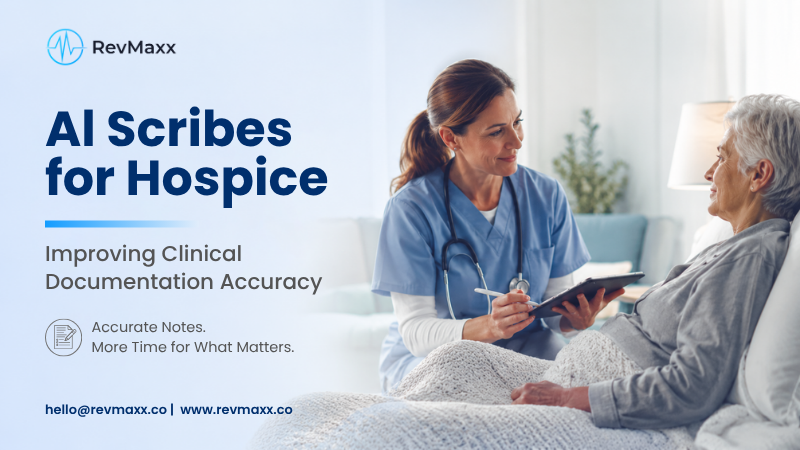
Hospice teams carry out two jobs at once: caring for patients in their struggling time and documenting every visit in detail. The second job is eating into the first. AI Scribes for Hospice are stepping in to give clinicians their time back while making records more accurate and complete.
Introduction to AI Scribes for Hospice
Hospice nurses and social workers often spend up to two hours per shift on documentation, much of it after hours. Accurate notes guide pain management and eligibility decisions. AI Scribes for Hospice listen during visits and turn conversations into structured notes automatically, cutting paperwork without cutting quality.
What Are AI Scribes for Hospice?
AI Scribes for Hospice are digital tools that sit quietly in the background of a visit. They pick up the conversation between clinician and patient or family, then turn it into a usable clinical note, removing the need to type while talking.
Understanding Ambient AI Scribing
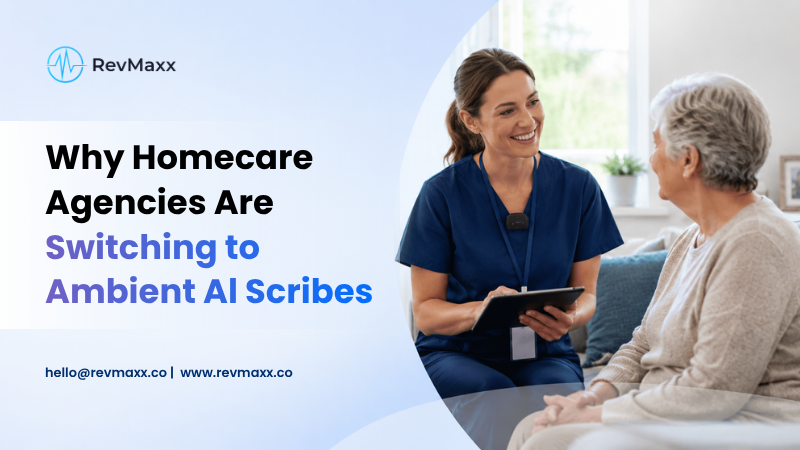
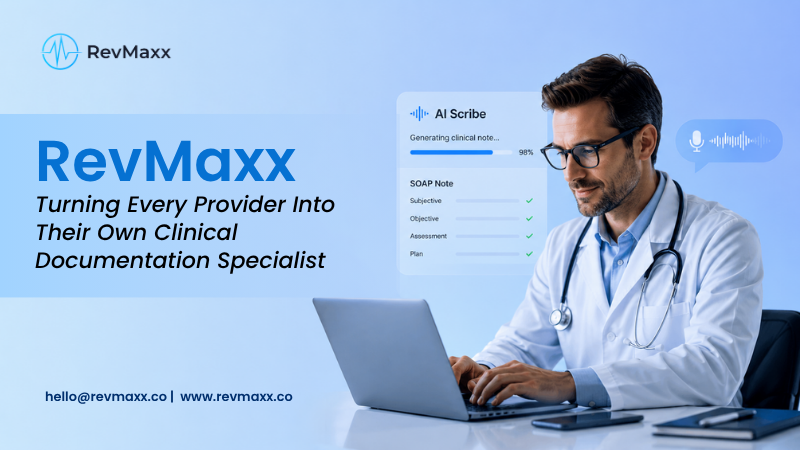
Ambient AI scribing works passively. The clinician does not stop to dictate or type. The tool listens during a home visit, capturing symptoms, medication changes, and family concerns as they come up, then transcribes it in real time. This fits hospice well, since visits often involve sensitive conversations a rigid form cannot capture.
How AI Scribes Work in Hospice Settings
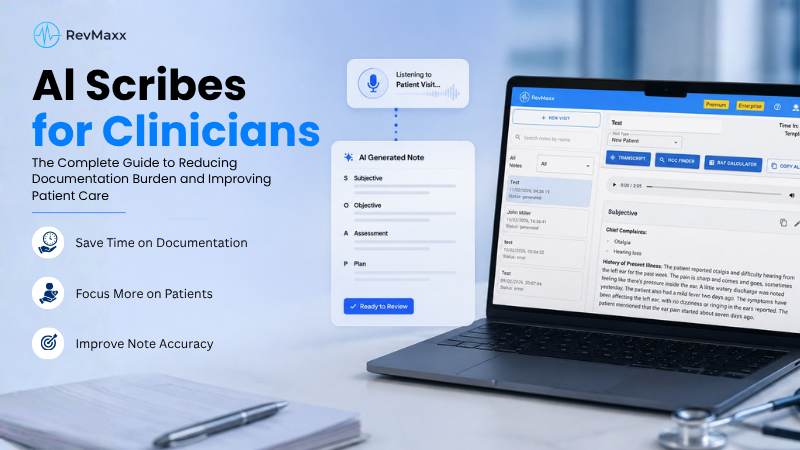
AI Scribes for Hospice capture patient assessments, pain scores, and condition changes as the clinician talks. They record symptom management and medication discussions, then use natural language processing to organize everything into a structured note, often SOAP format, ready for review and sign-off.
Why Clinical Documentation Accuracy Matters in Hospice Care
Documentation is not just paperwork in hospice. It proves a patient qualifies for care, tells the next clinician what happened, and supports every claim submitted to Medicare. Late, thin, or inconsistent notes hurt both patient care and finances.
Supporting High-Quality Patient Care
Accurate documentation builds accurate care plans. When a note clearly reflects a patient’s pain level or emotional state, the next team member can respond without guessing. This matters in hospice, where nurses, chaplains, social workers, and physicians rely on shared notes to coordinate care.
Meeting Regulatory and Compliance Requirements
Medicare requires detailed documentation to support a hospice patient’s terminal prognosis and level of care. A federal audit found documentation for 45 of 100 reviewed certification periods did not meet Medicare hospice requirements. Better documentation habits directly lower this risk.
Improving Reimbursement Accuracy
Medicare pays roughly $27.5 billion a year for hospice care covering about 1.8 million beneficiaries. One audit of a single provider found 40 of 100 sampled claims did not comply with Medicare rules, mainly because records failed to support the terminal prognosis, causing an estimated $42.3 million in improper payments.
Common Documentation Challenges Faced by Hospice Providers
Even experienced hospice teams struggle with the volume of writing required per visit. These are the exact problems AI Scribes for Hospice solve.
Time-Consuming Manual Note Taking
Manual documentation pulls clinicians away from patients and into laptops. One analysis found documentation accounted for about 35 percent of a clinician’s time. In emotionally heavy hospice visits, that burden is harder to carry.
Incomplete or Delayed Documentation
When clinicians cannot document during the visit, they rely on memory afterward, and details get lost. Research found every hour of patient-facing time linked to roughly two additional hours of documentation work. Delayed notes also slow billing and raise audit risk.
Clinician Burnout Due to Administrative Work
Documentation burden is repeatedly named as a top driver of hospice clinician burnout and turnover. A Yale-led study found burnout dropped from 51.9 percent to 38.8 percent after 30 days of AI scribe use.
Maintaining Consistency Across Care Teams
Hospice care depends on multiple clinicians seeing the same patient over time. When each document is different, the record becomes harder to read and easier to misinterpret. Consistent notes are essential for hand-offs as a patient’s condition changes.
How AI Scribes for Hospice Improve Clinical Documentation Accuracy
AI Scribes for Hospice tackle these challenges by changing how and when notes get written, not just who writes them.
Real-Time Clinical Documentation
Because the AI listens during the visit, notes are drafted in real time rather than reconstructed from memory later. This shortens the lag between a visit and a finished note, reducing forgotten details and speeding up the documentation cycle.
Automatic Generation of Structured SOAP Notes
AI Scribes for Hospice organize captured conversations into a structured SOAP note automatically. Complaints, findings, assessments, and care plans sort into the right sections without manual typing, saving time and keeping the note easy to scan.
Capturing More Complete Patient Conversations
A clinician typing during a visit inevitably misses details while focused on the keyboard. Ambient AI captures the full conversation, including symptom descriptions and family questions that might otherwise go unrecorded, creating a more complete picture than memory-based notes typically allow.
Reducing Human Errors and Missing Information
Manual notes are prone to typos, skipped details, and inconsistent terminology. AI-generated drafts pull directly from the actual conversation, lowering the chance a medication or dosage gets misremembered. Clinicians still review before signing but start from a more accurate baseline.
Standardizing Documentation Across Providers
Because AI Scribes for Hospice apply the same structure and terminology every time, documentation becomes more consistent across a care team, helping new and per-diem clinicians trust each other’s notes and supporting smoother hand-offs.
Key Benefits of AI Scribes for Hospice Organizations
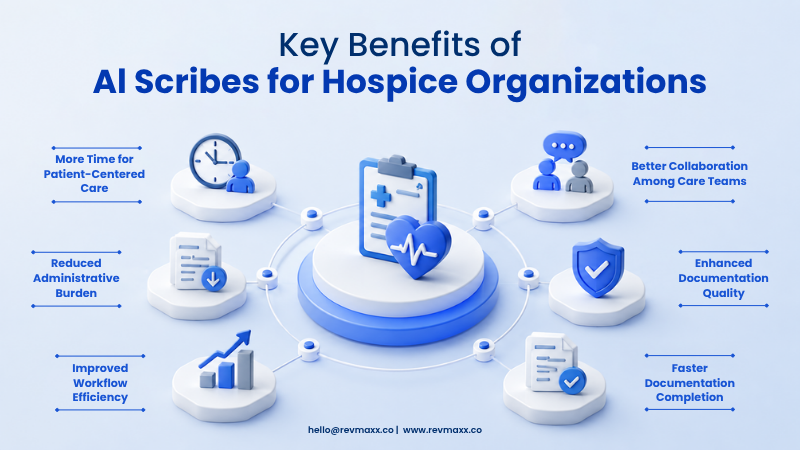
Beyond individual notes, AI scribes change how a hospice organization operates day to day.
More Time for Patient-Centered Care
When clinicians are not typing, they can look at the patient and simply listen. One health system reported clinicians saved up to two hours a day and saw two additional patients.
Reduced Administrative Burden
Clinicians using ambient AI scribes spent 8.5 percent less total time in the EHR and saw a 15 percent drop in note composition time, per a matched-cohort study from the Advisory Board. Across a busy caseload, these savings add up quickly.
Improved Workflow Efficiency
One health system reported saving nearly 15,800 hours of documentation time with ambient AI scribes, equal to about 1,800 eight-hour workdays. For hospice teams managing tight staffing, that reclaimed time improves how many patients they can serve well.
Better Collaboration Among Care Teams
Structured, consistent notes make it easier for nurses, physicians, chaplains, and social workers to stay aligned. In the same study, 84 percent of clinicians reported a positive effect on communication after adopting an AI scribe, per Advisory Board.
Enhanced Documentation Quality
AI-generated notes tend to be more complete because they draw from the full conversation rather than memory, supporting better care planning, stronger Medicare compliance, and a record that reflects what actually happened.
Faster Documentation Completion
Notes drafted during or right after the visit close the gap between care delivery and record completion, helping organizations avoid the late-night documentation catch-up many clinicians describe while speeding up billing.
RevMaxx AI Scribe for Hospice Documentation
RevMaxx AI Scribe is built for the documentation pressures unique to hospice care, combining ambient listening with hospice-specific note structures.
Ambient AI That Works During Patient Visits
RevMaxx AI Scribe listens passively during patient and family conversations, whether in a home, facility, or inpatient hospice setting, letting clinicians focus fully on the patient instead of a screen while it captures symptom updates and care details.
Automated SOAP Note Generation
Once a visit ends, RevMaxx AI Scribe automatically organizes the conversation into a structured SOAP note, removing the manual work of sorting assessments and plans and giving clinicians a ready-to-review draft instead of a blank template.
Accurate Clinical Documentation with Minimal Manual Input
Because the note builds from the actual visit conversation, RevMaxx AI Scribe reduces reliance on a clinician’s memory hours later. Clinicians still review and finalize every note, keeping clinical judgment in control while spending far less time typing.
HIPAA-Compliant and Secure Documentation
Hospice patients and families share deeply personal information during visits. RevMaxx AI Scribe follows HIPAA-compliant security standards through capture, transcription, and storage so organizations can adopt ambient AI without new privacy risk.
Seamless Integration with Existing EHR Systems
RevMaxx AI Scribe is designed to fit into the systems hospice teams already use. Notes flow into existing EHR platforms, reducing double entry and keeping the record centralized where billing and clinical teams already work.
Helping Hospice Teams Spend More Time with Patients Instead of Paperwork
The core goal of RevMaxx AI Scribe is simple: give clinicians back hours lost to typing, so they can be present with patients and families during a meaningful stage of life.
Best Practices for Successfully Implementing AI Scribes in Hospice
Adopting AI Scribes for Hospice works best when treated as a workflow change, not just a software install.
Train Staff on AI-Assisted Documentation
Clinicians need time to learn how ambient AI listens and how to review its drafts efficiently. Short, hands-on training paired with real scenarios helps staff use the tool naturally, instead of treating it as an extra step.
Review AI-Generated Notes Before Finalizing
AI-generated drafts are a starting point, not a final answer. Clinicians should review notes for accuracy and confirm details before signing, keeping accountability with the clinician while still saving significant time.
Integrate AI Into Existing Clinical Workflows
AI Scribes for Hospice work best when they fit naturally into how visits already happen. Aligning the tool with EHR systems and team meetings helps adoption stick instead of becoming another disconnected tool.
Monitor Documentation Quality and Compliance
Even after adoption, leadership should regularly audit a sample of AI-generated notes for accuracy and Medicare compliance. Ongoing monitoring catches gaps early and helps refine training over time.
The Future of AI Scribes for Hospice Care
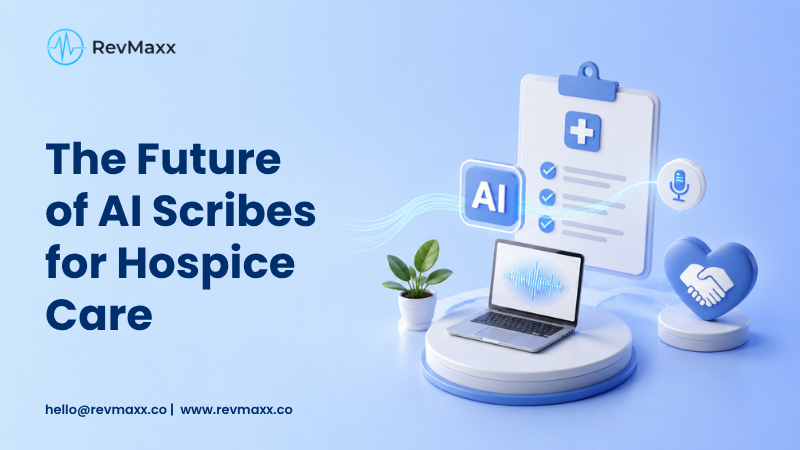
AI scribes for hospice are still evolving, and the next few years should bring deeper capabilities into everyday hospice workflows.
Smarter Ambient AI Documentation
Future ambient AI is expected to better understand hospice-specific language and terminology, producing more accurate first drafts. As models improve, clinicians should see less editing needed and notes reflecting more nuance.
Predictive Clinical Insights
Beyond transcribing visits, future AI tools may help flag emerging symptom patterns based on documented trends, supporting earlier interventions and more proactive symptom management.
Greater Integration with Hospice EHR Platforms
As adoption grows, AI scribes are likely to integrate more tightly with hospice-specific EHR platforms, reducing manual transfers and keeping documentation, billing, and compliance data connected in one system.
Supporting Value-Based and Patient-Centered Care
As hospice reimbursement shifts toward quality and outcomes, accurate, timely documentation becomes even more important. AI Scribes for Hospice support this shift by giving organizations reliable data to show the quality of care they deliver.
Conclusion
Accurate documentation sits at the center of good hospice care. It shapes care plans, supports Medicare compliance, and protects revenue cycles. Yet manual note-taking keeps pulling clinicians toward burnout. AI scribes for hospice offer a practical answer, capturing visits in real time and turning them into accurate, consistent notes.
Solutions like RevMaxx AI Scribe show what this looks like in practice: ambient listening, automated SOAP notes, HIPAA-compliant security, and EHR integration, reducing administrative burden without sacrificing accuracy. For hospice organizations balancing compliance pressure and the weight of end-of-life care, adopting AI Scribes for Hospice is becoming a necessity, one that gives clinicians back time with patients.
Frequently Asked Questions (FAQs)
What are AI Scribes for Hospice?
AI Scribes for Hospice are ambient listening tools that capture patient and family conversations and turn them into structured clinical notes, reducing manual typing and supporting faster, more complete documentation.
How do AI Scribes improve clinical documentation accuracy?
They capture the full conversation as it happens, rather than relying on memory afterward, reducing missing details, standardizing note structure across providers, and creating documentation that accurately reflects each visit.
Are AI Scribes HIPAA compliant?
Reputable AI scribe solutions, including RevMaxx AI Scribe, use HIPAA-compliant security measures to protect patient data. Organizations should always confirm a vendor’s compliance certifications before adopting any ambient AI tool.
Can AI Scribes integrate with hospice EHR systems?
Yes. Many AI scribe platforms, including RevMaxx AI Scribe, integrate with existing EHR systems, letting notes flow directly into the patient record without duplicate data entry.
Will AI Scribes replace hospice clinicians?
No. AI scribes support hospice clinicians rather than replace them. Clinical judgment and final review of every note remain with the clinician, while the technology removes the manual burden of typing.
How much time can hospice providers save by using AI Scribes?
Reported savings vary, but some health systems document clinicians saving up to two hours per day, plus measurable EHR-time reductions across multiple studies.