
Color vision shapes far more of daily life than most people notice — until it becomes a barrier. For someone with red-green color blindness, a set of traffic lights, a bundle of electrical wires, or a color-coded chart at work can be genuinely hard to read. So it’s natural to ask a hopeful question: could colorblind contact lenses fix this, and could they open the door to careers that demand sharp color vision?
The honest answer has layers. These lenses can help some people see certain colors more vividly in everyday situations — but they are not a cure, they don’t work for everyone, and in several safety-critical professions they are specifically not allowed during testing. This guide walks through what the lenses actually do, who tends to benefit, and the real color vision rules for careers in aviation, the military, healthcare, and beyond, so you can plan with clear eyes.
Part 1 – Understanding Colorblind Contact Lenses
What Are Colorblind Contact Lenses?
Red-green color blindness happens when the cone cells in the retina that detect red and green light overlap more than they should, making those hues easy to confuse. The two most common forms are protan (reduced sensitivity to red light) and deutan (reduced sensitivity to green). Together they account for the large majority of color vision deficiency, and both sit on a spectrum that runs from mild to severe.
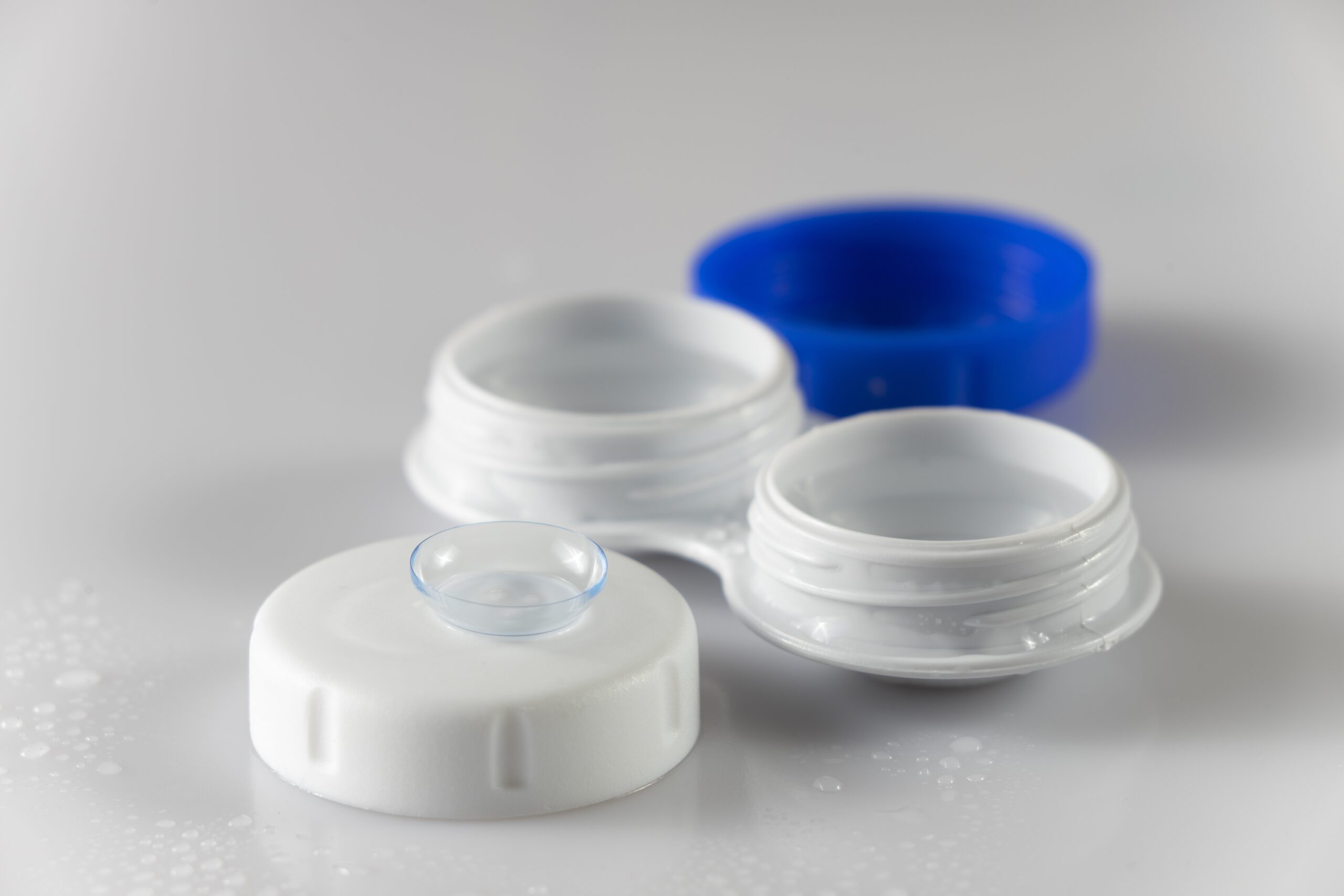
Colorblind contact lenses use a tinted filter that selectively blocks specific wavelengths of light. By reducing the overlap between the red and green signals reaching the eye, the filter can make those colors look more distinct to some wearers. Products such as ColorKinds color blind contacts are built on this filtering principle and are designed specifically for people with red-green color vision deficiency.
It’s worth being precise about what this means. The lens is not repairing the cones or restoring normal color vision. It changes the light entering the eye to exaggerate a difference the wearer’s eyes already struggle to catch. That distinction matters for every claim that follows.
How Colorblind Contact Lenses May Improve Color Discrimination
Long-term care teams manage a high volume of clinical documentation every day. Nurses, physicians, therapists, and caregivers may need to complete nursing assessments, medication administration records, care plan updates, physician progress notes, therapy documentation, and other resident records. With each resident generating multiple records throughout the day, the sheer volume of documentation can quickly become overwhelming and take valuable time away from direct patient care.
Benefits, Limitations, and Safety
Used realistically, the benefits sit in daily life: a little more confidence with color-dependent tasks at home, in hobbies, and in some work settings. That’s a genuine quality-of-life gain for the right person.
But three limitations deserve to be stated plainly, because they’re where most misunderstandings begin:
- They are not a cure. Take the lenses out and the underlying deficiency is unchanged. They assist perception; they don’t fix the cones.
- They’re best suited to red-green deficiency, not to every form of color blindness, and they help mild-to-moderate cases most.
- Results vary by individual. What works well for one person may do little for another.
On safety and care, treat them like any medical contact lens: get a professional fitting, follow the prescribed wear schedule, keep them clean, never share them, and stop and consult your eye doctor if you notice irritation or changes in vision. Filtered lenses can also alter how you perceive brightness and color in low light, so it’s wise to understand how yours behave before relying on them while driving at night or in other demanding conditions.
Part 2 – Who Can Benefit from This Guide?
- Students and career seekers. If you’re choosing a path and color vision is a factor, the most valuable thing you can do is learn the requirements before you invest years and tuition. Knowing whether you need a field test for color vision—and what happens if you don’t pass—lets you plan intelligently rather than discover a barrier late.
- Professionals in color-critical industries. Military personnel, police and law enforcement officers, firefighters, pilots and aviation staff, doctors and nurses, engineers and electricians, and railway and maritime professionals all work in roles where reading color accurately can be tied to safety. If that’s you, understanding both your own color vision and your industry’s rules is essential.
- Parents, educators, and eye care professionals. A parent helping a colorblind child think about the future, a counselor guiding a student, or a clinician advising a patient all benefit from an accurate picture of modern color vision enhancement options—including a clear-eyed view of what those options can and can’t do for a career.
Part 3 – Understanding Career Color Vision Requirements
Why Employers Require Color Vision Testing
Color vision testing in the workplace isn’t bureaucratic box-ticking. In safety-critical roles it protects people. A pilot may need to read colored light-gun signals from a control tower. An electrician relies on wire color codes. A nurse may need to notice a color change in a patient or a medication. Rail and maritime staff read colored signals and lights. Where a color mistake can cause harm, employers test—and many are bound by industry regulations and licensing standards that set the bar.
Common Careers with Color Vision Requirements
Requirements vary by employer, country, and specific role, but color vision standards commonly appear in:
- Military service
- Police and law enforcement
- Firefighting
- Aviation (pilots and related roles)
- Healthcare, in certain specialties and duties
- Engineering and electrical work
- Railway and maritime industries
- Other safety-critical professions
Being colorblind rarely means every door in these fields is closed. It often means specific roles, restrictions, or additional practical tests apply. The details differ enough that you should always confirm with the relevant authority for your situation.
Common Color Vision Tests Used by Employers
You may encounter one or more of these:
- Ishihara Test — the familiar plates of colored dots with hidden numbers; a common first screen.
- Waggoner Color Vision Test — a computer-based screening test.
- Rabin Cone Contrast Test (RCCT) — measures the sensitivity of each cone type.
- CAD (Color Assessment and Diagnosis) Test—a precise computer-based test used in aviation and research.
- Farnsworth D-15 Test — a cap-arrangement test that sorts by severity.
- Lantern Tests — practical tests that require identifying colored lights.
Which test you face—and the passing threshold—depends on the employer, the country, and the occupation.
Can You Wear Colorblind Lenses to Pass These Tests?
This is the question people most want answered, so here it is directly: Generally, no—and in many cases, it’s explicitly prohibited.
Regulators design occupational color vision testing to measure your natural color vision, precisely because that’s what the job depends on. The Federal Aviation Administration (FAA) prohibits wearing color-correcting lenses during the medical exam, during color vision testing, or while flying—and wearing them during the exam results in an automatic failure.
As of 2025, the FAA moved new applicants to precise computer-based tests, tightening the process further. The US Coast Guard bars color-sensing lenses, and various police and corrections agencies disallow color-filter lenses for their vision testing as well.
The reason is consistent across all of them: public safety depends on your unaided ability to distinguish colors in the real conditions of the job.
So the honest way to think about colorblind lenses and careers is this: view them as a possible aid for daily life, not as a key that unlocks color-restricted professions. If a field tests for color vision, plan around the real requirement.
Many careers still remain open to people with color vision deficiency—sometimes with restrictions, sometimes via a practical demonstration of ability—and knowing the rules early is what lets you choose a path you can actually pursue.
The Bottom Line
Colorblind contact lenses can be a real quality-of-life help for some people with red-green deficiency, making everyday color tasks a little easier. They are not a cure, their effect varies from person to person, and they are not a shortcut through occupational color vision testing. The smartest first steps are simple: get your color vision properly assessed by an eye care professional, learn the exact requirements of any career you’re considering, and make decisions from accurate information rather than hope.
If color vision affects your work or your plans, talk to a qualified eye care professional about testing and options suited to your specific situation.