
Healthcare teams are being asked to do more with less. Patient volumes are rising, but staffing levels are tight. Clinicians are spending long hours on notes after clinic time. This is where generative AI for clinical conversations is gaining attention. It promises faster documentation, better focus during visits, and lower operational stress.
But technology alone is not enough; leaders want to know one thing first. What is the return on investment? This blog breaks down the real ROI in simple terms, so healthcare decision-makers can judge if it is truly worth buying.
Why Are Healthcare Leaders Questioning ROI in 2026?
Healthcare organizations are more careful with spending than ever before. Every tool must show value quickly and clearly. Generative AI sounds promising, but leaders want proof. They want to see a real impact on time, cost, and staff well-being. ROI is no longer a bonus; it is a requirement for approval.
High Rising Operational Costs and Clinician Burnout
Operational costs continue to rise across healthcare. Salaries, compliance, and software fees all add pressure. At the same time, clinicians are exhausted. Many spend two to three hours daily finishing notes. This unpaid work leads to burnout and frustration. When clinicians leave, replacement costs are high. Leaders are now looking for solutions that reduce daily stress while controlling expenses. Generative AI for clinical conversations is being explored as a way to cut documentation time without adding new staff.
Pressure to Justify Every New Healthcare Technology Investment
Gone are the days of buying tools just because they are new. Boards and finance teams want clear justification. They ask how soon the investment pays back. They want to know if adoption will disrupt workflows. They also want proof that clinicians will actually use it. Generative AI for clinical conversations must show real-world ROI, not just theoretical benefits, to earn trust and approval.
What is Generative AI for Clinical Conversations?
Before measuring ROI, it is important to understand what this technology really does. Many people confuse it with simple transcription tools. In reality, it goes much deeper. It listens, understands, and organizes clinical conversations into billable medical documentation.
How Generative AI Captures and Understands Clinical Conversations?
Generative AI for Clinical Conversations listens during patient visits. It captures natural speech without forcing the clinician to dictate. The system understands medical terms, symptoms, and clinical intent. It then creates structured notes that fit common clinical formats. The clinician reviews, edits if needed, and signs off. This process saves time while keeping the clinician in control.
Difference Between Generative AI and Traditional Speech-to-Text Tools
Traditional speech-to-text tools only convert words into text. They often require clear dictation and frequent corrections. Generative AI works differently. It understands context and meaning. It knows the difference between patient history and assessment. It organizes information automatically. This reduces editing time and improves note quality compared to basic transcription.
Common Use Cases in Outpatient, Inpatient and Virtual Care
Generative AI is used to increase efficiency for outpatient clinics by supporting routine office visits, daily progress updates, and rounding notes for hospitals. This technology assists with the management of documents produced during telehealth, allowing for standardization of documentation, regardless of how (in-person or telephonic) those visits occurred. In each of these instances, the objectives are similar. To decrease patients’ time spent typing, increase efficiencies through saved time, and to develop the patient’s attention while they interact with their provider.
Key Cost Components to Consider Before Buying
Understanding costs is critical when calculating ROI. Generative AI for clinical conversations comes with clear pricing elements. Knowing these upfront helps avoid surprises and supports better budgeting decisions
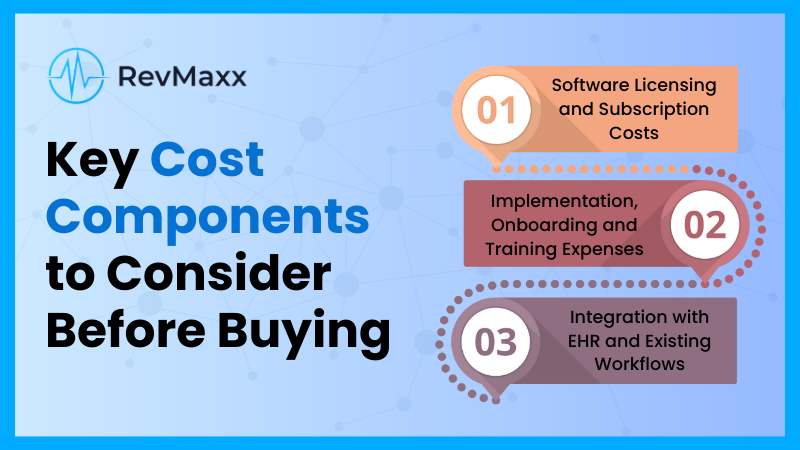
Software Licensing and Subscription Costs
Most vendors charge per provider per month. Some offer tiered pricing based on features. Others charge per encounter. These costs are predictable, which helps financial planning. Leaders should compare plans carefully and consider growth. A slightly higher fee may offer better long-term value if usage increases.
Implementation, Onboarding and Training Expenses
Even easy-to-use tools require setup. Clinicians and staff need training. Some vendors include onboarding in the subscription. Others charge separately. While these are usually one-time costs; they affect short-term ROI. Strong training reduces resistance and speeds up adoption, which improves overall returns.
Integration with EHR and Existing Workflows
Integration is important to the ROI achieved with artificial intelligence (AI). There is an increased rate of adoption by clinicians for those applications that offer a seamless integration into the existing electronic health record (EHR). Conversely, poor integration leads to friction and frustration among clinicians. Therefore, leaders need to understand how clinical notes will be entered into the EHR as well as the level of manual input required. Smooth integration increases efficiency and protects ROI.
Direct ROI Benefits of Generative AI for Clinical Conversations
Direct ROI benefits are the easiest to measure. These are visible improvements that impact daily operations. For many organizations, these benefits alone justify the investment.
Time Savings Per Patient Visit
Clinicians save several minutes per visit by not typing notes. Over a full day, this can save 1 to 2 hours. That time can be used to see more patients or leave work on time. Time savings translate directly into productivity gains and cost control.
Reduction in Documentation Workload
An AI medical scribe uses generative AI technology, that handles the first draft of clinical notes. Clinicians only review and edit. This reduces mental fatigue and repetitive work. Less documentation burden leads to better focus and fewer errors. Over time, this improves efficiency across the care team.
Improved Clinician Productivity and Focus
When clinicians are not focused on screens, they engage more with patients. Visits feel more natural. Productivity improves without rushing care. This balance supports better outcomes and stronger patient relationships, which indirectly supports revenue stability.
Indirect ROI That Often Goes Unnoticed
Some of the biggest ROI benefits are not immediate or financial on paper. These indirect gains matter greatly over time and often influence long-term success.
Reduced Clinician Burnout and Turnover
The financial burden of clinician burnout includes the time and expense of recruiting and training new clinicians. Generative AI for clinical conversations effectively lowers after-hours work demand on clinicians, making it easier for them to maintain their own work-life balance. When clinicians are happy, they’ll be more likely to remain with a practice, resulting in less of a turnover cost.
Improved Documentation Quality and Compliance
AI-generated notes are structured and consistent. This helps with coding, audits, and compliance reviews. Better documentation reduces claim denials and legal risks. These savings may not appear immediately but protect revenue over time.
Better Patient Experience and Engagement
Patients notice when clinicians listen instead of typing. Conversations feel more personal. Trust improves. Engaged patients follow care plans better and are more likely to return. This strengthens long-term patient relationships and practice reputation.
Measuring ROI in Real Clinical Settings
ROI should be measured using real data, not assumptions. Clear metrics help leaders understand the true impact of Generative AI for clinical conversations.
Key Metrics to Track (Time Saved, Cost Per Note, Clinician Satisfaction)
Track documentation time before and after adoption. Measure cost per visit. Survey clinician satisfaction. These metrics show whether the tool delivers on its promise. Consistent tracking supports better decision-making.
Short-Term vs Long-Term ROI Expectations
While short-term returns on investment tend to be realized through the elimination of wasted time, long-term returns will come in the form of decreased turnover and increased employee engagement and satisfaction; thus, leaders need to assess both types of ROI. If a leader focuses solely on short-term ROI, they may not value the technology appropriately.
Specialty-Specific ROI Differences
ROI varies by specialty. High-volume clinics see faster returns. Behavioral health benefits from long conversation capture. Each specialty should evaluate based on its own workflow and visit type.
Generative AI vs Human Scribes: Cost and Value Comparison
Many organizations compare AI with human scribes. Both reduce documentation burden, but the cost and value differ over time.
| Factor | Generative AI for Clinical Conversations | Human Scribe |
| Upfront Cost | Low to moderate setup cost (often included or $0–$1,500 per provider) | Hiring, onboarding, and training costs of $2,000–$5,000 per scribe |
| Monthly Cost | $300–$600 per provider per month (subscription-based) | $3,000–$4,500 per month per scribe (salary only) |
| Annual Cost | $3,600–$7,200 per provider per year | $36,000–$54,000 per scribe per year (excluding benefits) |
| Additional Cost | Minimal; updates and support usually included | Benefits, overtime, scheduling, management (adds 20–30% extra) |
| Scalability Cost | Add new providers instantly at the same per-user rate | Requires hiring additional scribes for growth |
| Availability | 24/7 availability at no extra cost | Limited to shift hours; overtime costs extra |
| Documentation Speed | Near real-time note creation | Depends on scribe workload and experience |
| Consistency of Notes | High consistency using standardized templates | Varies by individual scribe skill |
| Training & Turnover Cost | One-time onboarding, low retraining cost | High turnover leads to repeated training expenses |
| Compliance Support | Built-in structured formats help audits and billing | Requires manual quality checks and supervision |
| Impact on Burnout | Strong reduction in after-hours work | Reduces typing but adds coordination effort |
| Long-term ROI | Increases over time as usage scales | Decreases as labor costs rise |
Potential Risks and Hidden Costs
No technology is risk-free. Understanding potential challenges helps leaders plan better and protect ROI.
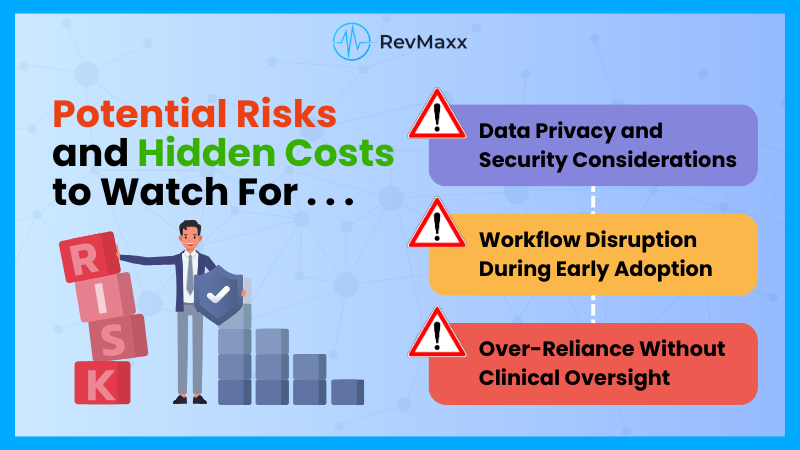
Data Privacy and Security Considerations
Patient data must be protected. Leaders should confirm security standards and compliance measures. A secure platform reduces legal and financial risks.
Workflow Disruption During Early Adoption
There may be a learning curve. Some clinicians may resist change. Clear training and leadership support reduce disruption and speed adoption.
Over-Reliance Without Clinical Oversight
AI supports clinicians but does not replace judgment. Notes must be reviewed. Clear guidelines ensure safe and effective use.
Who Gets the Highest ROI from Generative AI for Clinical Conversations
Not every organization sees the same ROI. Some benefit more based on volume, specialty, and care model.
High-Volume Practices
Practices with many daily visits save more time. Small savings per visit add up quickly. These organizations often see ROI within months.
Telehealth and Remote Care Providers
Remote care relies heavily on documentation. Generative AI ensures consistency across locations. This improves efficiency and reduces variation.
Behavioral Health and Primary Care Clinics
These settings depend on conversation. AI captures long discussions accurately. This reduces after-hours work and improves note quality.
The Final Conclusion
The final decision depends on goals, workflows, and readiness. When used correctly, the ROI can be strong and lasting.
If documentation is a major burden, the investment makes sense. If burnout is high, it makes sense. If leadership wants scalable growth with predictable costs, Generative AI for Clinical Conversations delivers real value.
If workflows are unstable or buy-in is low, a pilot may be better. Testing a generative AI documentation tool with a small group helps validate ROI before full rollout.