Documentation in health care today is much more than just jotting down notes—it now affects revenue, compliance, and patient care directly. With regulations becoming stricter and payers auditing more closely, the accuracy of the information depicted on a provider’s progress note has never been more vital. This is where AI progress notes are changing how providers document, code, and bill for services rendered.
AI-supported progress notes allow clinicians to support accurate CPT and E/M codes; they provide a mechanism to help identify the appropriate detail, assign a code correctly, and create a report for documentation that is compliant with all payers and the Centers for Medicare & Medicaid Services.
Why Documentation Accuracy Impacts Revenue and Compliance
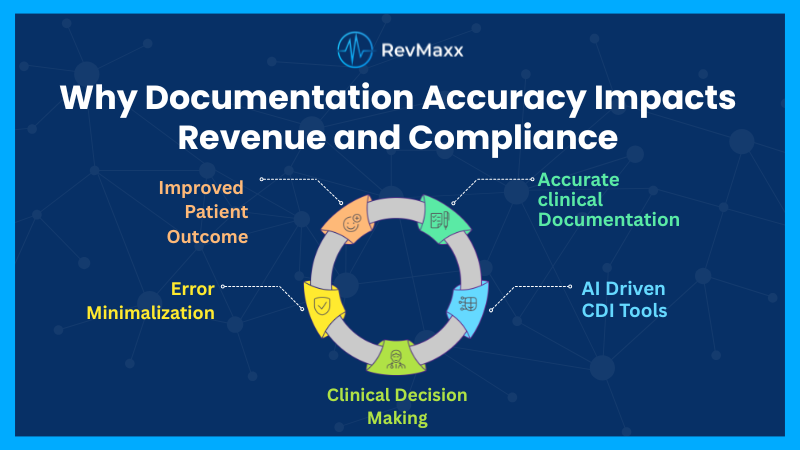
Every clinical note tells a financial and legal story. If documentation is incomplete or unclear, it leads to problems.
Poor documentation can cause:
- Claim denials or delays
- Underpayment due to under-coding
- Overcoding risks that trigger audits
- Compliance penalties
Even small errors in progress notes can result in lost revenue. Accurate notes support the medical necessity of services and justify the CPT and E/M codes billed. When documentation aligns with coding rules, practices get paid correctly and on time.
The Growing Role of AI in Clinical Documentation
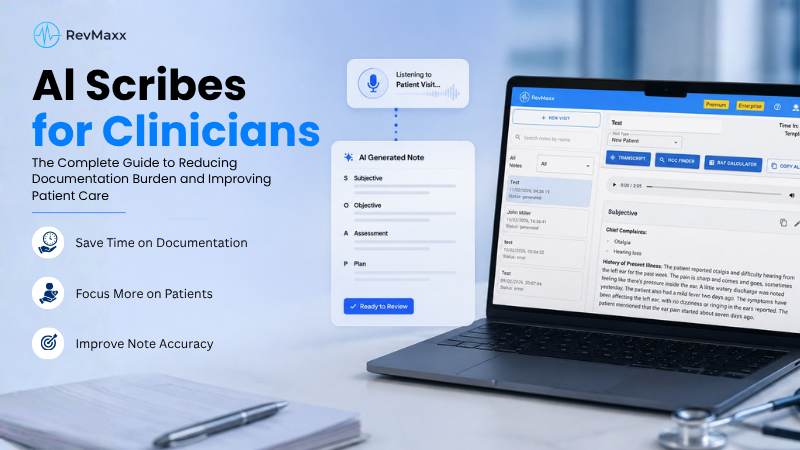
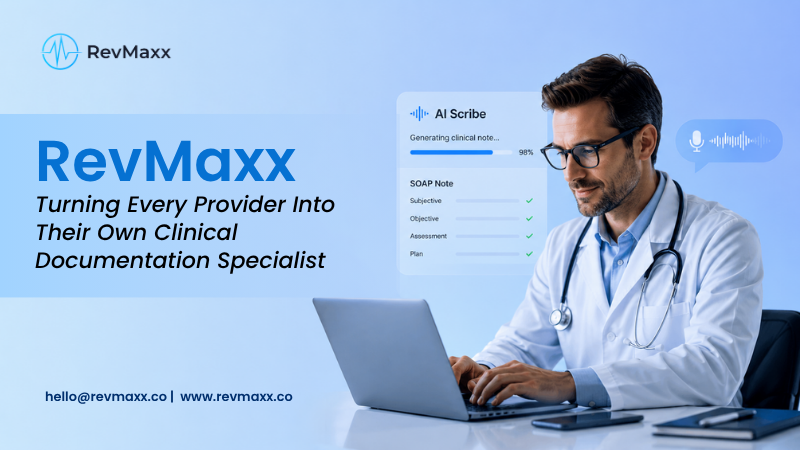
AI is now helping clinicians document care in real time. Instead of typing long notes after visits, providers can rely on AI medical scribe to structure progress notes correctly.
AI Progress Notes:
- Capture key clinical details
- Align documentation with coding rules
- Reduce manual work
- Improve consistency
As healthcare shifts toward value-based care and tighter audits, AI is becoming a trusted partner in clinical documentation.
Understanding CPT and E/M Coding Basics
To understand the value of AI progress notes, it is important to know the basics of CPT and E/M coding.
What Are CPT Codes?
CPT (Current Procedural Terminology) codes outline the specific services and procedures rendered to patients by healthcare providers and payers as a means to determine how much payment will be received from a particular procedure.
Procedure Coding and Reimbursement Overview
Each code defines the actual medical service provided by the physician. Proper and accurate CPT coding of a patient allows for maximum reimbursement.
- Correct payment for services rendered
- Clear communication with payers
- Reduced claim rejections
If a procedure is not documented clearly, it may not be reimbursed, even if it was performed.
What Are E/M Codes?
E/M (Evaluation and Management) codes describe patient encounters, such as office visits and hospital visits.
Medical Decision-Making (MDM), Time, and Documentation Requirements
E/M coding is based on:
- Medical Decision-Making (MDM)
- Time spent with the patient
- Risk and complexity of care
Since recent CMS updates, MDM has played a major role. Documentation must clearly support:
- Problems addressed
- Data reviewed
- Risk to the patient
AI progress notes help ensure these elements are captured correctly.
What Are AI Progress Notes With CPT & E/M Accuracy Features?
AI progress notes are not simple transcription tools. They are intelligent systems built to support accurate coding and compliance.
Definition and Key Capabilities
AI progress notes use advanced algorithms to:
- Capture clinical conversations
- Structure notes automatically
- Highlight coding-relevant details
They help providers create clear, complete, and compliant notes without extra effort.
AI-Driven Documentation Aligned With Coding Rules
AI systems are trained on coding guidelines. They understand:
- What details support higher E/M levels
- How procedures map to CPT codes
- What documentation is required for compliance
This alignment reduces guesswork and coding errors.
Built-In Compliance and Audit Support
AI progress notes often include:
- Documentation checks
- Missing element alerts
- Audit-ready note structures
This makes notes easier to defend during audits.
How AI Ensures CPT & E/M Accuracy in Progress Notes
AI improves accuracy by supporting clinicians during and after the patient visit. It helps capture the right details at the right time. This reduces missed information and coding gaps. AI also follows current CPT and E/M rules, which lowers risk. Providers get cleaner notes without extra effort. This leads to better billing accuracy and stronger compliance with payer expectations.
Automated Capture of Clinical Elements
AI listens to the provider or processes typed inputs during the visit. It captures important clinical details in real time. This includes symptoms, exam findings, and treatment decisions. Nothing is left to memory after the visit. Automated capture reduces errors caused by rushed note writing. It also ensures consistency across notes, even on busy days or with high patient volumes.
History, Exam, and Medical Decision-Making (MDM)
AI progress notes ensure that patient history is clear and complete. Exam findings are organized in a structured way. Medical decision-making details are properly supported. This includes problems addressed, data reviewed, and patient risk. When these elements are well documented, the selected E/M level is easier to justify. This protects revenue and reduces audit risk.
Real-Time Code Suggestions
AI can suggest codes based on what is documented in the note. These suggestions appear during or after the visit. Providers can review them quickly. This helps reduce guesswork and missed charges. Real-time support also helps clinicians understand how documentation connects to billing. It saves time and improves confidence in coding accuracy.
Mapping Clinical Actions to CPT Codes
When a procedure or service is documented, AI recognizes the clinical action. It maps that action to the correct CPT code. If something is missing, AI alerts the provider. This ensures the service is fully supported in the note. It reduces back-and-forth with coders and lowers the chance of denied or delayed claims.
Time-Based and Complexity-Based E/M Support
AI tracks visit time and care complexity automatically. This is helpful for both time-based and MDM-based E/M coding. Providers do not need to manually calculate totals. AI also considers the number of problems addressed and the risk involved. This makes it easier to select the correct E/M level without over- or under-coding.
Accurate Time Tracking and Risk Stratification
AI progress notes capture total provider time spent on the visit. This includes face-to-face and related work. AI also identifies high-risk conditions and complex decisions. These factors support higher E/M levels when appropriate. Accurate tracking ensures documentation aligns with billing rules. This helps practices bill confidently and stay compliant with payer guidelines.
Benefits of AI Progress Notes for Providers and Practices
AI progress notes offer both clinical and financial benefits for healthcare teams. They reduce daily documentation stress. Providers spend less time typing and correcting notes. Practices gain better control over billing accuracy. Notes are more consistent across clinicians. This leads to smoother operations, better compliance, and improved patient care without extra workload.
Reduced Coding Errors and Claim Denials
Manual coding errors are common, especially in busy practices. AI reduces these mistakes by guiding documentation. It helps ensure required details are included. Clear notes support correct codes. Fewer errors mean fewer claim denials. Billing teams spend less time fixing issues. Providers also gain confidence in their documentation.
Improved First-Pass Claim Acceptance
With accurate documentation, claims are cleaner and clearer. Payers can review them faster. Fewer rejections occur due to missing details. Payments are processed sooner. This improves cash flow for practices. Billing teams face fewer follow-ups. Overall revenue cycles become more predictable and stable.
Optimized Revenue and Charge Capture
AI helps ensure all billable services are captured during the visit. It reduces missed charges caused by incomplete notes. Providers do not need to remember every billing detail. AI supports full documentation. This helps practices receive proper payment for the care they deliver.
Preventing Under-Coding and Over-Coding
AI reduces the time spent on documentation after visits. Notes are created during or right after care. Providers no longer stay late finishing charts. Billing teams receive completed notes sooner. This speeds up the entire revenue cycle and reduces backlogs.
Faster Note Completion and Billing Readiness
AI helps ensure all billable services are captured during the visit. It reduces missed charges caused by incomplete notes. Providers do not need to remember every billing detail. AI supports full documentation. This helps practices receive proper payment for the care they deliver.
Same-Day Documentation and Coding
Providers can complete notes faster with AI support. Claims can be submitted sooner. Billing delays are reduced. Same-day documentation improves workflow efficiency. It also lowers the risk of forgotten details. Practices benefit from faster payments and smoother daily operations.
AI Progress Notes Across Specialties
AI progress notes are useful across many medical specialties because they adapt to different care needs. Each specialty has unique documentation rules and coding risks. AI helps maintain accuracy across these variations. It supports specialty-specific workflows without adding extra work. This makes clinical documentation easier for providers while keeping notes compliant and billing-ready.
Primary Care and Internal Medicine
Primary care visits often cover several problems in one visit. AI helps capture chronic condition updates and preventive services clearly. It also supports correct E/M level selection. This reduces missed charges and under-coding. Providers spend less time reviewing notes later. Accurate documentation supports fair reimbursement and smoother claim processing.
Psychiatry and Behavioral Health
Behavioral health care depends on time, complexity, and risk. AI progress notes help document session length clearly. They capture risk assessments and treatment decisions in a structured way. This improves clarity in notes. It also supports correct psychotherapy and E/M coding. Providers can focus more on patient care and less on paperwork.
Oncology and Complex Care Settings
Oncology visits involve serious conditions and complex treatment plans. Documentation must reflect the high level of care provided. AI helps capture clinical decisions, reviewed data, and treatment risks. This reduces missing details. Clear documentation supports accurate billing and compliance in complex care settings where audit risk is higher.
Supporting High-Complexity E/M Levels
AI ensures detailed MDM documentation is included in the note. It tracks data reviews and supports risk justification. These elements are critical for higher-level E/M codes. AI helps providers show the true complexity of care. This prevents under-coding and protects revenue while staying compliant with payer rules.
Compliance, Audit Readiness, and Risk Mitigation
Compliance is a major concern for healthcare organizations because rules change often. Missing details can lead to audits and payment issues. AI Progress Notes help reduce these risks. They guide providers to document correctly from the start. This creates stronger records. Practices feel more confident knowing their notes are clear, complete, and ready for review.
CMS and Payer Documentation Requirements
CMS and payers expect documentation to support every billed service. Notes must show medical necessity and decision-making clearly. AI helps ensure required details are not missed. It prompts providers during documentation. This reduces claim denials. Clear notes also speed up payer reviews and reduce follow-up requests from billing teams.
Defensible Notes for Audits and Reviews
AI progress notes follow standardized formats that auditors recognize. Required elements are included consistently. This makes notes easier to review and defend. Audit teams can quickly understand the care provided. Reduced gaps lower audit exposure. Practices stay protected during payer reviews and CMS audits with less stress.
HIPAA and Data Security Standards
Security is critical when using AI in healthcare. Patient data must remain private at all times. AI platforms are designed to meet HIPAA standards. They control access and track usage. Strong security builds trust with patients. It also helps organizations meet legal and regulatory requirements.
Secure AI Processing and Data Encryption
Trusted AI systems use strong data encryption. Information is protected during storage and transfer. Secure servers prevent unauthorized access. Role-based controls limit who can see data. These measures reduce the risk of data breaches. Practices can use AI safely while protecting sensitive patient information.
AI Progress Notes vs Traditional Documentation and Coding
Comparing traditional workflows with AI shows clear differences in efficiency. Manual methods take more time and effort. AI simplifies documentation and coding into one process. This reduces errors and delays. Providers finish notes faster. Billing teams receive cleaner documentation for claims.
Manual Documentation With Human Coders
Traditional methods rely on manual note writing after visits. Coders review notes separately later. This causes delays and frequent corrections. Important details may be missed. Errors increase with workload. The process is slow and costly. It also adds frustration for providers and staff.
AI-Assisted Documentation and Coding Intelligence
AI combines documentation and coding into a single workflow. It captures details during the visit. Coding guidance is built into the note. This reduces rework and confusion. Providers get immediate support. Coders spend less time fixing errors. The entire process becomes smoother.
Speed, Accuracy, and Scalability Comparison
AI progress notes allow faster documentation without losing quality. Accuracy remains consistent across providers. The system scales easily as teams grow. New users adapt quickly. Practices can handle higher patient volumes. This makes AI a strong solution for expanding healthcare organizations.
Best Practices for Implementing AI Progress Notes With Coding Accuracy
Successful implementation requires planning and clear goals. Practices should review current documentation and coding workflows first. This helps identify gaps AI can solve. Leadership support is also important. When teams understand the purpose of AI, adoption is smoother. A planned rollout reduces confusion and helps providers trust the system from the start.
Selecting an AI Platform With Built-In Coding Logic
Choose a platform that understands CPT and E/M rules clearly. It should stay updated with coding changes. EHR integration is important to avoid duplicate work. The platform must also support compliance and audits. A well-designed system saves time and reduces errors. This creates a strong foundation for long-term success.
Training Providers on AI-Assisted Coding Workflows
Providers should know how AI fits into their daily work. Simple training sessions help build confidence. Clinicians should learn how AI captures details and suggests codes. Clear guidance reduces fear of mistakes. When providers understand the system, they use it better. This improves accuracy and speeds up documentation and billing.
Physician Review and Final Validation
AI supports the process, but physicians remain in control. Providers should always review notes before signing. They should confirm suggested codes and make changes if needed. Final validation ensures accuracy and compliance. This step also builds trust in the system. Human oversight keeps documentation reliable and defensible.
Future of AI Progress Notes and Intelligent Coding
AI will continue to evolve as healthcare rules and payer expectations change. Future systems will become smarter and more reliable. They will better understand clinical content and documentation patterns. This will reduce manual effort even more. Providers will spend less time correcting notes and more time with patients. Practices will also gain stronger control over compliance and revenue.
Predictive Coding and Revenue Intelligence
Future AI systems will predict coding opportunities before claims are submitted. They will spot missed services and under-coded visits. AI will also identify revenue gaps early. This allows billing teams to act faster. Proactive billing support improves cash flow. It also helps practices capture full value for the care they already provide.
Proactive Compliance Alerts
AI will flag documentation risks in real time. It will alert providers to missing details or coding inconsistencies. Compliance issues will be identified early, not during audits. This reduces stress for clinicians and billing teams. Early alerts help correct notes quickly. Practices stay prepared for audits and avoid costly penalties.
Deeper EHR and RCM System Integration
AI progress notes will connect deeply with EHR and RCM systems. Data will flow smoothly without manual entry. Coding, billing, and documentation will stay in sync. This reduces delays and errors. Seamless integration also improves reporting and analytics. Teams can work faster with fewer system handoffs.
Conclusion: Improving Clinical Documentation and Revenue With AI Progress Notes
AI progress notes with CPT and E/M accuracy are transforming healthcare documentation. They help providers document care correctly, code accurately, and stay compliant. By reducing errors, improving efficiency, and supporting fair reimbursement, AI Progress Notes protect both revenue and quality of care.
As healthcare becomes more complex, AI-driven clinical documentation tool is no longer optional. It is a practical solution for practices that want accuracy, compliance, and sustainable growth.