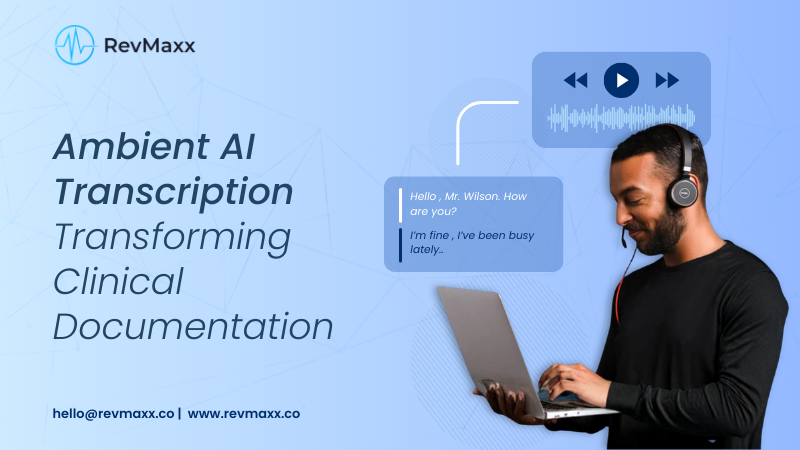
Clinical documentation is a big part of healthcare today. But for many clinicians, it has become a daily struggle. Doctors and nurses often spend hours typing notes into EHR systems. In many cases, documentation takes more time than seeing patients.
Studies show that clinicians can spend 30–40% of their workday on documentation tasks. Many also finish notes at night or on weekends. This extra work is one of the biggest reasons for clinician burnout.
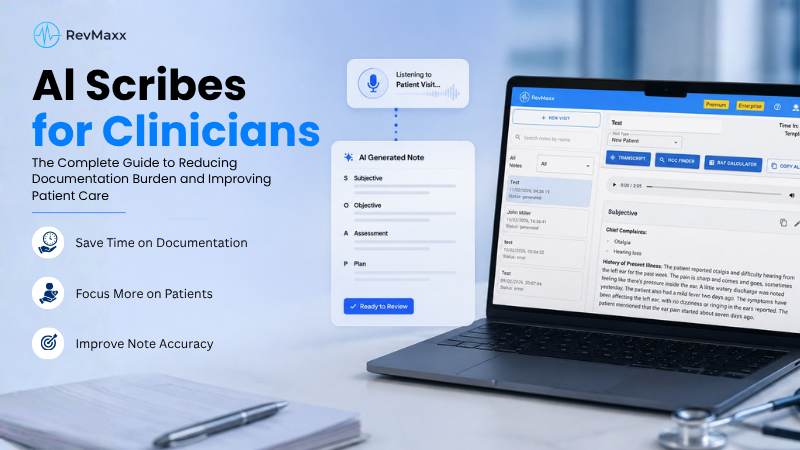
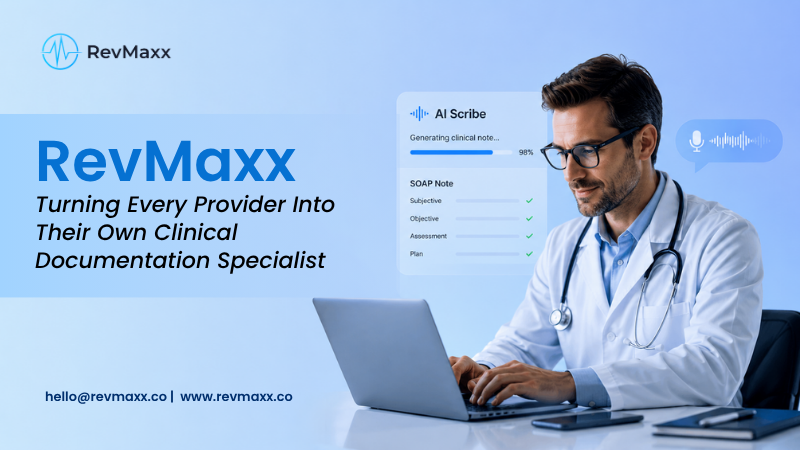
Ambient AI transcription is changing this. It listens to clinical conversations during patient visits. It turns those conversations into structured clinical notes automatically. Clinicians do not need to type or dictate. They can focus on the patient instead of the screen. This technology helps reduce workload, improve note quality, and support better care.
Today, in this blog, we will explain what ambient AI transcription is, how it differs from older approaches like dictation, how it works, its benefits, specialty use cases, compliance considerations, and how to choose the right solution for your practice.
What is Ambient AI Transcription in Healthcare?
Ambient AI transcription is an advanced form of speech-to-text technology. It continuously listens to clinical observations between healthcare providers and patients to seamlessly generate clinical notes in real time. It uses artificial intelligence (AI) and natural language processing (NLP) technology to interpret medical terms, extract meaningful information and format it into specialty-specific structured SOAP (subjective, objective, assessment and plan) notes.
The AI understands medical language. It identifies symptoms, diagnoses, exams, and treatment plans. The notes are structured and ready for review.
Clinicians do not need to give voice commands. They do not need to pause the visit. The system works automatically.
How Ambient AI Transcription Differs from Traditional Dictation
Traditional dictation tools require clinicians to actively record their thoughts, often after a patient visit, and then rely on speech recognition to convert the spoken word into text. This means clinicians must stop what they’re doing or set aside time after the visit to dictate, which still interrupts workflow and adds charting tasks to the end of the day.
On the other hand, Ambient AI transcription:
- Captures every patient-provider interactions as they happen, without extra steps from clinicians
- Generates structured clinical notes in real time rather than raw transcripts
- Understands medical context, including terminology, diagnoses and plan elements.
- Seamlessly integrates with EHR systems so that generated notes are available sooner and more accurately.
Why Ambient AI Transcription Matters Today
Ambient AI transcription matters today because clinicians are under growing pressure to see more patients while completing detailed documentation. Manual charting takes time and often continues after work hours. Ambient AI helps reduce this load by creating notes during the visit, allowing clinicians to focus more on patients and less on paperwork.
Rising Documentation Burden and Clinician Burnout
Documentation is one of the biggest stressors in healthcare. Many clinicians feel overwhelmed by EHR tasks. Charting often continues after clinic hours.
Burnout rates among clinicians remain high. In some studies, more than 50% of clinicians report burnout symptoms. Long hours and documentation pressure are key causes.
Research shows that using ambient AI tools can reduce burnout. In one large study, burnout dropped by over 10% after clinicians used ambient AI for just one month. Clinicians also spent less time charting after work.
Reducing documentation time helps clinicians feel more in control of their day.
Increasing Compliance and Audit Pressure
Documentation is more than just a clinical record; it is a legal and financial instrument. Payers, regulatory agencies like the Centers for Medicare & Medicaid Services (CMS), and internal auditors require accurate, complete, and defensible documentation for billing, compliance, and quality reporting.
Poor documentation can lead to:
- Claim denials or audits
- Lost revenue
- Penalties for non‑compliance
- Legal exposure in malpractice contexts
Ambient AI transcription can support better clinical reasoning capture, reduce errors of omission, and ensure documentation aligns with coding and compliance requirements.
How Ambient AI Transcription Works in Clinical Settings
Ambient AI transcription works by listening to patient and clinician conversations during the visit. It captures important medical details in real time and turns them into structured notes. The system runs quietly in the background, without interrupting the visit, so clinicians can focus on the patient instead of typing or dictating notes.
Capturing Clinical Conversations in Real Time
At the core of ambient AI transcription is its ability to listen and interpret clinical conversations without interrupting the flow of care.
This typically occurs through:
- Secure audio capture via clinic room microphones, devices, or EHR‑linked audio streams
- Real‑time audio processing that interprets spoken language into structured text
- Natural language understanding (NLU) technolgy that differentiates between clinical content (symptoms, diagnoses, plans) and unstructured chatter
The AI continuously processes what it hears, turning it into clinical meaning as clinicians and patients speak.
Background Listening vs Active Dictation
Traditional dictation requires a clinician to actively start and stop recordings, often prompting themselves with structured cues. In contrast, ambient AI:
- Runs in the background without clinician intervention
- Listens continuously throughout the visit
- Identifies key elements (e.g., ROS, HPI, exam findings) automatically
- Reduces cognitive load, allowing clinicians to focus on patient interaction rather than note capture.
Turning Transcription Into Structured Clinical Notes
Modern ambient AI transcription doesn’t just convert speech into text — it transforms clinical conversations into structured, organized medical notes. By understanding medical context, symptoms, diagnoses, and treatment plans, AI automatically formats information into standardized clinical documentation such as SOAP notes. This helps clinicians review, edit, and finalize notes faster while improving accuracy, consistency, and workflow efficiency.
Transcription From Raw Audio to SOAP and Specialty‑Specific Notes
Ambient AI does not just transcribe. It interprets and organizes clinical patient-provider conversation into meaningful clinical documentation.
- SOAP format for primary care and general encounters
- Specialty templates for cardiology, oncology, psychiatry, etc.
- Custom fields such as exam results, test orders, medications, and plan details.
Some systems can even highlight critical decision points like medical decision‑making (MDM) levels and support CPT/E&M code suggestions.
Real‑Time Note Generation Inside the EHR
One of the most powerful aspects of modern ambient AI is its ability to generate notes in real time directly within the EHR workflow. As clinicians see patients, drafted notes appear, ready for clinician review and sign‑off — significantly reducing after‑hours charting and improving same‑day note completion.
Ambient AI Transcription vs Medical Dictation Tools
To understand the impact of ambient AI in healthcare documentation, it is essential to compare it with traditional dictation technologies. Here is the differences discussed below:
Feature | Ambient AI Transcription | Traditional Dictation |
Requires clinician initiation | No (Ambient) | Yes |
Captures context in real time | Yes | No |
Structured note output | Yes | May require editing |
Post-Visit workload | Minimal | Significant |
Ambient AI transcription allows clinicians to keep their eyes on the patient and hands free of keyboards. On the other hand, traditional dictation often feels like a chore added to the bottom of a long day.
Benefits of Ambient AI Transcription for Healthcare Practices
Several tangible benefits make ambient AI transcription a compelling investment for modern healthcare.
Reduced Documentation Time and After‑Hours Charting
One of the most immediate and noticeable benefits clinicians report is less time spent on documentation overall — particularly outside of clinic hours.
Studies show ambient AI scribes can:
- Reduce time spent composing notes by significant percentages
- Cut after‑hours documentation (“pajama time”) dramatically
- Allow clinicians to complete charts during regular work hours
For example, large health systems implementing ambient AI report saving thousands of hours annually per physician group, helping clinicians reclaim evenings and weekends previously spent finishing charts.
Same‑Day Notes and Faster Billing Readiness
With real‑time note generation, practices can complete documentation on the same day as the encounter — boosting:
- Submit claims earlier
- Reduce revenue delays
- Improve cash flow
Faster completed notes mean fewer lost or delayed charges and better cash flow for the practice.
Improved Coding Accuracy and Revenue Protection
Ambient AI transcription systems that are trained to recognize clinical content can help support:
- Accurate ICD-10/CPT/E/M coding
- Documentation that meets payer and CMS guidelines
- Better reflection of medical decision‑making complexity
This level of documentation supports appropriate revenue capture and reduces the risk of denials due to incomplete or ambiguous notes.
Better Patient‑Clinician Interaction
Perhaps most importantly for clinician satisfaction and patient experience, ambient AI facilitates better engagement during patient encounters.
Clinicians report:
- Greater eye contact
- More natural conversations
- Stonger patient trust
This improvement in interaction quality strengthens patient trust and helps clinicians focus on care rather than charting.
Ambient AI Transcription Across Medical Specialties
Ambient AI transcription isn’t one‑size‑fits‑all. It can be tailored to the workflow needs of different specialties.
Primary Care and Multi-Specialty Clinics
In primary care and multi‑specialty visits, clinicians handle a wide range of concerns, symptoms, and care needs in a single encounter.
Ambient AI helps by:
- Handling high‑volume documentation
- Structuring multi‑problem visit notes
- Generating detailed histories and assessments quickly
This is especially helpful in clinics where a single clinician might manage 20–30 patients per day.
Oncology and Complex Care Settings
Oncology and other complex care specialties require documentation that captures nuanced medical reasoning, multi‑step treatment plans, chemotherapy regimens, and risk adjustments.
Ambient AI can support these detailed documentation needs by:
- Recognizing complex treatment language
- Accurately capturing risk‑based decision points
- Aligning documentation with regulatory and compliance expectations
Behavioral Health and Psychiatry
Behavioral health documentation often focuses on narrative detail, mental status exams, risk assessments, and time‑based care elements.
In these settings, ambient AI helps clinicians:
- Accurately capture detailed mental status notes
- Structure time‑based documentation requirements
- Reduce cognitive load associated with narrative note writing
Compliance, Privacy, and Security in Ambient AI Transcription
Ambient AI transcription systems must follow strict privacy and security rules. Patient data should be encrypted and stored safely at all times. Access must be limited to authorized users only. The platform should meet HIPAA standards and support secure data handling, so clinicians can trust that patient information stays protected.
HIPAA and Data Protection Standards
Any ambient AI transcription solution must comply with HIPAA requirements, including:
- Secure data transmission using encryption
- Business Associate Agreements (BAAs) with technology vendors
- Access controls and audit trails
Healthcare providers and practices should verify that the AI platform has strong technical safeguards to protect sensitive audio and text data.
Audit-Ready Documentation
Ambient AI transcription can help practices create more defensible documentation, which is critical during payer audits, compliance reviews, and legal inquiries.
By capturing comprehensive encounter details and organizing them in structured formats, ambient AI reduces risk of incomplete documentation — while still requiring clinician review before sign‑off.
Choosing the Right Ambient AI Transcription Platform
Choosing the right ambient AI transcription platform is important for long-term success. The tool should fit easily into daily workflows and work well with existing EHR systems. It should create accurate, structured notes, support compliance, and protect patient data. A good platform saves time without adding extra steps for clinicians.
Key Features to Look For in Ambient AI Transcription
When considering ambient AI transcription platforms, providers need to prioritize:
- Real‑time structured note generation directly in the EHR
- Coding support for CPT/E/M and documentation compliance
- High accuracy with clinical context understanding
- HIPAA compliance and encryption safeguards
- Customization for specialties and practice workflows
- Seamless EHR integration
These features ensure the platform not only transcribes but adds value to clinical documentation processes.
Common Mistakes to Avoid
Beware of transcription‑only tools that:
- Simply convert audio to text with no clinical structuring
- Lack EHR‑native integration
- Don’t support coding or documentation compliance
- Have weak security or unclear privacy policies
Conclusion: The Future of Ambient AI Transcription in Healthcare
Ambient AI transcription is reshaping clinical documentation by:
- Reducing documentation burden and burnout
- Enhancing patient‑clinician interactions
- Improving note quality and compliance
- Accelerating revenue capture and billing readiness
Healthcare teams today face heavy paperwork and staff shortages. This makes daily work harder for the providers. Ambient AI helps by reducing this load and making work more efficient. When used the right way, with proper oversight and privacy rules, it proves to be more than just a trend. It helps clinicians spend less time writing and more on patient care.
Ambient AI transcription will continue to improve. It will become more accurate, support more specialties, and work better with EHR systems. In the long run, this will help patients get better care and help clinicians feel less stressed and more supported.