

Today, healthcare systems need smarter tools. Manual processes are slow and error-prone. With the right solution, providers can improve cash flow, reduce denials, and build a stronger revenue cycle.
Healthcare organizations today face growing pressure to manage revenue efficiently. One of the biggest challenges they deal with is claim denials. Even a small percentage of denied claims can lead to significant financial loss over time. This is where a claim denial management solution becomes essential.
A well-designed solution does more than just track denied claims. It helps prevent errors, improves billing accuracy, and speeds up reimbursements. It also reduces the workload on staff and improves overall operational efficiency.
In a time where healthcare margins are tight, every dollar matters. A strong denial management strategy supported by the right technology can make a real difference. It helps providers move from reactive problem-solving to proactive revenue protection.
Why Claim Denials Are Growing Challenges in Healthcare
Claim denials are increasing year after year, and this trend is not slowing down. According to an industry report, nearly 41% of providers face denial rates of 10% or more, and 54% say denials are rising. This creates serious financial pressure. Hospitals lose millions every year due to denied claims. On average, hospitals lose around $5 million annually, which is nearly 5% of their net patient revenue.
One major reason is the growing complexity of payer rules. Insurance companies frequently update their policies, making it harder for billing teams to keep up. Even small mistakes like incorrect patient details or missing codes can lead to denials.
Financial impact is also significant. Hospitals lose millions annually due to denied claims. A large portion of these denials is preventable, yet they continue to happen due to manual processes and lack of proper systems.
Another challenge is the administrative burden. Staff spend hours reviewing claims, correcting errors, and resubmitting them. This takes time away from patient care and strategic work.
A modern claim denial management solution helps address these issues. It brings automation, accuracy, and visibility into the process, making denial management faster and more effective.
What is a Claim Denial Management Solution?
A claim denial management solution is a technology platform designed to help healthcare providers handle denied claims efficiently. It works by identifying errors, tracking denials, and guiding teams on how to resolve them.
This solution plays a crucial role in the revenue cycle. It ensures that claims are processed correctly from the start and corrected quickly if issues arise.
There are two key aspects of denial management:
- Prevention – identifying errors before claim submission
- Resolution – fixing denied claims and resubmitting them
Modern solutions combine both. They use data analytics and automation to improve accuracy and reduce rework.
For example, if a claim is denied due to missing authorization, the system can highlight the issue and suggest corrective action. Over time, it also identifies patterns and helps prevent similar errors.
This makes it a powerful tool for improving financial performance and operational efficiency.
Why Your Practice Needs a Strong Claim Denial Management Solution
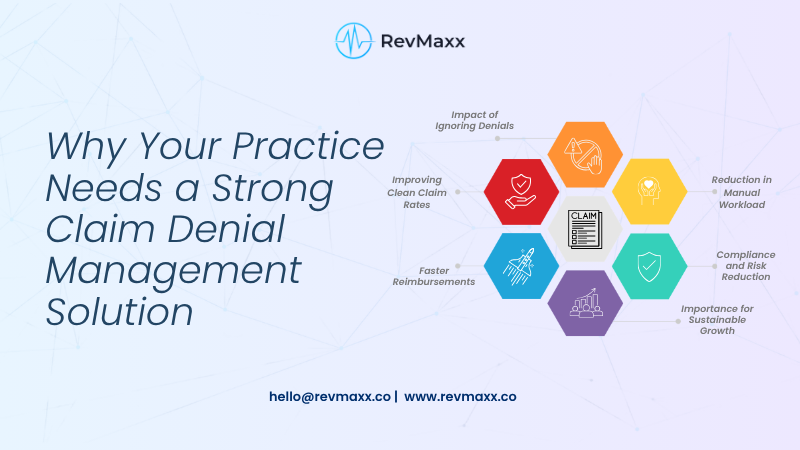
Ignoring claim denials can be costly. Even a small increase in denial rates can lead to major revenue loss. Many providers struggle to recover denied claims due to limited resources and time constraints.
- A strong claim denial management solution helps address these challenges in multiple ways. First, it improves clean claim rates. When claims are accurate from the start, the chances of denial are reduced.
- Second, it speeds up the reimbursement process. Faster payments improve cash flow and financial stability.
- Third, it reduces manual workload. Staff no longer need to spend hours reviewing claims. Automation handles repetitive tasks, allowing teams to focus on higher-value activities.
- Another key benefit is better compliance. The solution ensures that claims meet payer requirements, reducing the risk of penalties.
So, in simple words, having such a solution is not just helpful—it is essential for sustainable growth.
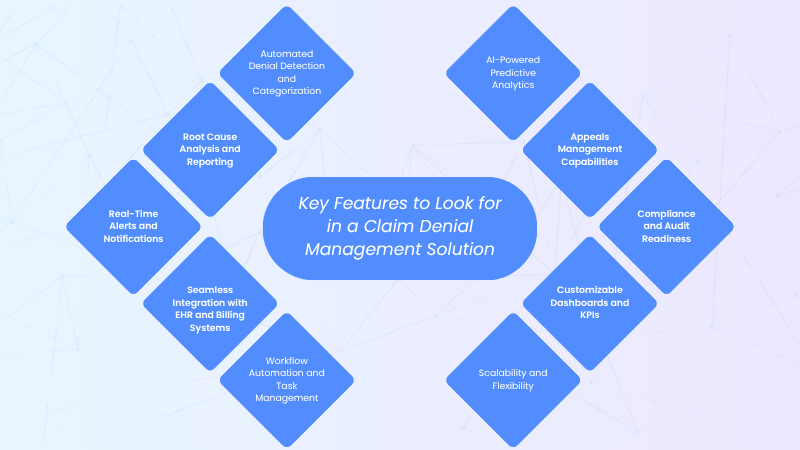
Key Features to Look for in a Claim Denial Management Solution
Choosing the right claim denial management solution is important for improving revenue and reducing claim errors. Not every solution offers the same level of support, so it is important to focus on features that solve real problems. A good solution should not only fix denied claims but also help prevent them. It should make the work easier for billing teams, reduce manual effort, and improve overall efficiency. Features like automation, analytics, and integration play a key role. When these features work together, they help providers reduce denials, speed up payments, and maintain a smooth revenue cycle.
Automated Denial Detection and Categorization
Automation is the foundation of an effective claim denial management solution. The system should automatically detect denied claims as soon as they occur.
It should also categorize them based on the reason for denial. Common categories include coding errors, eligibility issues, missing documentation, and authorization problems. This classification helps teams quickly understand what went wrong. Instead of manually reviewing each claim, they can focus on fixing the issue.
Automation also improves speed. Claims are processed faster, and errors are identified instantly. Over time, this reduces the number of repeated mistakes and improves overall efficiency.
Root Cause Analysis and Reporting
Fixing a denial is important, but preventing it is even more valuable. This is where root cause analysis plays a key role.
A good claim denial management solution should provide detailed reports that show why claims are being denied. These insights help identify patterns and recurring issues. For example, if a large number of denials are due to incorrect coding, the organization can provide additional training to staff.
Advanced dashboards also help track trends over time. This allows providers to measure improvement and adjust strategies. Data-driven insights are essential for long-term success. Without them, denial management remains reactive and inefficient.
Real-Time Alerts and Notifications
In denial management, timing matters. Delayed action can lead to missed deadlines and lost revenue.
A strong claim denial management solution should offer real-time alerts and notifications. These alerts inform staff about denied or at-risk claims immediately. This allows teams to take quick action. They can correct errors and resubmit claims before deadlines pass.
Custom alerts also help prioritize work. High-value claims can be addressed first, ensuring better financial outcomes. This feature improves responsiveness and reduces delays in the revenue cycle.
Seamless Integration with EHR and Billing Systems
Integration is critical for smooth operations. A denial management solution must work well with existing systems like EHR and billing software. Without integration, data must be entered manually. This increases errors and wastes time.
A well-integrated claim denial management solution ensures that data flows automatically between systems. This improves accuracy and reduces duplication. It also provides a complete view of the claim lifecycle. Staff can track claims from submission to payment in one place. This level of visibility is essential for effective revenue cycle management.
Workflow Automation and Task Management
Managing denied claims involves multiple steps. These include identifying the issue, correcting it, and resubmitting the claim.
A good claim denial management solution automates these workflows. It assigns tasks to the right team members and tracks progress. This reduces confusion and improves accountability. Everyone knows their role and responsibilities.
Automation also ensures consistency. Every claim follows the same process, reducing the risk of errors. As a result, teams can handle more claims efficiently and with fewer delays.
AI-Powered Predictive Analytics
AI is transforming healthcare billing. Advanced denial management solutions use predictive analytics to identify potential issues before claims are submitted.
This proactive approach helps reduce denial rates. Instead of fixing errors later, providers can prevent them from happening. Predictive analytics also improves decision-making. It uses historical data to identify trends and suggest improvements. For example, if certain procedures have higher denial rates, the system can flag them for review. This feature helps organizations stay ahead and improve overall performance.
Appeals Management Capabilities
Denied claims do not always mean lost revenue. Many can be recovered through proper appeals. A strong claim denial management solution should support the entire appeals process. This includes creating appeal letters, tracking deadlines, and managing documentation.
Pre-built templates make the process faster and more consistent. Tracking tools ensure that no appeal is missed. This improves success rates and increases revenue recovery. Without proper appeals management, organizations may lose valuable revenue opportunities.
Compliance and Audit Readiness
Healthcare billing must follow strict regulations. Non-compliance can lead to penalties and legal issues.
A reliable claim denial management solution ensures that claims meet all payer requirements. It also maintains proper documentation for audits. This reduces risk and improves transparency.
Audit-ready systems help organizations respond quickly to audits and reviews. Compliance is a critical part of denial management and should never be overlooked.
Customizable Dashboards and KPIs
Data visibility is essential for managing denials effectively. A good solution should offer customizable dashboards that display key metrics. These include denial rates, turnaround time, and appeal success rates.
Real-time insights help leaders make informed decisions. They can identify issues early and take corrective action. Custom dashboards also allow organizations to focus on metrics that matter most to them. This improves performance and accountability across teams.
Scalability and Flexibility
Healthcare organizations grow and change over time. A denial management solution should be able to adapt.
Scalability ensures that the system can handle increased volume and complexity. Flexibility allows customization based on workflow needs. A scalable claim denial management solution supports long-term growth and ensures consistent performance. This makes it a valuable investment for the future.
How to Evaluate the Right Claim Denial Management Solution for Your Practice
Choosing the right claim denial management solution starts with understanding your current challenges.
- Begin by looking at your denial rates and the most common reasons behind them. Industry data shows that denial rates can range between 5%-15% and nearly 90% of denials are preventable. This means there is a clear opportunity to improve with the right solution in place.
- Next, request demos and free trials from vendors. This helps you see how the system works in real situations. Pay attention to how easy it is to use and whether it fits your workflow. A complex system can slow your team down instead of helping them.
- Vendor credibility is also important. Check their experience in healthcare and look for proven results. Reading customer reviews and case studies can give you a clear idea of how the solution performs. For example, many providers report faster reimbursements and lower denial rates after implementing automated tools.
- Do not ignore customer support and training. A good vendor should offer proper onboarding and ongoing help. Without training, even the best system may not be used effectively.
- Finally, make sure the solution meets data security and compliance standards like HIPAA. Healthcare data is sensitive, and any risk can lead to serious issues. A reliable claim denial management solution should protect your data while improving your revenue cycle.
Future Trends in Claim Denial Management Solutions
The future of a claim denial management solution is strongly linked to technology. AI and machine learning are playing a bigger role in how providers manage claims. Many healthcare organizations are already adopting these tools. Reports show that over 60% of providers plan to invest in AI-driven revenue cycle tools like RevMaxx RCM Automation in the next few years. These technologies help analyze large amounts of data and identify patterns that are hard to spot manually.
There is also a clear shift toward predictive and preventive denial management. Instead of fixing denied claims later, providers now focus on preventing them before submission. This reduces rework and improves clean claim rates. Automation is another growing trend. It helps reduce manual tasks and speeds up the entire process.
Real-time insights are becoming more important as well. Providers want instant visibility into claim status so they can take quick action. Another key trend is integration with end-to-end RCM platforms. This creates a connected system where data flows smoothly across all stages. Overall, these trends are helping providers reduce denials and improve efficiency.
The Conclusion
Choosing the right claim denial management solution can make a big difference in your financial performance. Key features like automation, predictive analytics, integration, and real-time reporting should be a top priority. These features help reduce errors and improve claim accuracy.
A proactive approach to denial management is now essential. Instead of reacting to denials, providers need to prevent them from happening. Studies show that improving clean claim rates by even 5% can significantly increase revenue and reduce operational costs.
The right solution also improves efficiency. It reduces manual work, speeds up reimbursements, and helps teams stay organized. At the same time, it ensures compliance with payer rules and reduces risks.
Investing in a scalable, AI-driven solution is a smart move for long-term success. As healthcare becomes more complex, providers need tools that can adapt and grow with them. A strong claim denial management solution is not just a tool—it is a long-term investment in financial health and operational stability.