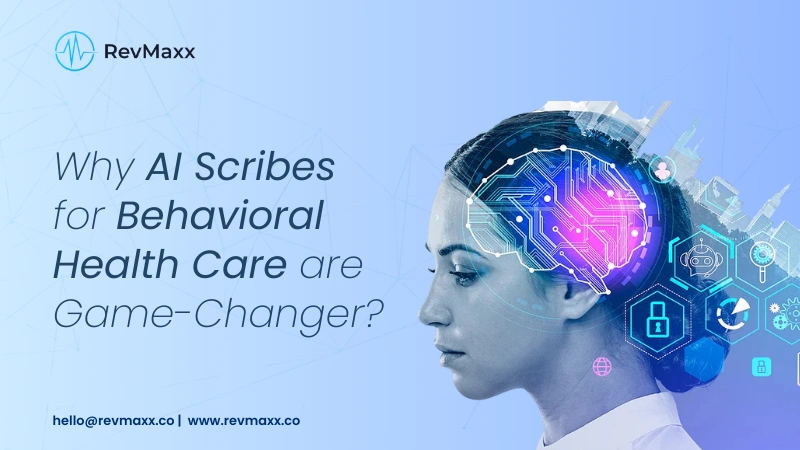
Mental health care professionals face challenges of balancing patient care and endless documentation work. The AI scribes for behavioral health are here to take care of these time-consuming paperwork tasks so that providers can fully concentrate on their patients.
In mental healthcare, accurate documentation is crucial. But due to heavy administrative burden, it often costs after-hours charting, which causes physician burnout. A study reveals that 60% of behavioral healthcare professionals face high levels of burnout due to documentation. AI scribes reduce this workload by generating structured notes during patient visits.
Read this blog and learn how AI scribes for behavioral health transform the documentation process.
What is AI Scribe in Healthcare?
A healthcare AI scribe is a computer program that assists physicians and other health care providers in clinical documentation. Behind the scenes during patient encounters, it quietly goes to work, carefully monitoring doctor-patient discussions and comprehending and creating structured clinical notes. Physicians are now free to entirely concentrate on what is most important: providing quality patient care. Instead of spending time on managing burdensome paperwork, physicians can now save their valuable time.
It uses advanced machine learning and natural language processing (NLP) technology to listen and transcribe patient-provider interaction into accurate notes. AI medical scribe reduces the administrative workload by making the documentation process faster and more accurate. They also integrated with popular EHR (electronic health record) systems to securely update and organize patient information.
How Is AI Used in Behavioral Health?
AI or artificial intelligence, has become a valuable support system in behavioral healthcare. Instead of replacing human care, medical scribe AI makes mental healthcare more accessible, faster, and more personalized.
Early Detection of Health Issues:
One of the main uses of AI in behavioral health is early detection. It can identify mental health concerns by analyzing patient-doctor conversation, EHRs and patterns in wearable devices. This helps healthcare providers to provide better treatment.
AI in Therapy Sessions:
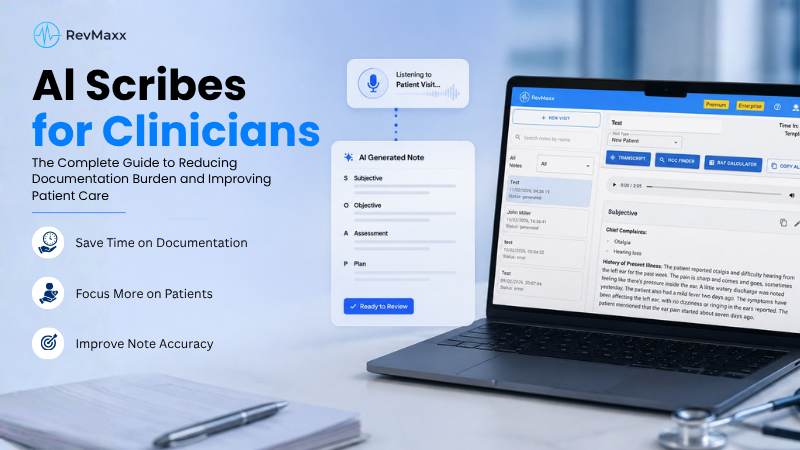
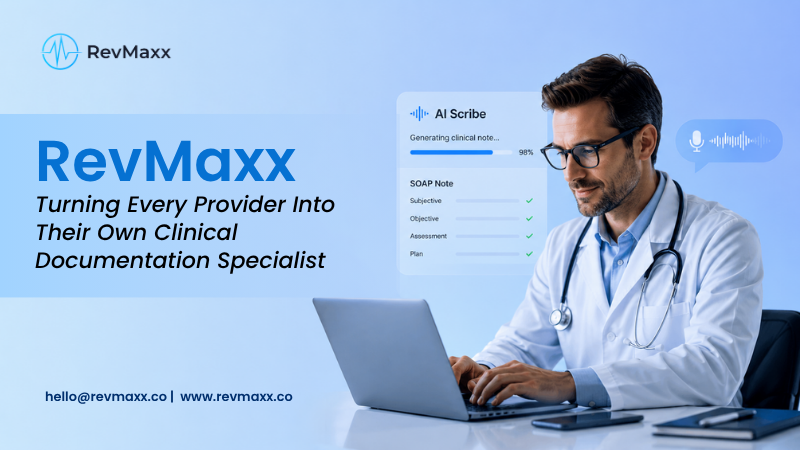
AI voice recognition tools carefully listen during counselling sessions and create accurate SOAP notes. Even chatbots and virtual assistants provide round-the-clock support and manage patient scheduling. This allows therapists and other behavioral healthcare professionals to focus more on patient care rather than paperwork.
Personalized Care Plan:
An AI scribe can study a patient’s medical history, lifestyle, and progress notes to offer a tailored treatment plan. A mental healthcare plan is not one-size-fits-all. This advanced technology carefully analyzes the progress report and plans accordingly to meet the unique needs of each individual.
Is It Legal to Use AI Scribes in Behavioral Health?
Yes, using AI scribes for behavioral health is legal. But it is important for healthcare providers to follow some important rules and guidelines. Behavioral healthcare providers deal with highly sensitive information. That is why AI medical scribes must meet strict privacy and security standards.
U.S. healthcare professionals are bound to comply with HIPAA, or the Health Insurance Portability and Accountability Act, guidelines and regulations. Thus, AI medical scribes employed in behavioral healthcare maintain confidentiality of patient information and safeguards against unauthorized use. When selecting AI tools for healthcare, providers must find out the one that is HIPAA-compliant and provides robust encryption to protect records from cyber risks.
Another important factor is patient consent. Before using AI scribes in therapy or counselling sessions, physicians should inform patients about this to get their approval. It ensures patients feel comfortable by knowing how their data is recorded and stored.
So, on a simple note, using AI scribes for behavioral healthcare is legal if the providers follow patient privacy and compliance rules and maintain transparency.
Is AI Scribe HIPAA Compliant?
Patient privacy is one of the biggest concerns in healthcare. That is why many providers raise a question: Is an AI scribe HIPAA compliant? Well, the answer depends on if the scribing tool follows the HIPAA rules strictly.
HIPAA establishes the benchmark for safeguarding a patient’s health-related data in an impenetrable manner. That is to say, while on patient visits, one should safeguard the patient’s personal information, medical charts, and progress notes. Therefore, an HIPAA-certified AI scribe for mental health must maintain secure storage of data, encrypted communication, and restricted access granted only to duly authorized users.
Most AI scribes for mental health care employ robust security features, such as end-to-end encryption, audit trails, and cloud hosting inside a safe healthcare framework. In turn, it minimizes paperwork burden, enhances clinical note accuracy, and provides doctors with additional time for patient care.
Which Is the Best AI Scribes for Behavioral Health?
Behavioral healthcare documentation needs accuracy, empathy, and strict privacy protection of patient details. So, while choosing the best AI scribe, it is important to find the one that understands the sensitive nature of mental health care.
Here are the top 3 AI medical scribes for behavioral healthcare providers:
RevMaxx:
An AI medical scribe solution specially designed for behavioral healthcare providers. Its natural language processing technology carefully captures and transcribes patient-doctor interaction into detailed SOAP notes in real-time.
Key Features:
- Creates SOAP notes within a few seconds.
- Supports multiple languages and has available customized templates for various specialties.
- Instantly generates 95% accurate clinical notes with accurate clinical codes (like ICD-10, CPT, E/M, and HCC) for proper treatment and better reimbursement.
- It integrates seamlessly with popular EHR systems, like eCW, Epic, Nextech etc.
- Fully HIPAA-compliant and ensures patient data security.
- Suitable for solo practitioners, small clinics, and large healthcare organizations.
Freed:
Freed AI is the most widely adopted AI scribe among clinicians across different specialties, including behavioral health. It is trusted by more than 20000 users per day to simplify the clinical documentation process.
Key Features:
- Supports multiple languages and is available on any device.
- SOAP note generation is done within 1-5 minutes.
- Adapts to any clinical formats, styles, and templates.
- HIPAA-compliant with privacy standards.
- Scalable for small and large healthcare organizations.
Heidi:
An ambient AI scribing tool designed to handle documentation workload for behavioral healthcare professionals. It streamlines clinical documentation without interrupting workflow.
Key Features:
- Customized templates are available for various specialties.
- Multilingual support to ensure seamless medical documentation.
- Real-time clinical note generation for mental healthcare professionals.
- Adaptive learning is available for individual preferences and needs.
The Final Thoughts
AI scribes are transforming behavioral health by easing documentation workload. It reduces burnout and allows providers to focus on patient care. While many tools are available, not all are built with the unique needs of mental health in mind. That’s where RevMaxx tool stands out as one of the best AI scribes for behavioral healthcare.
With its HIPAA-compliant platform, accurate SOAP notes, and seamless EHR integration, RevMaxx helps therapists, psychiatrists, and counselors spend less time on paperwork and more time caring for patients.
Want to experience it? Book a demo today.