
Specialty pharmacy documentation automation is becoming essential as specialty medications grow more complex and documentation demands continue to rise. The specialty pharmacy process involves a large number of expensive and complicated medications. These types of medications are found in almost every area of healthcare, including oncology, autoimmune disorder treatment, multiple sclerosis, and rare diseases. Each medication prescribed through specialty pharmacies requires very detailed documentation and prior authorizations, frequent follow-up appointments, and tracking for compliance to established standards.
Besides these, pharmacist workload is increasing. According to a 2023 report of the National Academies of Sciences, Engineering, and Medicine, healthcare professionals are experiencing record levels of burnout due to administrative burden. This is where specialty pharmacy documentation automation powered by Ambient AI is changing the landscape.
Let’s read this blog to learn more about this.
Why Specialty Pharmacy Documentation Is Reaching a Breaking Point?
Specialty pharmacies do far more than dispense medication. They manage:
- Prior authorizations (PAs)
- Insurance verification
- Clinical monitoring
- REMS documentation
- Patient adherence tracking
- Appeals and denial management
According to the report, specialty medications account for more than 50% of total drug spending in the U.S., even though they represent a small percentage of prescriptions. These therapies require heavy documentation to justify cost and medical necessity.
Prior authorizations are a major pain point. The American Medical Association (AMA) reports that 94% of physicians say prior authorization delays patient care. Specialty pharmacies deal with these delays daily, often submitting extensive clinical documentation multiple times.
As a result, there are
- Slower therapy starts
- Increased denial rates
- Staff overtime
- Higher operational costs
- Manual documentation is no longer sustainable.
What Is Specialty Pharmacy Documentation Automation?
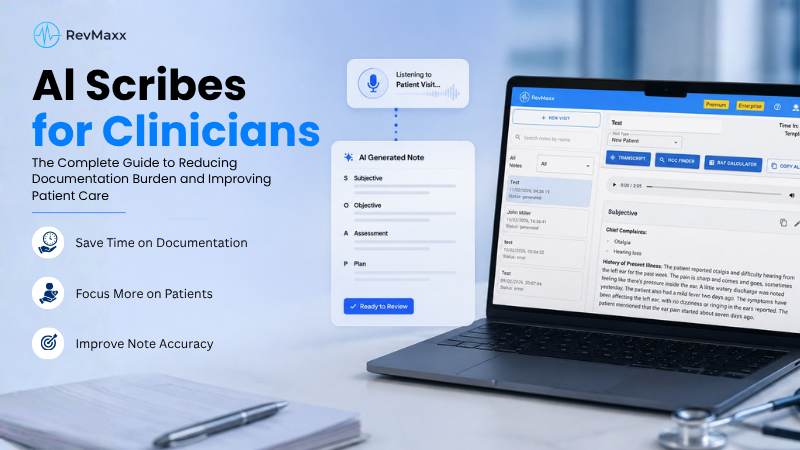
The automation of specialty pharmacy documentation utilizes technological resources to eliminate the need for manual data entry and charting. With the addition of ambient AI, the system allows for clinically structured documentation by listening in a secure manner to the conversations between patients and pharmacists. As the technology listens to the conversation, it documents by creating structured notes so that pharmacists can always maintain their focus on patients and not have to type after each call.
- Symptoms
- Side effects
- Adherence discussions
- Therapy response
- Lab values mentioned
- Insurance or PA updates
The ambient AI or you can say AI medical scribe for specialty pharmacist then organizes the information into a clean, structured format that can be reviewed and approved by the pharmacist.
The key difference from traditional documentation tools is that Ambient AI works in real time. It does not require manual dictation or after-hours charting.
Key Documentation Challenges in Specialty Pharmacy
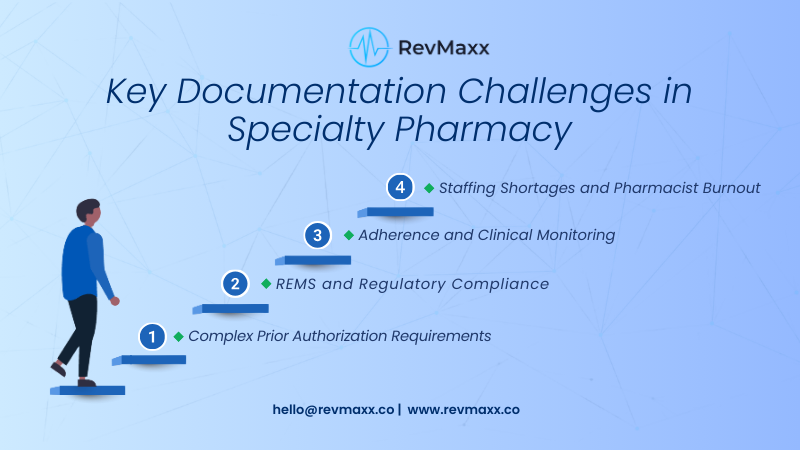
Specialty pharmacy documentation requires detailed tracking of clinical as well as regulatory and financial needs. Healthcare teams have to handle extensive prior authorization, multiple systems and medication adherence. All of these makes the documentation process time-consuming and challenging.
1. Complex Prior Authorization Requirements
Every payer has different rules. Specialty drugs often require:
- Diagnosis codes
- Lab results
- Step therapy documentation
- Clinical notes proving failure of previous therapies
A 2022 American Medical Association survey found that practices complete an average of 41 prior authorizations per physician per week. Specialty pharmacies supporting multiple providers may process hundreds weekly.
Incomplete documentation leads to denials. Each denial means resubmission, more phone calls, and treatment delays.
2. REMS and Regulatory Compliance
Some specialty medications fall under FDA Risk Evaluation and Mitigation Strategies (REMS). These programs require strict documentation. For example, Oncology and immunology drugs may require:
- Regular lab value documentation
- Pregnancy tests
- Adverse event monitoring
- Patient Counseling confirmation
Failure to document properly can lead to compliance risks and audit findings. AI automation ensures consistent tracking and structured audit-ready documentation.
3. Adherence and Clinical Monitoring
Specialty pharmacies conduct regular follow-up calls. Pharmacists ask about:
- Missed doses
- Side effects
- Therapy effectiveness
- Lifestyle changes
Manually documenting these conversations takes time. It also increases the risk of missing important details. Automation ensures every clinically relevant delta is captured accurately.
4. Staffing Shortages and Burnout
Pharmacists working in hospitals and specialty pharmacies all over the country are feeling the effects of pharmacy workforce shortage according to the American Society of Health System Pharmacists. Spending hours completing documentation rather than providing clinical care reduces productivity (which means the pharmacist is doing less) and increases burnout (the pharmacist has too much work to do). As a result, the staff turnover is increased. Ambient AI Automation provides a way for pharmacies to reduce their administrative work and retain their skilled workforce.
How Specialty Pharmacy Documentation Automation Changes the Scenario?
With the help of artificial intelligence, specialty pharmacy documentation automation is finally changing the landscape. By reducing manual data entry process and regular clinical workload, ambient AI can improve clinical accuracy and enhance compliance.
Real-time Clinical Note Generation
Ambient AI captures patient-provider conversations and generates structured notes automatically. These notes can follow SOAP or customized specialty pharmacy templates.
Benefits include:
- No after-hours charting
- Consistent documentation
- Faster chart completion
Pharmacists review and approve notes before final submission.
Automated Prior Authorization Support
AI can extract key clinical data required for prior authorization forms, such as:
- Diagnosis
- ICD-10 codes, CPT, E/M codes
- Previous therapy history
- Lab results
This reduces manual data collection and speeds up submission. Faster submissions often lead to faster approvals, improving patient access.
Intelligent REMS Documentation
Automation can flag required lab monitoring or safety documentation. It can:
- Track therapy milestones
- Capture lab values mentioned during calls
- Ensure required counseling is documented
This strengthens compliance and audit readiness.
Seamless Integration with EHR and Pharmacy Systems
Effective specialty pharmacy documentation automation integrates with:
- EHR systems
- Pharmacy management software
- Billing platforms
Integration ensures data flows directly into the patient record without duplicate entry. Minimal workflow disruption is critical for adoption.
Benefits of Specialty Pharmacy Documentation Automation
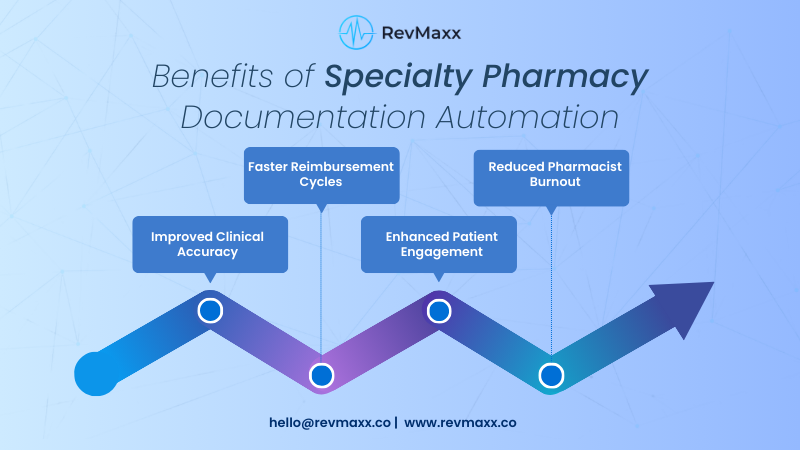
With the help of specialty pharmacy documentation automation, healthcare organizations are now transforming complex clinical workflows. While cutting time-to-therapy by up to 60% it is significantly reducing the risk of medication error. It streamlines prior authorizations with higher first-pass approval rates, like around 70%. As a result, organizations can experience better patient adherence, faster treatment initiation, and more efficient operations. This is allowing pharmacy staff to shift their focus from manual paperwork to delivering quality care to their patients.
Improved Clinical Accuracy
In specialty pharmacies, small details matter. A missed lab value, an incomplete note about side effects, or unclear documentation of therapy failure can lead to prior authorization denials or compliance issues.
Specialty pharmacy documentation automation helps reduce these risks by creating structured and consistent notes. Instead of free-text entries that vary from one pharmacist to another, automation organizes information into clear sections such as:
- Diagnosis
- Therapy history
- Lab monitoring
- Adherence updates
- Adverse events
Structured documentation reduces missing details because the system prompts capture of key clinical elements during the conversation. It also standardizes note formats across the entire pharmacy team.
Better Payer Submissions
Insurance companies require specific documentation. When information is complete and clearly organized, prior authorization requests are stronger and easier to review.
Improved Audit Outcomes
Accreditation bodies and payer audits require proof of monitoring, counseling, and follow-up. Structured documentation creates consistent records that are easier to track and defend.
Stronger Clinical Communication
Clear notes improve coordination between pharmacists, physicians, nurses, and case managers. Everyone sees the same organized information, which reduces confusion and duplicate work.
Faster Reimbursement Cycles
Denied or delayed claims are one of the biggest financial challenges in healthcare. According to Change Healthcare’s Revenue Cycle Index, claim denials cost providers billions of dollars every year. Many denials are linked to incomplete or unclear documentation.
In specialty pharmacy, reimbursement often depends on:
- Prior authorization approval
- Documentation of medical necessity
- Proof of step therapy
- Ongoing monitoring notes
When documentation is incomplete, payors request additional information. That leads to resubmissions and payment delays.
Specialty pharmacy documentation automation helps by ensuring required details are captured the first time.
It supports:
- Faster PA approvals: When all required clinical criteria are clearly documented, payers can review requests more quickly.
- Reduced resubmissions: Complete documentation lowers the risk of missing information that triggers rejection.
- Fewer reimbursement delays: Clean documentation supports smoother billing workflows and faster cash flow.
Enhanced Patient Engagement
Specialty pharmacy is relationship-driven. Many patients are managing serious or chronic conditions such as cancer, multiple sclerosis, or autoimmune diseases. They often need regular follow-up calls and emotional support.
When pharmacists spend large portions of the call typing notes, patient interaction suffers. Conversations can feel rushed or transactional.
With specialty pharmacy documentation automation, notes are captured automatically during the discussion. This allows pharmacists to:
- Maintain eye contact (in video settings)
- Listen actively
- Ask deeper follow-up questions
- Provide better counseling
When pharmacists are more present, patients feel heard and supported.
This leads to:
- Improved adherence: Patients are more likely to follow therapy plans when they trust and connect with their pharmacist.
- Better therapy outcomes: Open conversations encourage patients to report side effects early, allowing faster clinical intervention.
- Higher patient satisfaction: Patients appreciate unhurried conversations and clear explanations.
Reduced Burnout
Administrative burden is one of the leading causes of clinician burnout. The National Academy of Medicine has highlighted documentation overload as a major contributor to stress among healthcare professionals.
Pharmacists in specialty settings often complete documentation after hours. They manage:
- Prior authorization paperwork
- Appeal letters
- Compliance documentation
- Follow-up notes
This extra work reduces work-life balance and increases fatigue.
Specialty pharmacy documentation automation reduces repetitive data entry and after-hours charting. When documentation is completed in real time:
- Workdays become more predictable
- Overtime decreases
- Mental fatigue is reduced
Over time, this improves job satisfaction and staff retention. Retaining experienced specialty pharmacists is critical. Their clinical knowledge directly impacts patient safety and financial performance.
Conclusion: The Future of Specialty Pharmacy Documentation
New therapies often come with strict payer rules, additional monitoring protocols, and expanded REMS requirements. Value-based care contracts are also becoming more common. This means specialty pharmacies must not only dispense medication but also prove outcomes, adherence rates, and clinical effectiveness.
Documentation complexity will increase, not decrease. In the future, specialty pharmacies will be expected to:
- Track real-world outcomes
- Report adherence metrics
- Document therapy milestones
- Provide audit-ready compliance records
- Share structured data with providers and payers
Manual documentation processes cannot keep up with this level of demand. Specialty pharmacy documentation automation powered by Ambient AI tools like RevMaxx offers a path forward. Instead of adding more staff to handle growing paperwork, pharmacies can use intelligent systems to manage documentation at scale.