
Healthcare professionals work in environments where patient needs, administrative tasks, and scheduling challenges all compete for their attention. When a facility runs short on staff, that pressure spreads quickly, from daily workflows to the quality of patient care.
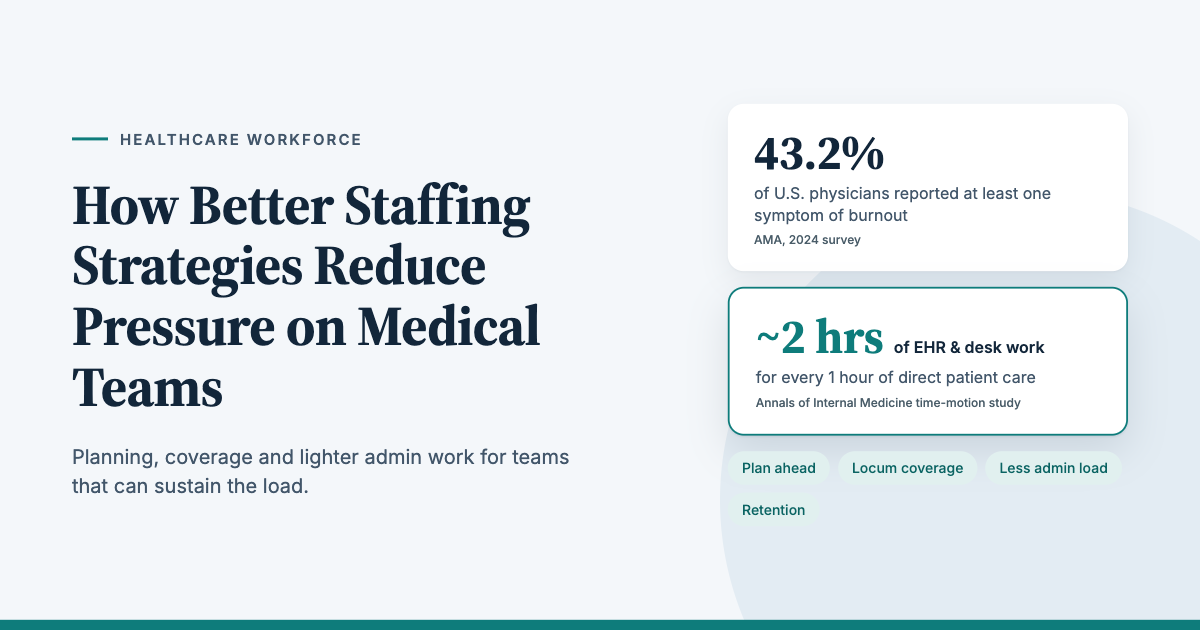
The numbers show how real this strain is. In the American Medical Association’s 2024 survey of nearly 18,000 physicians, 43.2% reported at least one symptom of burnout. That is an improvement from 53% in 2022, but it still means more than four in ten doctors are struggling. On the nursing side, the 2026 NSI National Health Care Retention & RN Staffing Report put hospital RN turnover at 17.6%, with an average cost of about $60,000 for each staff RN who leaves.
Effective staffing strategies help healthcare organizations maintain adequate coverage, share responsibilities more evenly, and create workloads people can sustain. Below are the approaches that make the biggest difference and how to put them into practice.
Use Temporary Coverage to Fill Short-Term Gaps
One of the fastest ways to relieve pressure is to secure locum doctor coverage when a permanent physician is unavailable or demand suddenly rises. Temporary physicians can fill gaps caused by vacations, medical leave, and unexpected departures, and they can absorb spikes in patient volume.
The benefit goes beyond keeping clinics open. Without temporary coverage, the missing physician’s patients usually land on colleagues who are already at capacity. Locum support lets a facility keep providing care without pushing permanent staff into extra shifts.
Plan Ahead for Staffing Needs
Waiting until a shortage becomes urgent makes gaps harder and more expensive to fill. Proactive planning lets administrators spot problems early and arrange coverage before daily operations are affected.
A practical planning routine includes:
- Reviewing schedules monthly to catch overlapping leave and thin weekend or night coverage.
- Tracking seasonal demand, such as flu season or regional patterns that raise patient volume.
- Monitoring known departures, including planned retirements, parental leave, and extended absences.
- Keeping relationships with staffing agencies active, so temporary professionals can be brought in quickly when an unexpected need comes up.
Planning ahead reduces disruption and gives medical teams confidence that support will be there when they need it.
Distribute Workloads More Effectively
When a department is short-staffed, the remaining physicians, nurses, and support staff absorb the extra work through longer hours and larger patient loads. Over time this leads to fatigue, frustration, and lower job satisfaction, the same conditions that push people to leave.
Better staffing strategies spread that work more evenly. Administrators can review patient volumes by department and time of day, compare them against current staffing levels, and adjust schedules to match actual demand instead of historical templates. When teams have enough qualified people, each clinician can focus on their core responsibilities, and workflows run more smoothly.
Reduce the Administrative Load on Clinicians
Staffing pressure is not only about headcount. A large share of a clinician’s day goes to work that does not involve patients. A widely cited time-motion study published in Annals of Internal Medicine found that physicians spend nearly two hours on EHR and desk work for every hour of direct patient time, plus one to two more hours each night after work. In the AMA’s 2024 survey, more than a third of physicians said EHR, in-basket, and documentation demands pull time away from patient care.
Reducing this load effectively adds capacity without adding staff. Common approaches include:
- Delegating clerical tasks to medical assistants or dedicated support staff where scope of practice allows.
- Simplifying documentation templates and removing fields that no one uses.
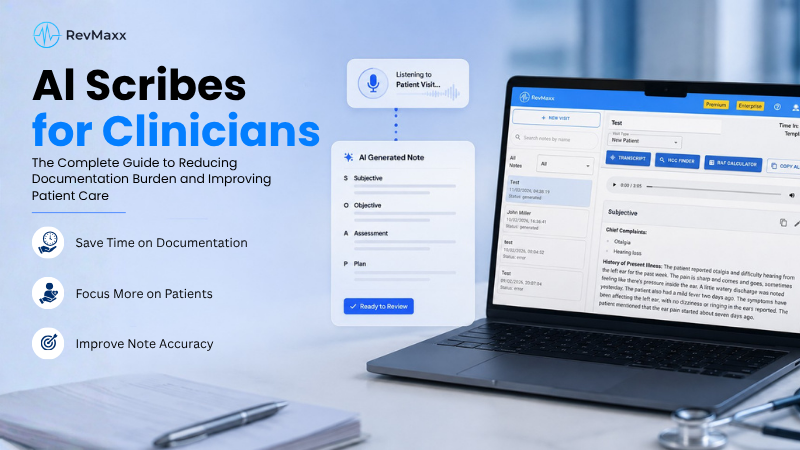
- Using ambient documentation tools. An AI medical scribe drafts the visit note from the patient conversation for the clinician to review and sign, which can cut after-hours charting. Our overview of AI scribes for clinicians covers how these tools work and what to evaluate before adopting one.
- Automating routine front-office work such as appointment booking and reminders with tools like an AI front desk, so front-desk staff can focus on patients in the clinic.
Any tool that touches clinical documentation should be reviewed for accuracy, privacy, and HIPAA compliance, and clinicians should always review AI-drafted notes before signing.
Improve Communication Between Departments
Effective staffing involves more than deciding how many people are needed. Communication between administrators, department managers, and clinical teams matters just as much.
Clinicians on the floor see problems that may not show up in scheduling data, such as recurring bottlenecks, unsafe patient ratios on certain shifts, or tasks that land on the wrong role. Short, regular check-ins or huddles give them a way to raise these concerns before they turn into burnout or turnover.
Clear communication also helps temporary and permanent staff work together. When everyone understands their responsibilities, handoff process, and escalation path, teams coordinate patient care more safely and efficiently.
Make Retention Part of the Staffing Plan
Every experienced clinician who leaves creates a new vacancy, raises the workload for those who stay and adds recruiting and onboarding costs. Departments that are consistently understaffed often fall into a cycle where turnover leads to heavier workloads, which leads to more turnover.
Retention-focused strategies include:
- Maintaining safe, consistent coverage so no one is routinely stretched thin
- Offering flexible or self-scheduling options where operations allow
- Acting on staff feedback and showing what changed as a result
- Providing mentorship for new hires during their first year
- Building clear career paths for nurses, physicians, and support staff
Keeping experienced staff helps facilities run smoothly and maintain continuity of care and control staffing costs.
Building a More Sustainable Healthcare Workforce
Reducing pressure on medical teams is not a one-time project. It requires regularly reviewing staffing needs and adjusting as patient volumes, workforce availability, and technology change.
The most effective organizations combine several approaches: thoughtful scheduling, temporary coverage for gaps, lighter administrative workloads, open communication, and real investment in retention. Together, these build a more sustainable workforce that benefits both medical professionals and the patients they care for.
Frequently Asked Questions
What causes staffing pressure in healthcare?
Common causes include unfilled positions, unexpected absences, rising patient volumes, high turnover, and administrative work such as documentation that takes time away from patient care.
How can hospitals reduce pressure on medical staff?
Hospitals can plan staffing ahead of demand, use temporary or locum coverage for gaps, distribute workloads based on real patient volumes, reduce administrative tasks and invest in retention through flexible scheduling and mentorship.
Does reducing documentation work help with staffing shortages?
It can. Time-motion research shows physicians spend nearly two hours on EHR and desk work for every hour with patients. Reducing that burden frees up clinical capacity and can lower burnout, one of the main drivers of turnover.
What is locum tenens coverage?
“Locum tenens” refers to physicians and other clinicians who temporarily fill a position, for example, during a leave of absence, a vacancy, or a period of high patient demand.
Sources
- American Medical Association. U.S. physician burnout hits lowest rate since COVID-19 (2024 survey data).
- American Medical Association. Clicks and keyboards stealing face time with patients (on the Annals of Internal Medicine time-motion study).
- Becker’s Hospital Review. The cost of nurse turnover in 10 points, 2026 (NSI National Health Care Retention & RN Staffing Report).