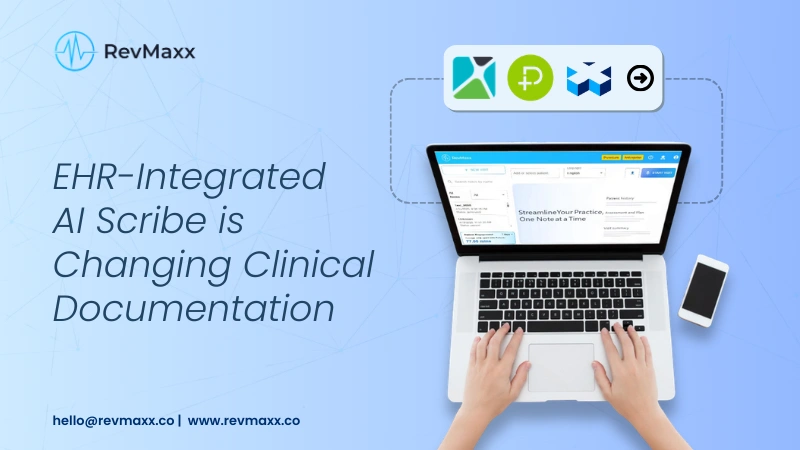
Physicians and healthcare professionals make use of electronic health record (EHR) systems to store patient information. But the catch is, entering all this information into the system manually takes time and even at times results in inaccuracies. So, it is not possible for physicians and healthcare professionals to manage the burden of clinical and administrative paperwork. That is where EHR-integrated AI scribe steps in. These are smart tools that listen, understand, and document patient visits automatically and directly upload inside the EHR system.
Instead of doctors typing notes or spending hours after clinical work completing records, AI scribes handle the documentation in real time. This enables practitioners to pay less attention to the computer screen and more to the patient discussion.
Therefore, let’s read this blog slowly and understand what EHR-integrated AI scribe is and how it revolutionizes healthcare documentation.
What is EHR-Integrated AI Scribe?
An AI scribe incorporated into an EHR is basically a high-level electronic assistant that runs in collaboration with or inside an electronic health record (EHR) system. It listens to patient-clinician conversations, translates medical lingo, and populates clinical documentation, prescriptions, and coding automatically in the EHR.
Understanding the Concept
“EHR-integrated AI scribe” refers to the smart healthcare tools powered by artificial intelligence to lower the burden of manual documentation. These systems capture, transcribe, and organize clinician-patient communications and other associated documentation automatically into the EHR. It uses speech recognition, natural language processing (NLP) and machine learning-based technologies to interpret multiple medical dialogues and create real-time structured clinical SOAP (Subjective, Objective, Assessment, Plan) notes.
How It Differs from Traditional Scribe
Traditional medical scribes, present in-person or virtually during the visit. They shadow clinicians on visits, hearing the consultation, typing out the notes, and entering data into the EHR, and then present to providers to review and sign.
Human scribes can be useful, but even so, they have scheduling, cost, training, and variability problems. This is where EHR-integrated AI scribe makes a difference.
- Operates 24/7 without any intervention
- Can handle large volumes of patient visits with consistent speed and accuracy
- Less expensive
- Integrates directly and seamlessly with popular EHR systems, reducing duplicate entry and transcription errors
- Offers analytics, coding automation and workflow optimisation that human scribes struggle to match.
The Need for AI-Powered EHR Integration in Healthcare
Precise medical coding is the most significant aspect of contemporary healthcare management. It aligns patient care automatically with correct billing,The need for automation in healthcare documentation is bigger than you ever think. Many physicians and healthcare staff say documentation and administrative paperwork take away the joy of practicing medicine. EHRs are meant to make the clinical documentation process easier, but they often add more clicks and more frustrations to a physician’s life. EHR-integrated AI scribe solve that problem by combining automation with artificial intelligence. They are helping doctors regain their valuable time while ensuring every clinical note is complete and compliant.compliance, analytics, and reporting of public health. A minor coding error can lead to claim denial, compliance penalties, and incorrect patient information.
Documentation Overload in Modern Medicine
Physicians often find themselves spending large portions of their day not with patients, but on EHR screens, navigating templates, filling forms, entering codes, and meeting regulatory requirements. According to the AMA study report, healthcare providers spend almost 50% of their working hours daily on EHR tasks. The constant need of documenting everything, from symptoms to treatment plans to billing codes, creates “Documentation Overload.” AI scribes are there to help doctors to get rid of this burden.
The Gap Between Patient Interaction and Record Keeping
During visits, doctors often switch their attention from their patients to screens to take notes. This shift can impact the quality of patient-provider interaction, clinician satisfaction, and even patient trust. AI scribes are here to fill the gap. They quietly listen in the background, capture important details, and update the EHR without disturbing the flow of conversation.
The Role of an AI Scribe in Bridging the Gap
EHR-integrated AI scribe is bridging the gap between patient-provider communication and clinical record keeping. It silently document all significant information in real time as they operate behind the scenes. It allows the clinician to engage more fully with the patient with the confidence of knowing that the record-keeping is timely, accurate, and inclusive. It is liberating healthcare providers to do what they do best: provide care to their patients.
Key Benefits of EHR-Integrated AI Scribe
AI scribe is not only about automation. It is about returning physicians and healthcare staff their precious time, enhancing accuracy, and making healthcare systems operate more efficiently. Let us take a look at some of its prime advantages.
Improved Efficiency and Time Savings
One of the greatest benefits is how quickly AI scribes are able to process paperwork: capturing, transcribing, organizing, and refreshing notes into the EHR much quicker than by hand. AI scribes have the ability to free up to 2–3 hours a day that physicians typically spend on charting. That is, rather than leaving late to complete notes, physicians can leave work on time. They can now devote less time to ‘after-hours’ charting and more time to direct patient care or personal well-being. This efficiency also allows them to see more patients per day without feeling hurried.
Reduced Physician Burnout
Burnout is among the largest healthcare challenges today. Research indicates that clinical documentation burden and EHR are responsible for stress among clinicians. By reducing that burden, AI scribes contribute to clinician well-being, reclaim time, and reduce mental load. It is empowering physicians to do what they care about the most: treat patients. It results in improved morale and an improved balance of work life.
Higher Accuracy and Better Compliance
AI scribes take advantage of templated formats, coding assistance (such as ICD-10, CPT) and error-proofing algorithms to minimize the possibility of omitting a vital data point, mis-coding or producing incomplete notes. That translates to better quality reports, improved adherence to regulatory compliance and potentially fewer denials or audits.
Seamless Data Flow Across EHR Systems
Modern medical care often requires multiple systems, different specialties, and data sources. AI scribes integrated with EHR speak directly to installed EHR, so copying or pasting between systems is not necessary. Easy data transfer is enabled, so notes generated are attuned to EHR fields, templates, patient data, and audit trails. Replication and transcription error are reduced by integration.
Enhanced Patient Satisfaction
When doctors can devote their undivided attention to patients, listening attentively and making eye contact, it makes visits more personal. Patients feel respected, cared for, and heard. The outcome is increased satisfaction, a better patient-provider relationship, and perhaps improved clinical outcomes.
How EHR Integration Works with AI Medical Scribe
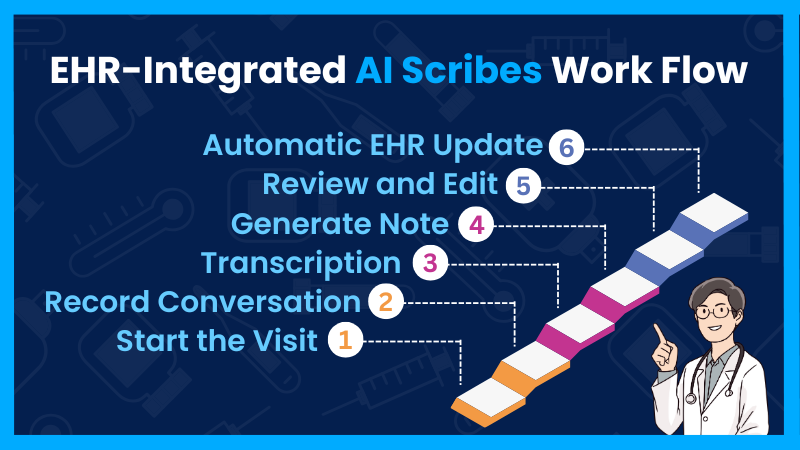
Here is a typical workflow of how an EHR-integrated AI scribe works in clinical practice:
- Start Visit: The clinician initiates the session either via the AI scribe tool or through a “Start Visit” button.
- Record Conversation: The program records the clinician-patient conversation in real time, ambient sound or through the microphone.
- Transcription: It employs ML and NLP to identify clinical context and medical terms and insert them in the respective places of the note.
- Generate Structured Note: The system generates structured SOAP (Subjective, Objective, Assessment, Plan) notes with correct codes (ICD-10, CPT, HCC).
- Review/Edit: The note is reviewed by the clinician, edited if necessary, and signed off.
- Automatic EHR Update: After approval, the note is automatically updating in the EHR on the correct patient record.
Supported EHR Systems
PointClickCare (PCC) EHR:
PointClickCare (PCC) is a cloud-based EHR platform widely used in senior, long-term care and skilled nursing settings. AI scribes that integrate here help skilled nurse facilities document faster, reduce manual entry, and maintain accurate care reports.
Allscripts (Veradigm) EHR:
Allscripts (including the Veradigm suite) is a major EHR/EMR vendor in ambulatory and inpatient care. AI scribes compatible with Allscripts support practices in office-based care, hospitals and health systems. This integration improves documentation flow, simplifies coding, and reduces time spent per patient chart.
Practice Fusion EHR:
Practice Fusion is a cloud-based ambulatory EHR system popular for small to medium clinical practices. Integration here allows AI scribes to serve independent physicians and group practices with minimal infrastructure demands. It provides affordable automation, helping independent clinicians save time without hiring extra staff.
Epic EHR:
Epic is one of the largest EHR platforms globally, used by major hospitals and health systems. AI scribes that work with Epic enable high-volume environments, complex specialties, and large health networks. So, users gain real-time documentation support during visits, improved note quality, and faster turnaround times.
Athenahealth EHR:
Athenahealth is a cloud platform offering EHR, billing and practice management. AI scribe integration here helps streamline documentation, coding, and revenue cycle tasks in ambulatory and hospital settings.
Why Choose RevMaxx AI for EHR-Integrated Scribe
Among the many AI scribe solutions available in the market, RevMaxx AI medical scribe stands out for its seamless EHR connectivity and real-world performance. It is built specifically for clinicians who want simple, secure, and fast documentation support.
Built for Seamless EHR Compatibility
RevMaxx AI scribe integrates directly with leading EHR platforms like Epic, Athenahealth, PointClickCare, eCW and more. Its setup is quick, and it does not require complicated IT installation. That means your clinical workflow stays the same- just faster and easier.
Trained Medical Intelligence
RevMaxx offers specialty-specific templates, advanced NLP, and automated coding for ICD-10, CPT, and HCC. Its focus is not only on capturing doctor-patient conversation but also on turning it into fully structured, actionable clinical documentation. Whether you are working in psychiatry, primary care, cardiology, or home care, RevMaxx fits into your specialty’s workflow.
Secure and HIPAA-Compliant
RevMaxx follows rigorous HIPAAstandards. Patient data is encrypted both in transit and rest. Healthcare practices can be certain to use RevMaxx, knowing that patient information is secure and fully compliant.
The Future of Clinical Documentation
The future of medical documentation is moving beyond typing and dictation. It is all about intelligent assistance that truly understands the need of patient care.
- From Automation to Augmentation: Today, AI scribes enable automatic clinical documentation. They will do even better tomorrow- offering real-time decision-making assistance, recording patient history, and signaling potential risks or follow-up actions. AI will not replace clinicians but augment their abilities so that they can make more efficient and timely decisions.
- Continuous Learning and Adaptation: AI scribes learn constantly from each note, specialty, and provider habit. They evolve over time based on how each clinician practices, writing notes that sound real and individualized but remain accurate and compliant. This will make healthcare documentation more human-like, not less.
The Final Thoughts
EHR-integrated AI scribe is revolutionizing the way healthcare practitioners manage medical documentation tasks. They are saving time, decreasing physician burnout, enhancing accuracy, and personalizing patient interactions. For those healthcare organizations that want to update workflows, solutions such as RevMaxx AI scribe provide an intelligent and secure path forward.
As things keep changing with technology, one thing is certain: the future of clinical documentation does not include doing more. It includes doing it better, quicker, and with a personal touch.