Long-term care settings are an important means of supporting older adults and those with chronic health issues. Skilled nursing facilities (SNFs) are primarily engaged in providing professional care, medication administration, assessments, and coordination among many care teams, thus documentation is at the forefront of a SNF’s daily operations. Every detail is relevant, which requires every update to be complete, timely, and accurate.
In long-term care, documentation is another rigorous burden that contributes to clinician workload. Nurses and caregivers take note of fine conditions, write notes, and make updates and confirmations; each contributes significantly to their time burden. Each of these is really important, but they reduce the time spent with direct care. EHR automation or electronic health records automation will bring change in skilled nursing facilities. Automated tools support rapid clinical documentation, support timeliness by reducing manual charting, and improve overall accuracy. Enhanced workflows support caregivers, reduce time, improve coordination, and reduce SNF burnout.
Today in this blog, we will explore how EHR automation is transforming documentation for SNFs.
Understanding the Role of EHR Automation in Long-Term Care Facility
EHR automation uses advanced technology to complete documentation tasks that would normally be done manually by physicians and nursing staff. Instead of caregivers manually typing notes, entering patients’ vital signs or updating charts, automated systems record and organize this information in real time.
It works by:
- Capturing spoken or written clinical details
- Converting them into structured medical notes
- Updating resident records automatically
- Sharing updates across the care team immediately
Automation reduces the need for repeated data entry and helps ensure records are always current and accurate.
The Scaling Need for Automation in Long-Term Care Workflows
The demand for long-term care continues to increase as the proportion of the population ages. This scale of care demand has not changed over time, and staffing shortages remain a challenge. Many SNFs are faced with limited nurses with high turnover rates, and in addition, are overburdened with significant documentation requirements. This creates an unsustainable burden on manual workflows.
Automation is becoming necessary to:
- Reduce caregiver workload
- Support smaller staff teams
- Ensure consistent documentation
- Improve operational efficiency
It helps facilities do more without adding extra strain on the workforce.
Why Documentation Is So Critical in Skilled Nursing Facilities (SNFs)?
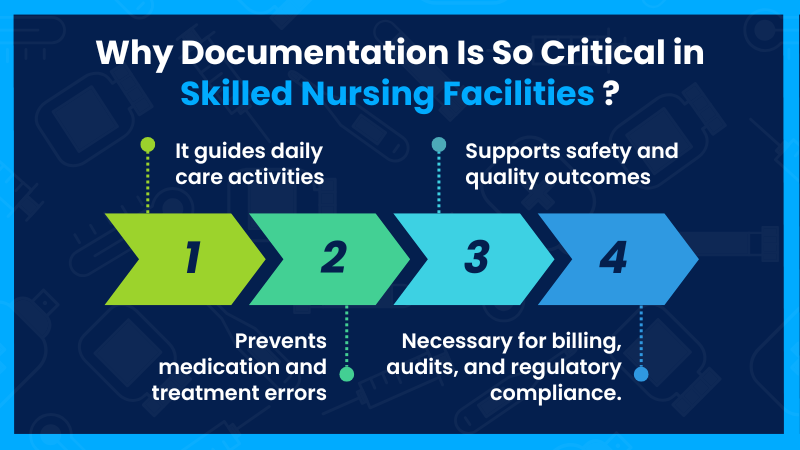
SNFs care for residents who often have multiple chronic conditions, medication needs, therapy plans, and daily care routines. Clear documentation is essential because:
- It guides daily care activities
- Prevents medication and treatment errors
- Supports safety and quality outcomes
- Most importantly, it is necessary for billing, audits, and regulatory compliance.
Failure to document completely, correctly, or clearly, means that resident care may deteriorate. So, accuracy and timeliness will be important.
Key Challenges in SNF Documentation
1. Manual Data Entry and Repetitive Charting:
In skilled nursing facilities, tasks take place every day. Nurses take vital signs, update Activities of Daily Living (ADL) charts, review medication lists, write progress notes, and prepare reports for care. All this takes time and attention to detail.
When you document by hand, it can become slow and redundant. Nurses often unintentionally duplicate the same information in multiple areas and are moving back and forth between screens. This is time-consuming and often results in nurses being less likely to spend time with residents listening to their concerns and ensuring comfort and psychosocial wellness.
Charting by hand may result in typos, omissions of important notes, and incomplete documentation. Even small glitches in documentation can lead to miscommunication, delays in care, and the potential for misunderstanding safety. Typing back and forth is a cognitive overload by the end of the shift and takes away from time spent meaningfully caring.
2. Inconsistent Documentation Across Care Teams:
SNFs work with a variety of caregivers and clinical staff. Individuals may have different methods of note-taking. Some might document detailed notes, and some will only write a few lines. Some staff will document right away and some wait until the end of the shift. This inconsistency causes a number of issues:
- Important details may be lost
- Care plans may become unclear
- Communication between shifts may break down
A caregiver may omit a small detail – a subsequent caregiver may not know a resident has pain, a change in mood, or has developed new symptoms. The implications matter for the resident’s safety and comfort. It is important to have a standard routine approach to documentation. However, when documentation is not automated, retaining experience is difficult and depends on people’s routines and availability.
3. Compliance, Auditing, and Billing Bottlenecks:
Skilled Nursing Facilities (SNFs) must meet strict rules from Medicaid, Medicare, state regulators, and insurance organizations. Every note must be clear, complete, and accurate to support:
- Billing and reimbursement
- Quality of care reporting
- Survey and audit inspections
- Legal and safety requirements
If documentation is incomplete or unclear, SNFs may experience:
- Claim denials and delayed payments
- Financial loss over time
- Compliance citations during inspections
- Increased scrutiny from oversight agencies
Many facilities struggle to keep documentation up-to-date during busy shifts. Staff must often spend extra hours catching up on charts to stay audit-ready. This can create stress and increase the pressure on clinical teams.
4. The Impact of Documentation Burden on Caregiver Burnout:
As a caring profession, nursing can be demanding in skilled nursing facilities. Nurses juggle multiple responsibilities, including clinical care tasks, medication administration schedules, emotional support for residents, emergencies, and documentation—often simultaneously.
When documentation takes longer than planned, or it is not completed until after the shift concludes, shifts can feel longer and more strenuous than they already are. This leads to:
- Less time for rest and personal life
- Higher stress levels
- Reduced job satisfaction
- Emotional fatigue
Eventually, it causes burnout. The loss of capable caregivers is not necessarily due to lack of caring, but rather due to a sense of overwhelm. When a caregiver exits the community, their assigned workload is shared amongst caregivers remaining on that team, decreasing morale and quality of care. Therefore, when it comes to sustaining caregiver well-being and maintaining staffing, relieving documentation load is important as it relates to long-term care.
How EHR Automation Transforms SNF Documentation
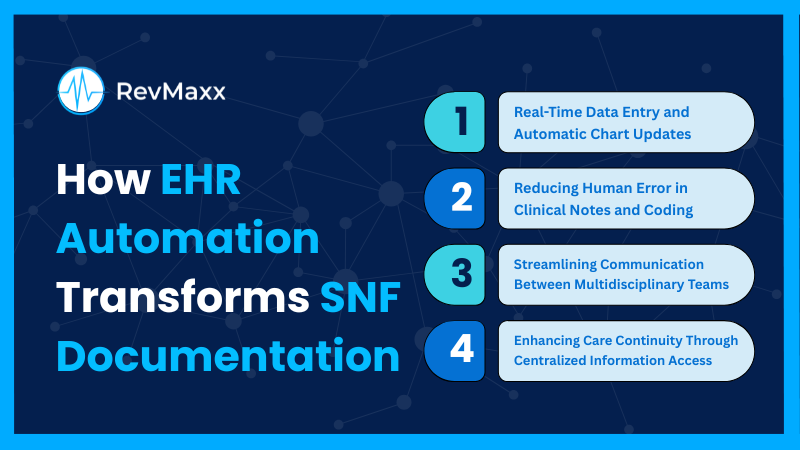
SNFs take on a huge volume of clinical documentation on a daily basis. Whether charting patient vital signs or updating care plans, staff can spend significant time typing and organizing records. EHR automation can help share this burden. It assists nursing and care teams by collecting data in real time, increasing accuracy, and enhancing ability to access and share information.
1. Real-Time Data Entry and Automatic Chart Updates:
Automation gathers and updates information while care is occurring. For example, if a nurse is checking a blood pressure, changing a dressing, or speaking to a resident about symptoms, the automation can capture that information immediately.
This prevents the need for charting after the shift is complete and reduces back-and-forth movements between residents and their chart. Staff do not have to rely on memory for details that are often hard to remember. The record is accurate and complete, and it saves time in already busy shifts.
This also allows nurses to spend more time or focus more on resident needs instead of some or all of their time on lengthy types of notes. Increases the quality of care and efficiency of workflow.
2. Reducing Human Error in Clinical Notes and Coding:
Manual EHR charting can lead to spelling mistakes, missing details, or incorrect billing codes. These errors can affect treatment decisions and create claim rejections. But no worries. Automated systems help standardize note formats and suggest accurate codes based on what was documented. This makes notes consistent and clear.
As a result, insurance claims are processed faster and with fewer denials. It also reduces stress for staff, since they don’t have to look up codes or rewrite notes.
3. Streamlining Communication Between Multidisciplinary Teams:
SNFs involve many professionals working together, including:
- Nurses
- Physicians
- Therapists
- Social Workers
- Dietitians
Everyone needs access to the same resident information. EHR automation ensures all updates appear in real time, so no one works from outdated charts. This improves team coordination. Care plans stay aligned. Residents receive better and more consistent care. It also reduces confusion during shift changes and handoffs.
4. Enhancing Care Continuity Through Centralized Information Access
EHR automation stores all resident records, assessments, medications, treatment notes, and care plans in one place. Staff do not need to search through paper files or ask multiple people for updates. Access is quick and simple, even if a resident moves to another unit or sees a different provider. Everyone can see the full care history.
This helps new staff adjust faster and makes care transitions smooth. Residents benefit from consistent treatment with fewer delays and misunderstandings.
Integration of AI Scribes with EHR Systems
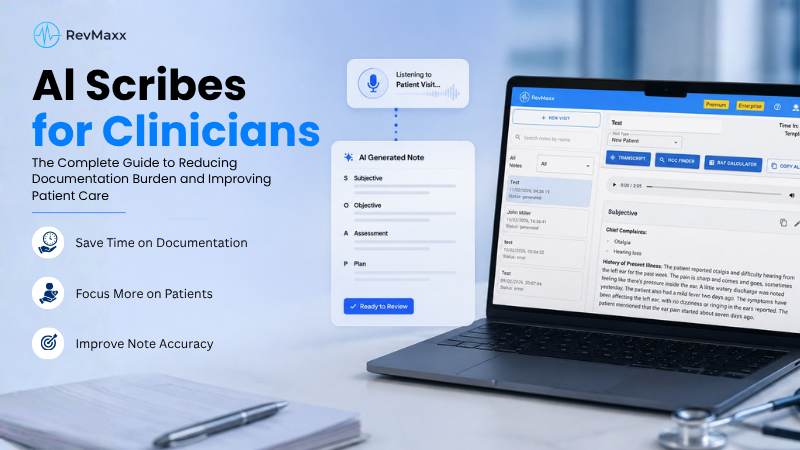
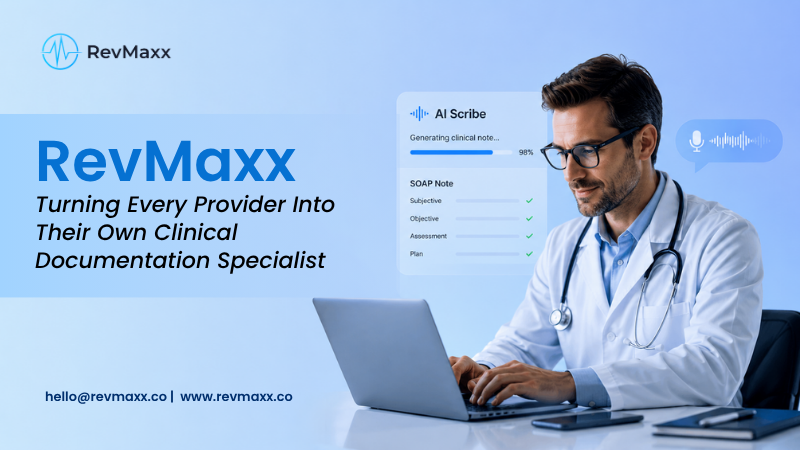
AI scribes are becoming a helpful support tool in skilled nursing facilities. They reduce typing work and help staff complete documentation faster. Instead of spending hours entering notes, nurses and clinicians can directly connect with patients during visits. The AI-powered medical scribing tool converts their conversations into meaningful notes. This improves accuracy and consistency in resident charts and reduces the chance of missing details.
How AI Scribes Like RevMaxx Simplify Documentation:
RevMaxx AI medical scribe listen to the provider–resident conversation and convert spoken details into structured clinical notes. They capture tone, context, and key medical information while the provider continues care. It also captures accurate clinical codes like ICD-10, CPT, HCC, and E/M codes for smooth care and billing.
They help complete:
- Progress notes
- Evaluation summaries
- Treatment plans
- Medication updates
This enables nurses and clinicians to talk in a more natural manner and focus on the resident, rather than typing. It helps maintain workflow between rounds, assessments and follow-ups, allowing staff to spend more time on personal care and developing relationships with, and trust in, all residents.
Linking AI Scribes with PointClickCare EHR System
Many SNFs use EHR platforms like PointClickCare to manage resident records. AI scribes like RevMaxx integrate directly with PointClickCare. After the notes are compiled, the scribe organizes the data and puts it into the corresponding resident chart and box. This allows information to be placed exactly where it should go, for documentations, i.e., progress notes, nursing assessments, and care plans.
This alleviates the need to copy/paste information or manually re-input notes that can lead to inaccuracies and omissions. An EHR allows all staff to view the same updated information in real-time.
Automating SOAP Notes, Coding, and Progress Notes:
The AI scribe can automatically generate:
- SOAP notes (Subjective, Objective, Assessment, Plan)
- Medical Codes
- Daily progress summaries
- Care plan updates
This reduces the time staff spend documenting each resident interaction. It also standardizes note quality, making reports clear and easy to understand. Nurses do not need to remember every detail later; the system captures it during the conversation. This also supports compliance and reduces documentation-related stress.
Case Example of How Automation Reduces After-Hours Charting in SNFs:
In many skilled nursing facilities, nurses stay late to finish notes. This often leads to fatigue, stress, and burnout.
With automation:
- Notes are completed during the conversation
- Charts are updated in real time
- End-of-shift review takes minutes, not hours
This may reduce after-hours documentation by up to 70%, creating a more reasonable schedule. Staff will leave work at the end of their scheduled time instead of early or staying late, which will lead to better work-life balance. Additionally, documenting in real-time or regularly will lead to better care for residents and a lower risk of omitting important, although sometimes subtle, information.
Benefits of EHR Automation for Skilled Nursing Facilities
With EHR automation, skilled nursing facilities run more effectively. Time spent on paperwork is reduced, and documentation quality is improved. With less manual steps, information becomes clear, precise, and accessible. The staff can focus more time on care rather than simply trying to keep up with charts.
1. Improved Accuracy and Efficiency in Resident Documentation:
Automated workflows decrease human errors and assure consistent documentation. The input of information in real time also lowers the likelihood of symptoms, medication changes, or the updates of care plans being neglected. EHR automation increases standardization even further for how notes will be written. Every resident chart will be written in a uniform way, allowing physicians, nurses, and therapists to interpret notes and provide coordinated care, while spending less time and energy documenting. Documentation overall becomes more quick, clean, and dependable.
2. Reduced Administrative Workload for Nurses and Clinicians:
Caregivers are able to dedicate more time to their residents and less time to typing. Instead of being forced to stay late to finish documentation, caregivers can document as they provide care with the help of EHR automation. Reduction of documentation stress and burnout, especially on busy shifts, is significant. Team morale improves because the staff feel that their time is valued. Improved quality can be seen when caregivers can focus on human beings instead of a computer screen.
3. Better Compliance and Audit Readiness:
Records are complete, standardized, and stored in an organized format that supports audits and billing. Automation reduces missing signatures, incorrect dates, and incomplete assessments. Facilities can pull reports quickly when needed for state inspections or billing reviews. Consistent documentation also protects the organization from compliance issues and improves trust with families and regulatory partners. This creates a more stable and professional care environment.
4. Enhanced Care Quality and Patient Satisfaction:
When staff have more time for direct care, residents feel more supported, safe, and comforted. They receive more attention, more conversation, and more personal engagement. This builds trust and emotional comfort, especially for long-term residents. Better documentation also helps care teams respond faster to changes in health, preventing avoidable complications. As a result, both residents and families feel confident in the quality of care provided.
Overcoming Barriers to EHR Automation Adoption
Ensuring Data Security and HIPAA Compliance:
Facilities should choose automation tools that prioritize:
- Encrypted data transmission
- Secure access controls
- HIPAA and regulatory compliance
This protects resident privacy and maintains trust.
Training and Change Management for SNF Staff
Staff need clear guidance on:
- How to use new systems
- How automation fits into existing workflows
- Whom to contact for support
Training should be simple and hands-on.
Selecting the Right Automation Partner for Your Facility
Look for a partner that:
- Understands long-term care operations
- Integrates with your current EHR
- Offers responsive support
- Adapts to your facility’s needs
The Future of EHR Automation in Long-Term Care
The future of long-term care is heading to smarter, faster, and more supportive workflows. With increased complexity of resident needs and continued staffing challenges, technology will play a larger role for caregivers in delivering effective and compassionate care. EHR automation will not replace human caregivers; rather, it will allow human caregivers to be more efficient, lower stress, and focus on more resident engagement.
The goal is to create a care environment where documentation is smooth, information is easy to access, and every update supports better decision-making.
1. Predictive Analytics and Early Risk Detection:
In the coming years, EHR systems will not only record resident data but also interpret it. With predictive analytics, the system will look for patterns that may signal early warning signs. For example:
- A gradual change in walking patterns may show a fall risk
- Changes in appetite or weight can indicate dehydration or infection
- Changes in sleep patterns may indicate underlying pain or discomfort
If caregivers can identify risk factors earlier, they can take appropriate preventative measures that may minimize risk. This could reduce the need for hospitalization, limit complications, and increase the quality of life of residents. Early intervention often provides greater benefits than responding after an event has occurred.
2. Integration with Wearables and Remote Monitoring Systems:
Wearable technology is on the rise in long-term care. Smart watches, glucose monitors, fall detection sensors, and heart-rate monitors can collect data at different times throughout the day. When wearable devices are directly connected to the EHR:
- Nurses do not need to manually record vital signs
- Changes in health conditions are noticed quickly
- Families and care teams receive continuous updates
This gives caregivers a clearer view of the resident’s health, even between routine check-ups. It also allows residents to move more freely while staying safe. Remote monitoring helps staff respond faster to changes and reduces the need for unnecessary hospital visits.
3. AI-Driven Decision Support and Workflow Optimization:
Future EHR systems will act as a helpful guide. They will not make decisions for caregivers, but they will offer suggestions when needed. For example:
- Recommending treatment adjustments based on recent progress notes
- Suggesting when to review medications for possible side effects
- Helping plan daily care schedules to balance staff workload
These features support nurses and clinicians by offering helpful reminders and clear summaries. This reduces guesswork and supports better communication across the care team. As a result, care becomes more consistent, organized, and resident-centered.
Conclusion — Smarter Workflows, Better Care
As the demands for long-term care grow, continuing to document manually is not defensible. Facilities need a dependable tool that will both relieve the workload while assisting in quality care. EHR automation provides accuracy in documentation, helps alleviate staff burnout, eases compliance, and approach resident care in a meaningful way.
RevMaxx aids SNFs by enabling greater documentation with AI scribing and automated EHR integration. It allows staff to save time, remain accurate in their documentation, and concentrate on what is most important—compassionately taking care of residents.
Smarter workflows lead to better outcomes. As a consequence of lowering the burden of documentation through EHR automation, SNFs can promote a healthier workplace and also promote a stronger standard of care in the future.