Healthcare has always depended on documentation that is both accurate and timely. Clinical notes serve as the foundation for diagnosis, treatment decisions, communication between care teams, and ultimately in maintaining patient safety.
However, the documentation of notes has changed significantly over time. The move from paper records to digital charts helped improve storage and access. Yet it also introduced new challenges. Many clinicians today spend long hours typing notes, updating charts, and navigating screens. This is often at the cost of face-to-face time with their patients.
Clinical notes automation and EHR interoperability emerge here. These technologies are transforming the way that documentation operates within the daily workload of providers. Clinicians will no longer need to type out every detail, and instead can record notes in a more natural and easy way. The technology records the conversation between the patient and the provider, identifies the medical context, and renders it into structured notes. When connected to the EHR, the clinician is able to incorporate those notes into the patients medical record seamlessly, without requiring any copying or reentering of documentation.
Why Manual Note-Taking No Longer Works in Modern Healthcare
At one time, manual note-taking was a reasonable approach to documentation in an environment with less patient volume and easier clinical processes. In modern healthcare, however, it is a fast-paced environment in which many more patients are being taken care of each day, and each visit entails history, assessment, treatment plan, and follow-up. It is cumbersome to write detailed clinical notes for each step in the visit, and ultimately this contributes to the overwhelm and burnout that physicians experience.
Many clinicians report spending more time documenting than seeing patients. Study reveals, they spend nearly 2-3 hours on documentation on every 1 hour of patient visit. This imbalance reduces patient interaction and satisfaction. Manual documentation also increases the risk of missed details, inconsistent notes, and potential errors.
The Rising Demand for Smarter, Automated Documentation Tools
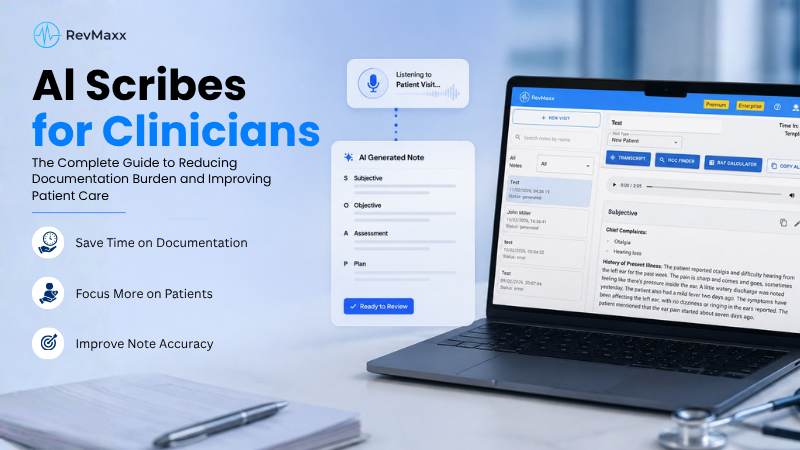
Clinicians are looking for solutions that will allow them to attend to their patients, rather than type or click around screens. The AI-enabled documentation tools listen during the patient visit, understand the clinician-patient dialogue, and create a concise and organized clinical note. This allows clinicians to spend less time entering information manually and helps create notes that are consistent, concisely explanatory, and adequately complete.
Even more importantly, it reduces the stress of the tasks needed to complete notes and helps minimize burnout. When clinicians do not feel pressured to stay late to complete their notes, they have increased time away from work to maintain a work-life balance. That directly impacts job satisfaction and the quality of care.
How EHR Integration Is Powering a Connected Care Ecosystem
Clinical notes automation becomes even more powerful when it works smoothly with EHR systems. Integration means when the note is done and approved, it flows directly into the patient medical record as part of the EHR. This means all patient data is in one place and does not need to be copied or pasted or uploaded separately.
EHR integration also means that everyone caring for a patient is looking at the same information. If a doctor updates a note, the nurses, specialists, and care coordinator can see those notes right away. This process encourages collaboration and reduces miscommunication.
What Is Clinical Notes Automation?
Clinical notes automation is changing how healthcare providers document every patient’s care. Years back, physicians spent a large percentage of their working hours typing notes or writing them by hand. This slows down clinical workflow and often takes time away from patient interaction. With the help of automation, accurate notes are generated automatically, without adding any extra effort. It supports providers in staying focused during visits and helps keep patient records consistent across the care team.
Defining Clinical Notes Automation in Simple Terms
Clinical notes automation refers to the process of creating medical notes automatically based on conversations and observations during patient visits. Instead of typing every detail, providers can speak in a natural way. The system listens carefully, identifies medical terms and relevant information, and then converts these details into structured notes.
These notes may include:
- SOAP notes
- Progress notes
- Visit summaries
- Follow-up plans
The provider simply reviews and approves the note. This reduces documentation time and makes charting easier and more organized. Automation does not replace clinical judgment. It supports it by capturing details accurately and helping ensure nothing important is missed.
How AI and NLP Power Automated Medical Documentation
Systems for auto-generating clinical notes use Natural Language Processing (NLP) to comprehend what clinicians and patients communicate. Medical conversations can be complicated. They have confusing symptoms, medical history, diagnoses, medications, and treatment plans. NLP helps the system understand connotation and context, not just words.
For instance: If a patient said, “I have had chest pain for the last two days,” and the clinician asked follow-up questions concerning that, the system will recognize:
- The symptom (chest pain),
- Duration (two days)
- Related concerns (if mentioned)
- Medical assessment and plan
It builds the note step-by-step, just like how the clinician would manually. This results in documentation that is clear, complete, and clinically useful.
From Dictation to Structured Notes — The Evolution of Charting
Clinical documentation has gone through several stages:
Handwritten notes, typing into EHR, dictation and then automated structured notes- the latest standard of charting.
In earlier days, dictation tools only captured raw speech. Clinicians had to rearrange information, edit text, and add missing clinical details. This still took time. Now, automated systems organize the information into a structured SOAP (Subjective, Objective, Assessment, Plan) note format that supports clinical clarity and billing compliance.
This evolution has reduced manual typing and after-hours charting and improved accuracy and workflow efficiency.
The Challenges of Traditional Clinical Documentation
The documentation related to healthcare is essential for keeping patients safe and ensuring coordination of care. However, traditional documentation takes too long and can create issues with record quality. Writing notes by hand takes up precious time, and the data entry process can carry compliance risks and lead to burnout. These are examples of issues every nurse and doctor contend with every day:
1. Time-Consuming Manual Entry and Burnout:
Entering every detail after a patient visit is a significant time commitment that requires focus and concentration from the clinician making the entry. Clinicians frequently spend multiple hours at the end of a patient’s visit updating their chart.
This last-minute updating, ultimately occurring late into the clinician’s own day, infringes on personal time and recuperation and results in frustration and burnout over time, which has an impact on both the quality of interaction and total clinic productivity. Slow documentation reduces patient visits and increases administrative work compared to patient-related responsibilities.
2. Inconsistent Notes and Missing Data Points:
Each healthcare practitioner has a different style of note-taking. Some people take extensive notes, others take short, succinct notes. This variation can lead to other team members finding it hard to follow up on treatment plans or look up patient care history. Manual notes have the potential to be inaccurate, which can result in significant gaps in documentation, such as medication details, follow-up paperwork, or vital signs. If this important data is missed, it may alter clinical decisions and could create a potential patient safety risk.
3. Compliance Issues and Inefficient Workflows:
Strict compliance standards exist for healthcare documentation, such as HIPAA. Manual processes are error-prone and allow for missing fields and outdated entries, which may result in possible compliance risk upon audit. Incomplete bona-fide clinical notes or inaccurate documentation can also trigger issues when billing and collecting reimbursements. If clinical details do not meet coding-specific or E/M-level requirements, billable services will create delays or denials. Little errors can create major problems for the provider as well as administrative staff.
How EHR Integration Enhances Clinical Notes Automation
Integrating Electronic Health Records (EHR) encompasses collecting and integrating patient records, documenting provider and clinical information / insights into one centralized, multifaceted platform. EHR integration creates a fluid and connected workflow for healthcare teams, and allows for faster, more informed decision-making and improves patient safety.
1. Seamless Data Flow Between Documentation and Patient Records:
If clinical notes automation is tied to an EHR, whenever a note is completed it automatically updates the patient’s record. The provider does not have to navigate between different tabs, copy content, or upload a file. Streamlined data movement also eliminates inconsistency. If a patient sees a specialist, the specialist and the primary care can review the same updated information as and when it is available. This reduces misunderstanding, errors, and unnecessary work.
2. Eliminating Duplicate Entry and Manual Uploads:
Before integration, there were many providers who were re-entering the same information into two or more systems. The repeated work was exhausting and could easily lead to error. EHR integration allows providers to avoid duplicate documentation. Notes that are documented one time will be made available in every system that is integrated with the EHR. This means that there is less administrative work to do, and providers can continue to focus on clinical work. With a faster, more organized documentation process, the workflow completes more efficiently.
3. Real-Time Syncing for More Accurate Care Coordination:
Real-time synchronization means that a change made by one provider can be viewable to other providers immediately. Real-time syncing is very useful if more than one clinician is treating a patient in an organization. If a nurse documents new symptoms or a medication change, the physician will have the documentation available instantly in the EHR. Everybody will be aware of the same information, which minimizes information silos and creates better information flow in care coordination.
Most importantly, real-time synching allows the care team to make quicker decisions for patients as data flows in the system. When patient information can be made viewable in real-time, providers can intuitively respond while waiting for charts un-pent manually. This level of timely data and collaborative care enhances patient safety and outcome.
Example: RevMaxx AI Scribe Integrated with eClinicalWorks, PointClickCare, Practice Fusion
RevMaxx AI medical scribe integrates with leading EHR platforms like eClinicalWorks, PointClickCare and Practice Fusion, among others, to help providers automate documentation and keep patient accounts current. RevMaxx captures the conversation during patient visits and writes detailed notes that sync automatically with progress notes in the providers’ existing EHR configuration.
They can instantly review and sign. In long-term and post-acute care facilities, RevMaxx can help staff document resident assessments, daily observations and any updates to their ongoing treatment.
The seamless integration of functionality reduces the administrative burden while also reducing or eliminating the threat of errors, and ensuring everyone on the team is working from accurate, real-time information. It also improved communication between providers, nurses and the administrative team and supports a more coordinated and efficient process of care.
Benefits of Clinical Notes Automation with EHR Integration
Integrating electronic health records (EHR) with clinical notes’ automation enables healthcare teams to operate more effectively. This reduces the time spent on manual workflows, improves record accuracy, and supports optimal communication. Providers can spend more time focusing on the care of patients while preserving complete and compliant documentation with ease.
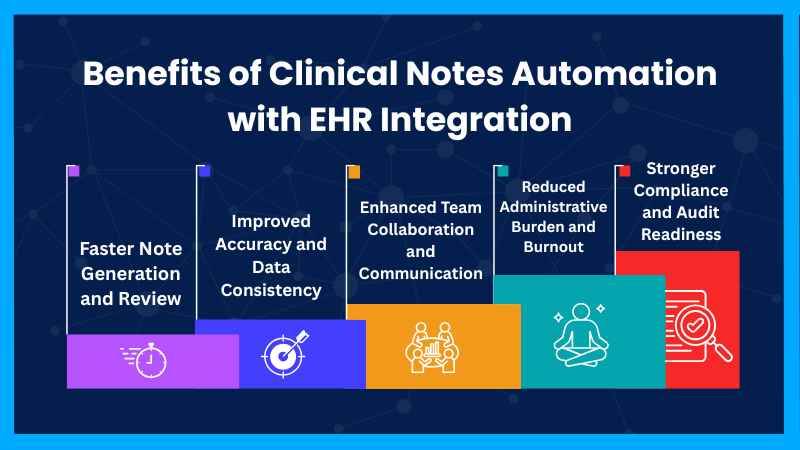
1. Faster Note Generation and Review:
By using automation, clinicians will have the choice to review and sign off on notes instead of writing them themselves. The automation collects the details while speaking, and translates the conversation into fully prepared to sign documentation. This can reduce charting time, decrease backlogs, and foster daily workflows.
2. Improved Accuracy and Data Consistency:
Automated clinical notes record all the essential details without omitting. The structured templates provide clear and comprehensive note sections for the diagnosis, medications, and plan. This consistency will decrease errors and increase trust in medical records throughout the continuum of care.
3. Enhanced Team Collaboration and Communication:
When clinical notes are updated in real-time in the EHR, the whole care team is aware. Physicians, nurses, and specialists always possess the same accurate information. Improved collaboration and less miscommunication results in timely decision-making with patients.
4. Reduced Administrative Burden and Burnout:
Automation alleviates repetitive data entry and after-hours charting, enabling healthcare providers to spend less time on the computer and more with their patients. Now that causes less stress and feeling of burnout, and creates a better sense of balance in their professional and personal lives.
5. Stronger Compliance and Audit Readiness:
Structured and accurate clinical notes meet documentation standards required for billing and audits. Each record includes accurate details for coding, claims, and reporting. This helps providers maintain compliance and ensures smoother reimbursement and inspection processes.
Role of AI Scribes in Clinical Notes Automation
AI scribes are revolutionizing healthcare documentation. They record clinician-patient interactions in real time and produce full, structured notes. This allows clinicians to focus their attention on the patient instead of typing. Additionally, automated documentation ensures that every word, symptom, and plan is captured precisely as discussed and retained securely in the EHR.
How AI Scribes Like RevMaxx Listen, Understand, and Document:
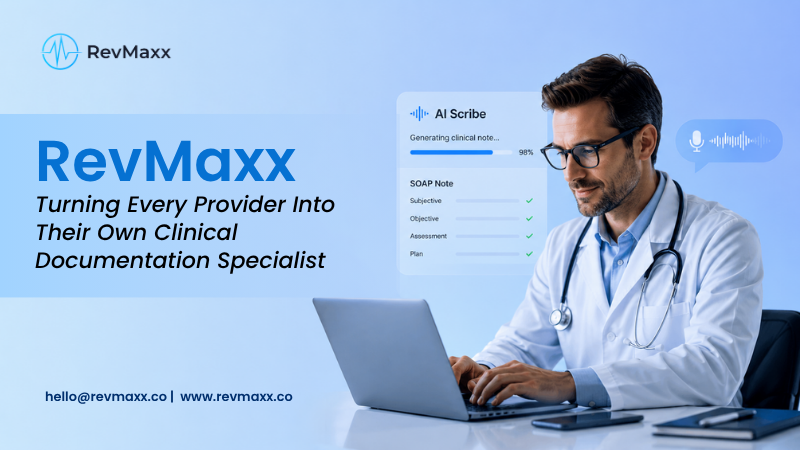
AI medical scribes like RevMaxx act as silent assistants during patient visits. It carefully listens to the patient-provider dialogue, determines the main clinical terms, and generates SOAP notes with 95% accuracy in real-time in the SOAP structure. The system knows who said what and communicates effectively to ensure that the final note fairly reflects clinical context, information about the patient, and thorough, accurate information discussed with the patient.
Contextual Understanding Through NLP:
Understanding context is what makes automated notes reliable. Employing Natural Language Processing (NLP), the system recognizes the patient’s condition, the provider’s intent, and next steps. It identifies relationships between symptoms, diagnoses, and treatments, generating structured notes that flow naturally while incorporating all aspects of the patient encounter.
Template Customization for Specialties:
Every medical specialty has unique needs and workflows. RevMaxx supports customized templates that fit different clinical styles. Providers can choose templates tailored for:
- Primary Care
- Psychiatry
- Cardiology
- Orthopedics
- Pediatrics
- Long-Term Care and more
These templates ensure that specialty-specific details are always included, saving time and improving accuracy.
Automated Coding Support — ICD, CPT, E/M codes and HCC Integration:
Accurate coding ensures smooth billing and proper reimbursement. Automated documentation tools like RevMaxxcan detect clinical details and suggest the right:
- ICD-10 codes for diagnoses
- CPT codes for procedures
- E/M levels for visits
- HCC risk scores for chronic care
This reduces human error, saves time, and strengthens financial accuracy for healthcare organizations.
Real-World Use Cases of Clinical Notes Automation
Clinical notes automation is not just a concept — it’s being used across different care settings. It helps doctors, nurses, and administrative staff save time, maintain accuracy, and deliver coordinated care. Whether in a busy clinic or a long-term facility, automated documentation simplifies complex workflows.
1. Primary Care and Multi-Provider Practices:
Primary care teams handle large patient volumes daily. Automated note tools help them capture details quickly and manage time better. Instead of typing long summaries, providers can focus on patient interactions, allowing more visits each day without sacrificing quality of care or documentation accuracy.
2. Long-Term and Post-Acute Care Settings:
In nursing homes and rehabilitation centers, caregivers will document daily summaries, medication changes, and progress notes. Automation speeds up record-keeping while reducing documentation errors. Automation also supports continuity of care by having an updated record instantly available for every resident or patient. This not only facilitates the coordinating of care but also decreases the amount of documentation required through manual record-keeping.
3. Legal and Insurance Documentation Workflows:
The importance of accurate and organized clinical documentation in legal and insurance cases cannot be understated. Automated notes, which include clear and organized documentation, can withstand audits or legal scrutiny. Automated notes capture verification, traceability, and secure storage. Automated notes make things more reliable and transparent for both patients and providers.
Ensuring Data Security and HIPAA Compliance
Healthcare organizations prioritize protecting patient privacy. Automated documentation systems are built to protect privacy with rigorous standards to comply with HIPAA data privacy laws. These systems utilize secure cloud storage, encrypted data transfer to ensure confidentiality is maximized and knowledgeable personnel may access PHI in confidence.
1. Role-Based Access and Encryption Standards:
Only individuals with permission may view, edit, or share clinical notes. Data encryption is utilized while transmitting data and at rest to authenticate access. Role-based controls limit each user’s view to only the essential information required for their particular job function to maintain the confidentiality of patient records at each care level.
2. Single-Tenant Architecture and Data Privacy:
Platforms like RevMaxx AI medical scribe use a single-tenant architecture to keep each organization’s data completely separate. This design prevents data overlap and enhances privacy. It ensures that healthcare providers maintain full control over their records while enjoying secure, uninterrupted access to their clinical documentation.
The Future of Automated Clinical Documentation
The future of clinical documentation emphasizes intelligent, rapid, and interconnected workflows. Automation will not just document information but also aid in clinical decision making. It will simplify healthcare documentation to be seamless, accurate and proactive, providing clinicians with more time to focus on patients versus paperwork.
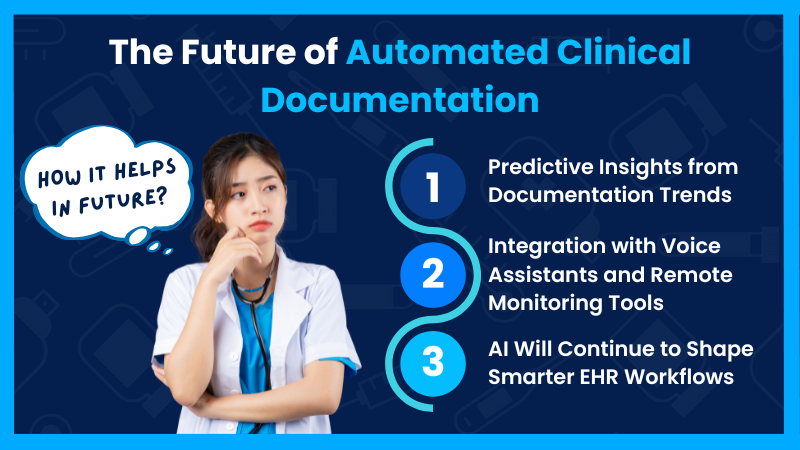
1. Predictive Insights from Documentation Trends:
Forthcoming systems will evaluate documentation patterns to identify health risk factors sooner. They can easily detect some warning signs that suggest chronic conditions are worsening too, or warn of adverse effects from medication in part, because they studied prior documentation notes with similar language patterns. In time, these predictive insights will help guide providers to engage in preventive measures, improve patient outcomes, and decrease the likelihood of readmission to acute care settings.
2. Integration with Voice Assistants and Remote Monitoring Tools:
Voice technology will be typically introduced into documentation. Clinicians will either create, edit, or view documentation without using their hands during their patient interactions. The use of remote monitoring devices will provide a seamless transfer of critical data into medical record documentation, which will lead to timely decision-making and higher quality care coordination.
3. How AI Will Continue to Shape Smarter EHR Workflows:
Future EHR workflows will blend automation into every step of care delivery. Documentation will happen quietly in the background as clinicians speak and interact. Notes will build themselves, codes will auto-populate, and data will sync instantly. This invisible documentation process will help providers focus entirely on patient connection and quality care.
Conclusion — Toward a Smarter, Connected Healthcare Future
Automating clinical notes removes barriers that slow down patient care. It supports better accuracy, workflow efficiency, and provider satisfaction. AI documentation tools like RevMaxx are providing practices with opportunities to go from documenting in isolation to a workflow that is connected, streamlined, and stress-free. With painless EHR integration, specialty templates, and coding functionality, clinicians can spend more time with patients, and less time documenting.
Healthcare is changing and documentation must evolve. Automating documentation is not just a tool, it is the future of care delivery towards a more intelligent and human-centered model of care delivery.