Ambient clinical documentation is quietly revolutionizing healthcare. It’s that invisible assistant that listens during your patient visit and turns conversation into structured medical notes. It saves clinicians valuable time, reduces burnout, and improves patient experience.
Across U.S. systems like Stanford Health, Mass General Brigham, and others, ambient AI scribes have slashed documentation time from 90 minutes to under 30 minutes per day. That’s nearly an hour saved, giving clinicians time to concentrate on patients, not paperwork.
So, let’s read this blog to learn more on ambient clinical documentation.
What is Ambient Clinical Documentation?
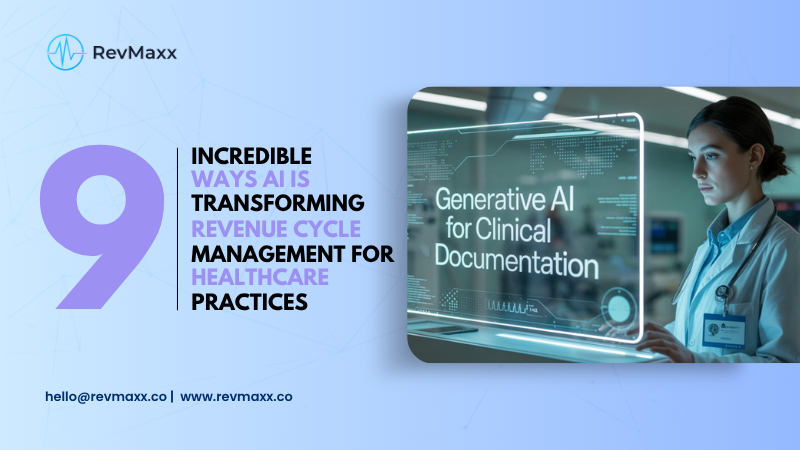
Ambient clinical documentation, also known as ambient scribing, is an AI-powered tool that listens to patient-clinician interaction in real-time and transforms the conversation into structured clinical notes.
AMA states that physicians spend nearly two hours on documentation for every day on patient care. This contributes heavily to burnout and ambient documentation can significantly reduce it. It is like an invisible assistant working silently in the background, catching clinical details and generating SOAP notes- freeing up doctors for direct patient care.
This process typically involves advanced machine learning, natural language processing (NLP) technology and a deep understanding of medical context. During patient visit, when patients share symptoms and clinicians ask questions, this system automatically identifies key medical terms, diagnoses, medication and treatment plans. It then drafts patient notes ready for clinician review. This means the doctor can focus on listening, making eye contact and building rapport- without the distraction of continuous typing.
According to a study report, more than 550 physicians and healthcare providers are now using ambient documentation. It helps them to spend less time on screens and focus more on what matters most: delivering quality patient care.
What is Ambient AI in Healthcare?
Ambient AI refers to the artificial intelligence technology that works quietly in the background, adapting to human conversations without intruding. In the healthcare setting, ambient AI aids workflows like transcribing consultations, generating clinical notes, automating clinical coding and more.
So, on a simple note, ambient AI brings efficiency, reducing charting time by approximately 70% , improving return-on-investment by up to 600% and helping healthcare providers to reclaim working hours each day.
Reports reveal that these ambient AI tools reduce physician burnout and increase patient satisfaction and let physicians engage more on patient visits instead of typing notes.
Example of Ambient AI:
One excellent example of Ambient AI is RevMaxx, an AI medical scribe tool that transcribes patient-doctor consultations, builds structured clinical notes, creates referral letters and treatment summaries and even handles billing documentation templates- all during or right after the patient visit.
What Are the Different Types of Clinical Documentation?
Clinical documentation comes in several forms, each one with its own process, technology and impact on clinical workflow. They can be grouped into four main types:
Traditional Manual Notes:
This is one of the most familiar clinical note taking processes, where healthcare providers type directly into EHR or handwrite notes during and after the patient visit. It is a time-consuming process and takes away physician’s focus from their patients.
Human Scribe:
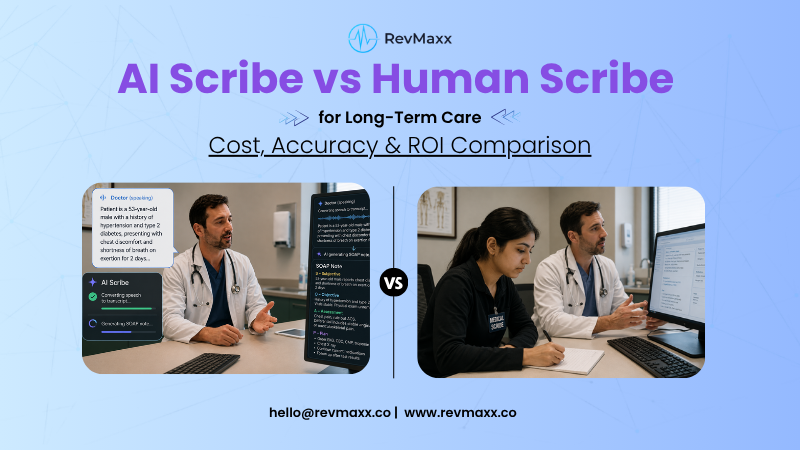
Scribes can be physically present in the visiting room or connected remotely via audio or video. They carefully listen to doctor-patient interaction and type notes in real-time. This relieves physicians from typing patient records but costs extra staffing expenses and may cause human error or privacy concerns.
Dictation Tool:
Clinicians use this tool to record notes into a microphone and speech-to-text software to transcribe them. It is quite faster than the manual entry process, but it often requires manual editing and structured templates, which might take significant timing.
Ambient AI Scribe:
Ambient AI scribe is the fastest-growing option in modern healthcare facilities. It passively listens during patient encounters, identifies key clinical details and automatically generates structured clinical notes for review. These tools capture the natural flow of conversation without interrupting the clinical workflow.
No matter the method, every documentation needs to be aligned with the 5 C’s of clinical documentation. This will help healthcare providers to ensure records are both high-quality and clinically useful.
What are 5C’s of Clinical Documentation?

Clinical documentation helps doctors track a patient’s health journey, assist researchers in improving treatments and even guide government policies for public health. To ensure these records are accurate, clear and useful- the healthcare professionals follow the 5C’s of clinical documentation. Let’s have a look on that:
Clarity:
In any healthcare setting, clear documentation is crucial. Medical records include many technical terms, abbreviations and data points. If these are not written clearly in the records, the meaning can be misunderstood and this may affect patient care. Proper spelling, grammar and correct medical terminology help avoid confusion.
Conciseness:
Medical records should be brief but complete. The goal is to share all necessary information about patient details without any unnecessary interruptions. Short, to-the-point clinical notes make the documentation easier to read and faster to review. This is especially important for healthcare professionals while making quick decisions.
Completeness:
Every entry in a patient’s medical record should be fully completed at the time of care. Leaving blanks with the intention of filling them later increases the risk of missing important information. Real-time, complete documentation ensures accuracy and helps maintain a reliable patient history.
Confidentiality:
Medical records are private and can only be shared with the patient’s permission, except when required by law. This is not just a professional responsibility but also a legal requirement under standards like HIPAA. Protecting patient privacy builds trust and safeguards sensitive health information.
Chronological Order:
Patient care happens in a sequence, and records should reflect that order. For example, documenting surgery before anesthesia would create confusion. Recording events as they happen helps doctors and nurses follow the patient’s treatment journey and ensures the record makes sense. Chronological documentation is also important in legal situations, as it provides a clear, step-by-step account of the care given.
The Final Thoughts
Ambient clinical documentation is changing healthcare for the better. By listening during clinical encounters and generating smart, structured notes, this AI-powered assistant helps clinicians spend less time documenting and more time caring. It neatly aligns with best practices- being clear, accurate, complete, concise, chronological, correct, and timely.
Healthcare providers across the U.S. are reporting less burnout and more meaningful patient interactions thanks to systems like RevMaxx AI medical scribe. As more practices adopt these tools, and as regulations evolve, ambient documentation looks poised to become a norm- not a novelty.