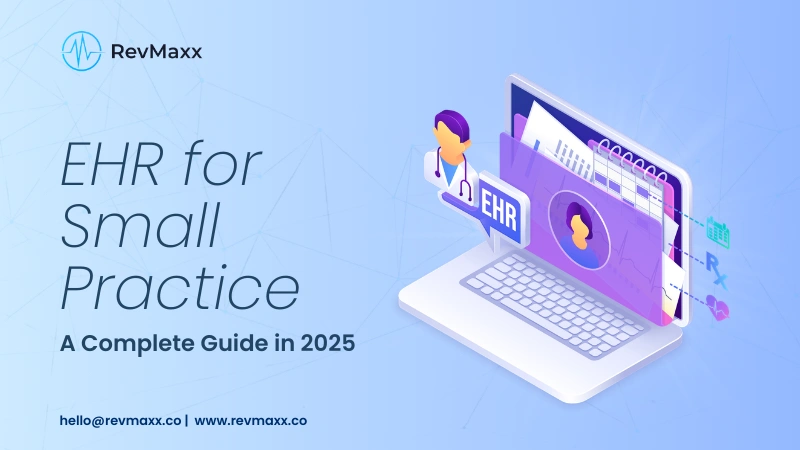
EHR for small practice is no longer a luxury- it is a must have for solo providers who want to stay efficient, compliant and patient-focused. In a small healthcare clinic, every minute counts. Without the right EHR (electronic health record) system, providers often spend hours on paperwork and handling billing issues instead of focusing on patients.
According to an AMA report, physicians spend up to 49% of their working hours on administrative tasks and documentation. This is the time which could be better spent in patient care. Only an EHR for small practice can cut this administrative burden in half and help healthcare providers work smarter.
So, here in this blog, we will explore the top 5 EHRs for small practices available in 2025.
Why Small Practices Struggle Without the Right EHR?
Running a small clinic means balancing high-quality patient care with a difficult environment. They often work with limited budgets, fewer staff members and minimal technical support. Doctors and their teams have to manage a lot of tasks- handling patient care, managing appointments, overseeing billing and ensuring compliance.
Unlike bigger facilities that can afford a large IT department and costly software, small practices need tools which are affordable and easy to implement. An EHR for small practice must fit seamlessly into the daily operations of the clinic without creating any extra workload.
Insufficient EHR system can:
- Take extra time to navigate, leaving less time for patient consultation
- Cause mistakes in documentation and billing, which can hurt both patient safety and healthcare clinic’s revenue.
- Make it harder to stay compliant with HIPAA regulations.
So, to keep up with all these for small practices, the right EHR is essential.
Key Benefits of EHR for Small Practices
For small private clinical practice, switching to an Electronic health record (EHR) system can make a big difference, for both patients and providers. This system brings all important health data together in one place. This is making everyday clinical workflow smoother and helping doctors to deliver better patient care.
With cloud-based EHR systems, private practices can securely store and manage patient records from anywhere, improving efficiency and supporting better health outcomes without the hassles of managing paperwork.
Enhancing Patient Care:
One of the biggest benefits of using EHR in small practices is the ability to share patient data securely with other healthcare providers. This is important when a patient needs to be referred or hospitalized. This smooth exchange of information leads to better coordination, faster treatment decisions and improved patient experience.
EHR systems also give providers instant access to complete patient histories- medications, lab tests and more in real-time. This helps physicians to avoid unnecessary tests, reduce mistakes and make faster, smarter decisions. Its built-in templates and checklists keep documentation accurate and consistent.
Many modern EHR platforms also offer telehealth options for scheduling appointments, prescription management and follow-ups.
Reducing Administrative Workload:
Managing clinical paperwork can take up valuable time in small clinical practice. EHR systems help by automating everyday administrative tasks like scheduling, billing and clinical note-taking. With customized templates, practices can easily tailor their workflow according to needs.
Most importantly, digital access to patient records means no digging through flies. Providers can quickly update patient charts, track progress and manage paperwork. This frees up more time for doctors to focus more on what matters most: their patients.
Boosting Practice Revenue:
EHR systems play a big role in improving a practice’s financial performance. By streamlining billing, auto-filling claim forms and reducing manual errors, they lower the risk of rejected claims. That means faster payment from insurance providers, leading to better revenue and financial stability.
Many advanced EHRs also include built-in financial management tools, so that providers can keep costs predictable and easy-to-manage.
Top 5 EHR for Small Practice
Here are some of the most popular EHR systems suitable for small healthcare practice:
1. Nextech:
It is a cloud-based EHR system that works well for small practices which want more control over billing and analytics. This offers customized templates, e-prescribing, telehealth and a strong dashboard facility.
Apart from these, Nextech’s billing and revenue cycle management tool is a big plus for providers who want to track clinic’s financial performance alongside clinical works.
2. Tebra:
Tebra EHR is especially designed for solo clinical practices that need simplicity without losing functionality. Physicians get charting, scheduling, billing and telehealth- all in one place. The patient portal allows patients to book appointments, access records and pay bills online.
Its focus on automation makes this EHR stand out from the crowd. It runs silently in the background and easily manages claims processing, reminders and patient consultation while physicians focus entirely on patient care.
3. Elation Health:
Elation Health is perfect for primary care and direct primary care (DPC) practices. The interface is clean, fast, and easy to learn. It supports referral tracking, lab integrations, and population health management.
Small clinical providers often praise its “clinician-first” design, which prioritizes speed in documentation and fewer clicks per task.
4. Practice Fusion:
This EHR system is well-known for being budget-friendly, Practice Fusion offers cloud-based charting, scheduling, and e-prescribing. It’s straightforward and gets the job done without overwhelming small teams with extras they don’t need.
It is a great entry-level option for small primary care or specialty practices.
5. PointClickCare:
As a small healthcare practitioner, one can use PCC EHR to simplify daily tasks like charting, immunizations, and growth tracking through customized templates and workflow. With PCC, you gain all-in-one scheduling, billing, claims management, and reporting capabilities.
AI-powered Scribing Tool and EHR Integration
Small healthcare practices often face the challenge of juggling patient care with time-consuming administrative tasks. That’s where an AI medical scribe integrated with your EHR can make all the difference.
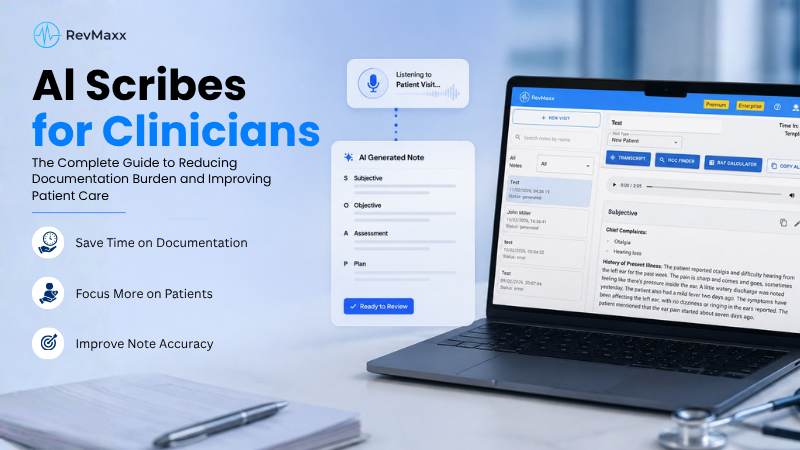
Solutions like RevMaxx are designed to simplify clinical documentation by automatically converting doctor-patient conversations into accurate medical notes- right within your existing EHR system. This means providers can focus more on patients and less on typing or charting.
RevMaxx directly integrates with top EHR platforms, allowing real-time syncing of patient data, medical history, and visit summaries. So, by combining smart AI scribing with EHR, small clinics can save time and improve care.
The Final Words
An EHR for small practice can be a game-change in modern healthcare facilities. But the best choice depends on your needs, specialty and budget. Try to focus on systems that are easy to learn, integrate billing and patient engagement and keep patient data safe.
With the right system in place, you can spend less time on admin and more time on what matters most- caring for your patients.
RevMaxx, AI medical scribe tool directly integrated with these above-mentioned EHR for small practices to make clinical documentation process faster, smarter and streamlined.