Running a small or independent medical practice is quite challenging. Medical practitioners must manage all aspects of their practice, including providing clinical care, maintaining clinical records, filing claims for reimbursement, completing application paperwork, and performing all administrative duties. Many small independent medical practices experience difficulty managing all of the time-consuming tasks associated with providing quality patient care and also managing increasing levels of documentation.
As a result, the use of an AI scribe for small practices has become a necessity. It can reduce the manual effort required for documentation, increase speed in entering charts into the system, improve record quality, and provide practitioners with additional time to interact with patients.
This blog explains why it matters, how it works, and how small clinics can choose the right solution. You will also see real examples of better efficiency and time savings.
Why AI Scribe for Small Practices Matters Today?
AI scribes for small practices matter today because of heavy paperwork and limited staff. Providers spend long hours typing notes, which leads to stress and rushed visits. An AI scribe helps reduce this workload, improves accuracy, and gives providers more time to concentrate on patients.
The Rising Documentation Burden in Small Clinics
Small practices face heavy clinical documentation pressure. Healthcare providers spend long hours entering patient notes, updating charts, and writing assessments. Each patient visit requires detailed information, and regulations keep growing every year. This leads to:
- Long charting hours
- Missed details due to fatigue
- Delays in updating records
- Less time for patient conversations
Documentation alone can consume as much as 30% of a provider’s total working day. This loss of work time is amplified in small clinics because there is less distribution of the documentation workload than in larger clinics or hospitals.
Many times, when clinicians finish their normal workdays at a clinic, they continue to work hours at home completing charts. This creates added stress, decreases their ability to rest, and can negatively impact their physical and mental health.
How Limited Staff Impacts Workflow Efficiency
Small clinics often run with a small team. Sometimes, it is just one doctor and a few support staff. When documentation takes too long, it impacts the entire workflow:
- Appointments run late
- Staff work overtime
- Tasks get delayed
- Patient experience drops
With fewer people available, every extra minute spent on paperwork takes away from direct care. Providers need a solution that supports them without requiring more hiring or extra administrative help.
This is where an AI scribe for small practice becomes valuable. It takes the documentation load off providers and keeps the workflow moving smoothly.
Key Benefits of Using an AI Scribe for Small Practices
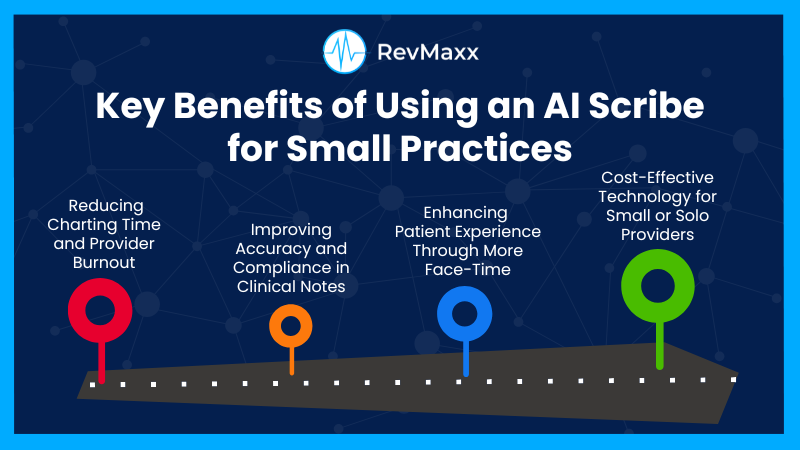
An AI scribe offers major advantages for small practices. It cuts charting time, reduces physician burnout, and improves clinical note accuracy. Providers get more face time with patients and less screen time. Small clinics gain enterprise-level efficiency without hiring extra staff or increasing costs.
Reducing Charting Time and Provider Burnout:
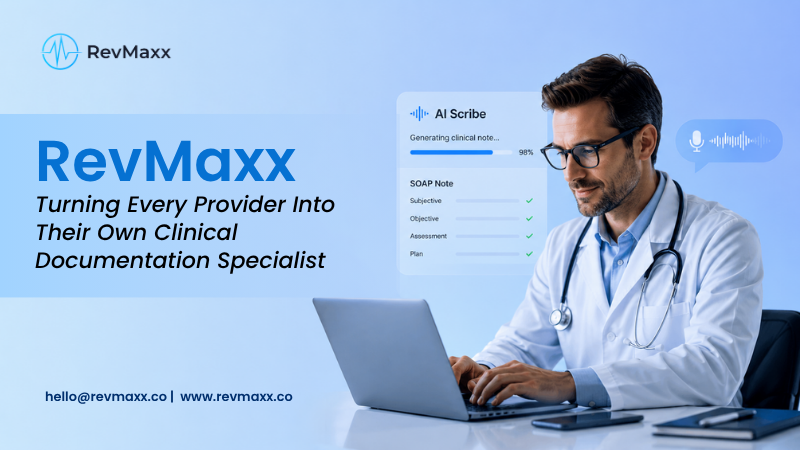
The biggest advantage of AI scribe is the time saved. Instead of typing long notes or remembering details hours later, providers can complete their documentation within a minute. The scribe carefully listens to patient-provider conversations during visits and prepares clear, structured clinical notes automatically in real time.
This reduces:
- Long charting sessions
- Mental fatigue
- Stress from unfinished work
- Weekend and late-night paperwork
When physicians and healthcare providers spend less time on screen, they feel less overwhelmed and more focused during the day.
Eliminating After-Hours Documentation (Pajama Time):
Many small practice providers experience “Pajama Time”- charting late at night after family hours. This is one of the main causes of burnout.
An AI scribe for small practice helps eliminate this by completing most of the documentation during the patient visit. Providers can leave the clinic on time, with finished notes, and enjoy their personal life without extra work hanging over them.
Less pajama time means:
- Better work-life balance
- More energy for the next day
- Clearer notes because they are captured instantly
Improving Accuracy and Compliance in Clinical Notes:
Complete and accurate medical records that comply with regulations are needed by small practices. Errors in documentation may adversely affect billing, the quality of care delivered to patients, and the results of a regulatory audit. An AI-based medical scribe is beneficial for these practitioners because it captures information in real time.
By reducing errors created by relying upon memory-based note-taking, it improves the overall quality of documentation. The use of an AI-based medical scribe maintains consistency with clinical standards and ensures that documentation is complete and accurate.
Standardized SOAP Notes for Consistent Documentation:
SOAP notes (Subjective, Objective, Assessment, and Plan) are essential for clinical documentation. However, writing them manually for every visit is time-consuming.
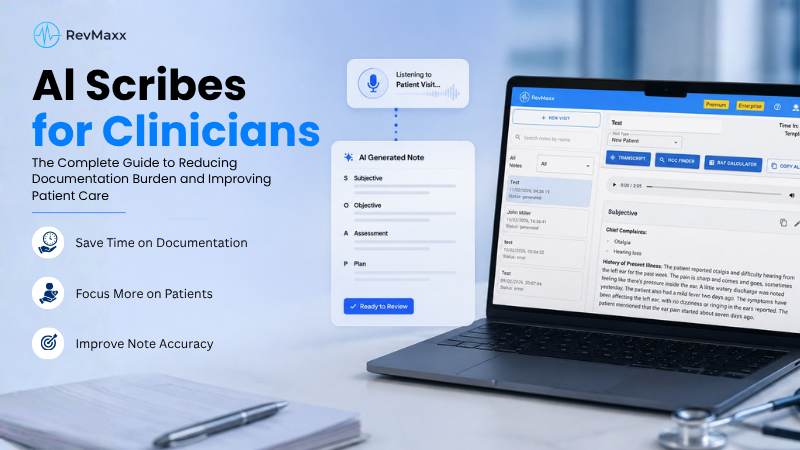
An AI scribe automatically organizes the information into a clean SOAP format. This ensures:
- Standardized notes across all visits
- Clear assessments and plans
- Accurate patient histories
- Better communication with other clinicians
For small practices, having consistent documentation makes chart audits and insurance claims much smoother.
Enhancing Patient Experience Through More Face-Time:
Patients feel neglected when their providers are busy typing notes. Patients have less direct eye contact, conversations are less personal. Patients want to be listened to, valued and feel a sense of connection with their providers. This is especially true in the fields of family medicine, primary healthcare, mental health and specialty clinics.
By using an AI scribe for small practice providers can focus on their patients rather than worrying about how to take notes on what is being said. By having an AI scribe, small practice providers can continue to establish rapport with their patients while providing appropriate information without being concerned with manually writing down every detail.
Allowing Providers to Stay Focused on the Conversation:
When providers are not distracted by typing, they can:
- Understand patient concerns better
- Ask more meaningful questions
- Notice non-verbal cues
- Build stronger connections
In small practices, where patient relationships are the heart of the clinic, this improved interaction makes a huge difference.
Cost-Effective Technology for Small or Solo Providers:
Small clinics often work with limited budgets. Hiring full-time scribes or extra administrative staff is expensive. Outsourced scribes are also costly, and the cost grows as visit volume increases.
An AI scribe provides similar support at a much lower cost. It offers:
- Affordable plans
- No training costs
- No turnover or staffing challenges
- Consistent support throughout the day
Achieving Enterprise-Level Efficiency on a Small Budget:
The efficiency of larger health care organizations is achieved through use of a sophisticated toolset and large staff. By utilising AI technology, smaller medical practices can access similar benefits, but at a much lower overall cost, than that available to larger health care providers who cannot afford to hire as many employees as large organisations can.
This helps them:
- Increase daily patient volume
- Reduce administrative costs
- Improve accuracy
- Provide better care
A small clinic can compete with larger organizations in terms of documentation speed and care quality.
How an AI Scribe for Small Practices Works
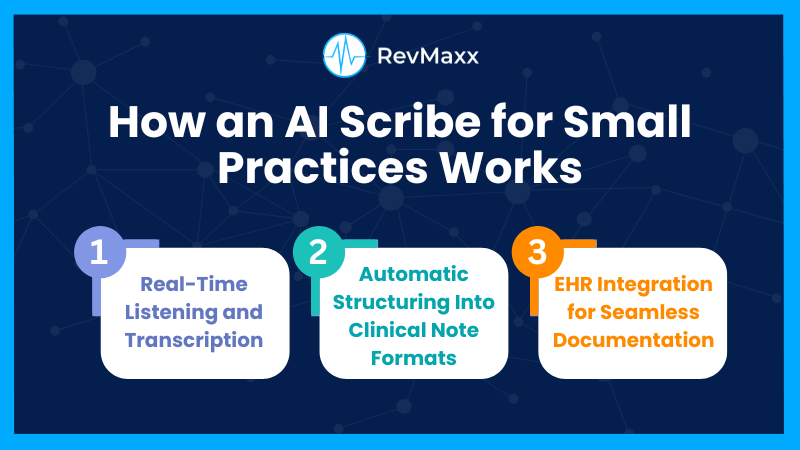
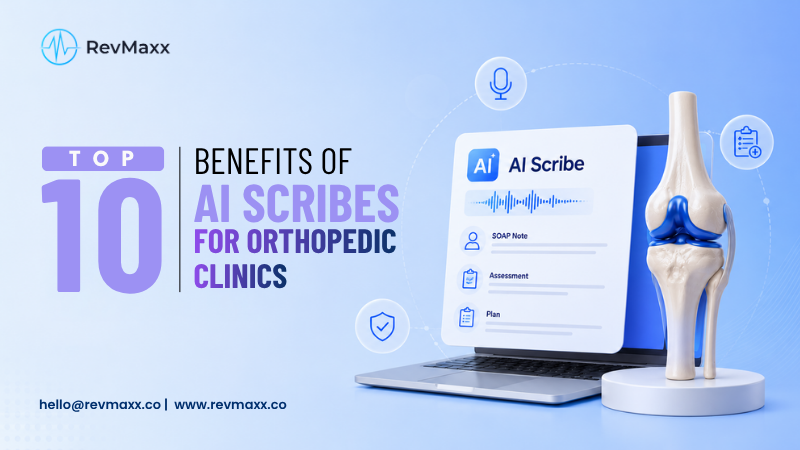
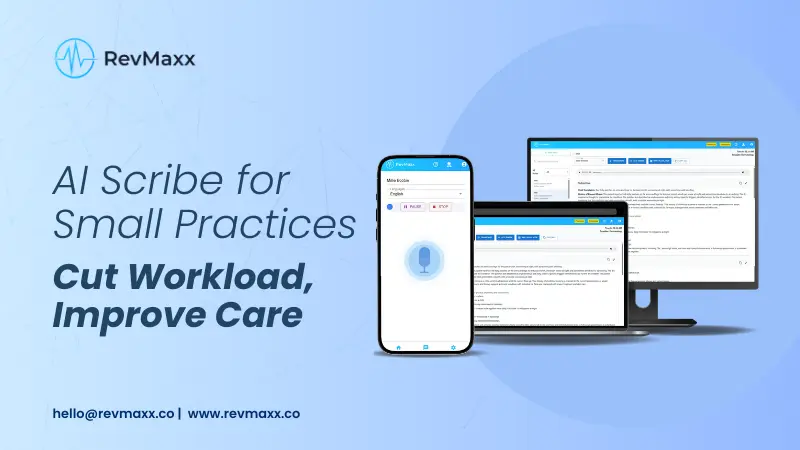
An AI scribe works by listening to the visit in real time and turning patient-provider conversation into clear clinical notes. It organizes the details into the right format and prepares the chart for review. The notes then sync with existing EHR system. Here is how it works:
Real-Time Listening and Transcription:
The scribe listens to the conversation between the provider and the patient (with consent). It captures:
- Symptoms
- Medical history
- Assessment details
- Treatment plans
- Follow-up instructions
This transcription happens instantly, so providers do not need to recall anything later.
Automatic Structuring Into Clinical Note Formats:
Once the conversation is captured, the system organizes it into structured medical notes. This includes:
- SOAP notes
- HPI summaries
- Assessments
- Treatment plans
- Procedure notes
Providers can edit or approve the notes before saving them. Most of the work is already done, so they only spend a few minutes finalizing the chart.
EHR Integration for Seamless Documentation:
An effective AI scribe integrates smoothly with the clinic’s EHR. This allows providers to:
- Send notes directly into patient charts
- Update records without manual typing
- Keep documentation aligned with EHR templates
Seamless integration reduces extra steps and makes daily workflows smoother.
Choosing the Right AI Scribe for Small Practices
Choosing the right documentation tool is an important decision for small practices. Each clinic has its own workflow, specialty needs, and budget. A good scribe should make the provider’s day smoother, not more complicated. It should support accurate documentation, reduce typing, and fit naturally into daily patient visits. When selecting a solution, clinics should look at its features, security, ease of use, and pricing. The goal is to choose a tool that delivers long-term value and keeps the practice running efficiently without adding extra work.
Essential Features to Look For in AI Scribe
Not all scribes work the same way. Some tools are designed for hospitals, while others are made specifically for small or solo practices. The right choice should support your specialty, match your workflow, and help you save time every day.
Small practice healthcare providers should focus on features that give consistent accuracy, comfort, and flexibility. A scribe that fits your work style will reduce editing time and improve documentation quality.
Accuracy, Specialty Support, and Custom Workflows
Accuracy is the foundation of any documentation tool. When the scribe understands your medical terms, phrases, and treatment plans correctly, your charts become easier to complete. Poor accuracy leads to more editing, more frustration, and wasted time.
A strong AI scribe should:
- Capture medical terms correctly, even in fast conversations
- Understand clinical language used in your specialty
- Offer templates that match your notes
- Allow adjustments based on your workflow
- Recognize symptoms, medications, and diagnoses
- Support complex assessments and treatment plans
- Work smoothly with your existing EHR
Specialty support is important for small practices. A family medicine clinic documents differently than a mental health clinic or pain management center. The scribe should adapt to your field and not force you to change your documentation style.
Custom workflows are also helpful. Providers should be able to set their preferred note structure, choose templates, and adjust how the scribe organizes information. This reduces editing time and ensures the final note feels natural and complete.
When accuracy is high and workflows match your needs, your trust in the notes grows. This leads to faster chart completion and better patient documentation overall.
Security and HIPAA Compliance Considerations
Security is non-negotiable in healthcare. Small practices must protect patient information with the same level of care as large hospitals. A scribe handles sensitive patient conversations, so strong privacy standards are essential.
The scribe must follow:
- HIPAA guidelines
- Encrypted data storage for extra protection
- Secure access controls for authorized users only
- Encrypted transfers when sharing notes with the EHR
- Private, protected transcripts
- Zero tolerance for sharing identifiable patient data
Small clinics cannot afford security risks or violations. A data breach can lead to penalties, trust issues, and financial loss. Choosing a secure and compliant AI scribe for small practices keeps patient information safe and gives providers peace of mind.
Pricing Models That Fit Small Clinic Budgets
Most healthcare providers prefer flexible pricing options, such as:
- Monthly subscriptions
- Pay-per-use plans
- Annual discounts
A good AI-powered medical scribe should offer clear, transparent pricing without hidden fees or usage restrictions. Small practices need predictable costs that fit their monthly budget.
Predictable pricing helps small clinics plan their monthly expenses. It also ensures the practice can grow without worrying about rising software costs. Providers should look for a tool that fits their budget today and still supports them as they scale.
Real-World Impact of AI Scribe for Small Practices
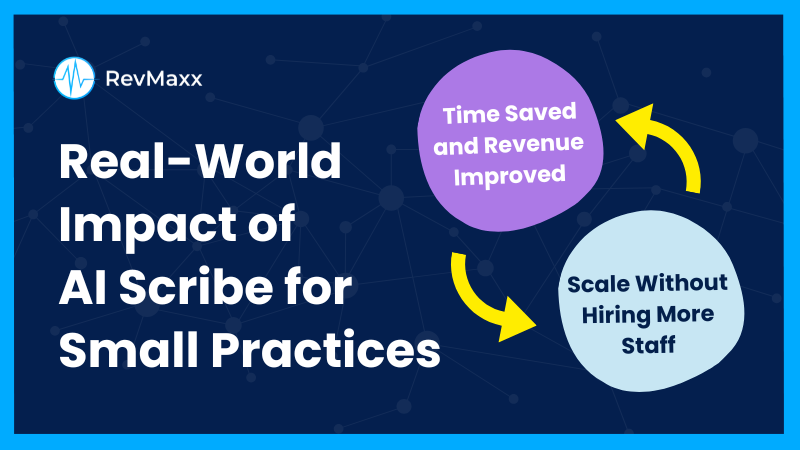
Real results matter most to small practices. Providers want tools that actually save time, reduce stress, and help their business grow. An AI scribe delivers practical benefits that can be seen within days or weeks of use. It improves documentation speed, supports better patient care, and strengthens the financial health of the clinic. Instead of adding workload, it removes pressure and makes daily tasks easier. For many small practices, this tool becomes a turning point in how they manage their time, their staff, and their patient care.
Case Examples of Time Saved and Revenue Improved:
Small practices across different specialties have seen major improvements after using an AI scribe. Even clinics with low patient volume report meaningful results because the scribe cuts down documentation time and reduces mental load.
Most providers save 1–2 hours every day, which can be used for rest, family time, or more patients. Instead of catching up on notes after work, providers finish documentation before leaving the clinic. This brings a sense of relief and reduces burnout.
In many real cases, small practices have reported:
- Completing full chart notes within minutes
- Finishing the workday on time for the first time in years
- Reducing charting errors caused by late-night documentation
- Improving billing accuracy by capturing more complete details
A predictable benefit is increased patient visits. Most clinics can see 2–4 additional patients each day without feeling rushed. This increase adds more revenue without adding new staff or extending clinic hours. Over a month, this can significantly boost income, especially for solo providers.
How Small Clinics Scale Without Hiring More Staff:
Many small practices want to grow but feel blocked because of limited staff. Adding more patients usually means more paperwork, more calls, and more follow-ups. Without help, the administrative strain becomes overwhelming.
An AI scribe changes this by removing the extra documentation load. Providers can handle more patient visits without increasing administrative tasks. Staff can focus on scheduling, patient support, and front-desk duties instead of chasing charts or entering notes manually.
With a scribe, small clinics can:
- Increase patient capacity without burnout
- Keep documentation organized and up-to-date
- Avoid hiring extra staff just to manage paperwork
- Offer new services such as telehealth or specialty visits
- Improve staff satisfaction because they feel less rushed
This gives small practices room to grow naturally. They can add more appointments per week, extend office hours, or serve more complex cases without worrying about falling behind.
Is an AI Scribe Right for Your Small Practice?
Choosing new technology for a small practice can feel overwhelming. Every decision affects your time, your staff, and your patients. But a documentation tool is different. It has a direct impact on your daily workload and your work-life balance. Many small practices reach a point where they feel stuck—too much paperwork, too little time, and no space to grow. An AI scribe for small practices can help break that cycle. It supports providers, reduces burnout, and gives clinics more room to breathe. Before you decide, it helps to look closely at your current challenges and see whether this tool fits your needs.
Questions to Help You Decide
A simple way to know if a scribe is right for you is to check how much time you spend on documentation and how it affects your day. Most small practices struggle with long charting hours and limited staff, which makes this tool a strong fit.
You may benefit from an AI scribe if:
- Documentation takes too long
- You finish notes after work
- Patient visits feel rushed
- You want to increase daily visits
- You work with limited staff
- You want consistent and accurate notes
- You want more face-time with patients
If even two or three of these apply, your practice might be a good fit.
How to Start With a Trial or Pilot Program
Starting with a RevMaxx FREE trial is the easiest way to see how the scribe fits your daily workflow. Most small practices begin with a short pilot program. This helps providers test the tool during real patient visits without changing their routine.
You can start by choosing 5 demos, such as follow-ups or routine checkups. This keeps the trial simple and focused. RevMaxx captures notes in the background while you continue your normal conversations. You can review and edit the notes before sending them to your EHR.
The pilot shows how much time you save, how accurate the notes are, and how it supports your staff. If the trial feels helpful, you can get a subscription plan and expand it to all visits.
The Final Thought
Small practices work under enormous pressure. Heavy documentation, limited staff, and growing patient needs make daily operations challenging. An AI medical scribe offers real relief. It cuts charting time, reduces burnout, improves accuracy, and helps providers stay focused during patient visits.
It gives small clinics the power to work like larger organizations, without hiring more staff or increasing costs. If you want to improve efficiency, protect your time, and deliver better care, exploring an AI scribe for small practice is a smart next step.