Healthcare is all about listening, caring, and providing better patient care. But unfortunately, most of the doctors and healthcare staff are spending most of their working hours filling out EHR charts or typing notes. This burdensome administrative workload causes physician burnout and negatively impacts care.
To overcome these challenges, new technologies have emerged. Among them, AI medical tools have become a key part of the everyday healthcare system.
These tools are not only supporting physicians in diagnosis but also automating clinical documentation tasks. They are opening doors to better healthcare efficiency and improved patient care.
But before jumping in, carefully consider what factors to keep in mind while adding AI medical tools in healthcare practices.
What Are AI Medical Tools?
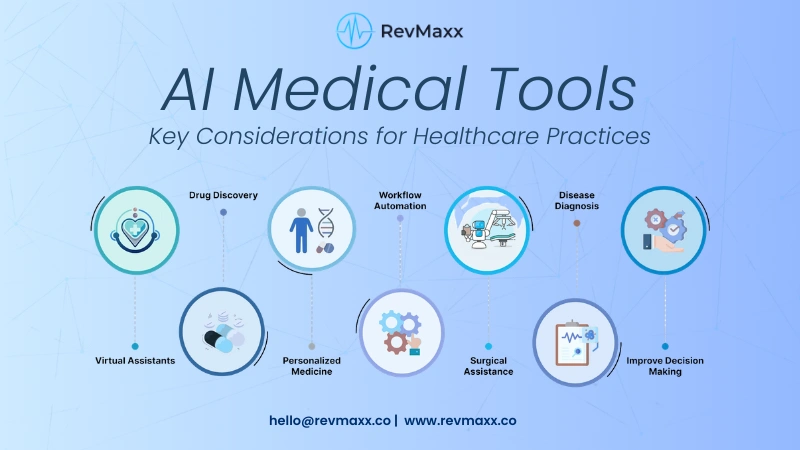
AI medical tools are artificial intelligence-powered technologies used to provide support in healthcare settings. These are used to deliver better, faster, and more accurate patient care. They use advanced machine learning, algorithms, and natural language processing (NLP) technologies to analyze patient data, automate note generation, and assist healthcare providers in decision-making.
Examples of AI Medical Tools
AI Medical Scribes:
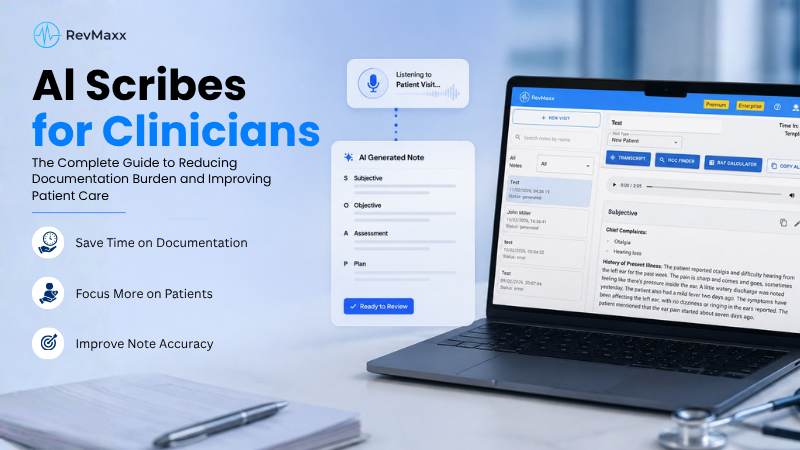
AI scribing tools listen during patient-doctor consultations and automatically create clear, structured clinical notes. This reduces the paperwork burden, saves time, and allows doctors to focus more on patients instead of typing into the EHR.
AI Imaging Tools:
AI imaging tools act like an extra set of eyes, which are spotting early signs of conditions such as cancer, strokes, or fractures. They help radiologists make faster and more accurate diagnoses.
Predictive Analytics Tools:
These tools study large amounts of patient data, like lab results, medical history, and lifestyle patterns. It is used to predict future health risks. If a patient is at high risk of developing heart disease or diabetes, these tools warn the physicians. This early insight helps in starting preventive care before problems get serious.
Virtual Health Assistant:
These are AI-powered chatbots and apps that guide patients with simple health questions, medication reminders, or symptom checks. If a patient wants to know whether a mild fever needs medical attention, the assistant can suggest next steps. This improves patient engagement and reduces unnecessary hospital visits.
Why Are Healthcare Practices Turning to AI Medical Tools?
Many healthcare providers are leaning into AI medical tools for some good reasons. These advanced technologies not only save physicians’ time but also reduce stress and burnout. Doctors often spend hours on managing routine administrative tasks and burdensome paperwork. AI tools are now taking over this workload and leaving more time for what really matters: their patients.
According to a 2024 survey report, 86% of healthcare organizations are already leveraging these advanced tools and technologies. The advanced ambient documentation tools analyze large amounts of data, spot patterns, and assist in decision-making in real time. As a result, they are taking over the administrative load from physicians and leaving more time for direct patient care.
Key Considerations Before Adopting AI Medical Tools
Compliance and Regulation
When applying AI to the practice of medicine, the biggest issue should be compliance and patient data protection. AI medical devices that deal with patient information are required to adopt HIPAA privacy and safety standards. Failure to adopt a HIPAA-compliant tool may result in severe violations, such as fines and loss of patient trust.
By HIPAA regulation, the EHR system must be ensured to be protected by robust encryption, secure communication, and access controls. These prevent unauthorized access to confidential patient health information.
Another important point is FDA approval and state-level regulations. AI tools that are used in clinical decision-making may need clearance before they can be safely used in patient care. Most importantly, vendors need to sign a Business Associate Agreement (BAA). ensures the vendor accepts legal responsibility for protecting patient data. Without it, the practice takes on unnecessary risk.
Data Privacy and Security:
Protecting patient privacy is one of the biggest responsibilities for any healthcare practice adopting AI. Since AI tools often process large amounts of sensitive patient information, strong safeguards like encryption, secure storage, and access control are essential. These measures help prevent data from being exposed to unauthorized users.
Another risk comes from data sharing and third-party integrations. Some AI systems are designed to use the data entered into them for further training. While this might improve the tool, it can create serious problems when patient data is involved. If health records are shared without proper controls, it could lead to privacy violations and non-compliance with HIPAA standards.
That’s why transparency is so important. Healthcare providers must clearly understand how an AI vendor collects, stores, and uses data. By choosing tools that prioritize transparency and follow strict privacy rules, medical practices can protect patients’ trust while using AI to improve care.
Integration with Existing Systems
One of the largest issues with implementing AI in medicine is ensuring it integrates well with what a practice already has. Most medical professionals are dependent on Electronic Health Record (EHR) systems, so any AI medical device must integrate with them. If it does not integrate well, it can cause more work rather than save time.
Another major criterion is simplicity of workflow adoption. Employees should not feel burdened with the need to learn a complex system. AI must make their work simpler, not more difficult. Transparent training, intuitive design, and easy features can empower employees to feel confident and ready to use the tool in day-to-day work.
Although, interoperability with other systems remains a tricky issue with healthcare IT. Practices might work on numerous platforms which do not always talk well to other systems. Gaps, delays, or errors in data may result.
The goal should be smooth integration, where the AI tool becomes a natural part of the workflow. When done right, it improves efficiency, reduces stress, and ensures that both staff and patients benefit.
Accuracy and Reliability
AI medical devices are strong, yet not flawless. They should not be used solely for medical decision-making because data errors or algorithm flaws could result in unsafe conclusions. In the healthcare industry, even minute errors are unacceptable.
That is why human input is necessary. Physicians and nurses need to remain the ultimate decision-makers with AI as a tool in assistance, not substitution. AI can assist by reviewing patterns, writing notes, or presenting alternatives, but clinical wisdom must always direct the result.
There have been cases where AI tools made wrong predictions or misread medical images. These examples remind us that while AI is helpful, it works best when combined with human expertise. Together, they create a safer, more reliable approach to patient care.
The Final Words
RevMaxx AI Medical Scribe and other AI medical software are revolutionizing healthcare by cutting paperwork, enhancing accuracy, and allowing providers more time for patients. But it must be adopted with care, looking to compliance, security, integration, costs, and patient trust. Begin small and train personnel and the process can be made easier. Note that AI isn’t here to replace physicians or nurses—it helps them.
With RevMaxx AI Medical Scribe, practices have a trusted ally that simplifies documentation and provides accurate notes, allowing providers to deliver care that is efficient, accurate, and compassionate.