
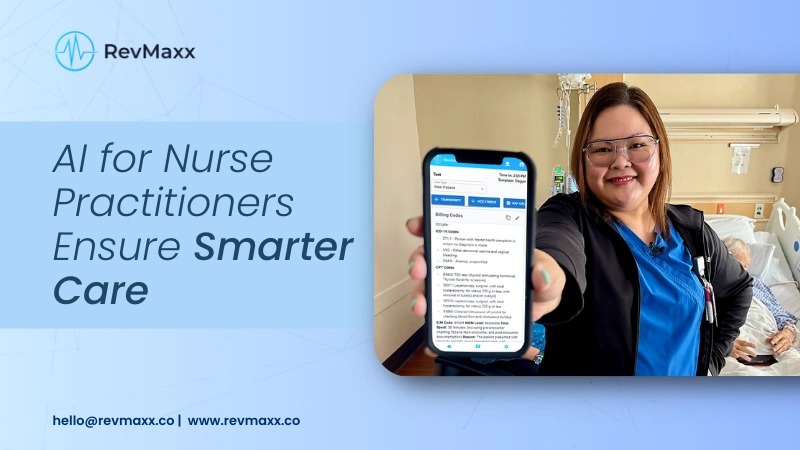
Nurse practitioners (NPs) play a vital role in healthcare facilities. They do much more than treating patients- diagnosing, delivering quality care, and handling a lot of clinical documentation tasks. But with the growing documentation workload and endless administrative tasks, NPs feel overwhelmed. This is where AI for nurse practitioners is making a real difference. From generating clinical notes automatically to helping with treatment decisions, AI is helping NPs save valuable time, reduce burnout, and give better patient care.
Let’s read this blog carefully and learn how AI is changing clinical documentation work for NPs.
The Expanding Role of Nurse Practitioners in Modern Healthcare
From Patient Care to Administrative Duties:
Over the last few years, nurse practitioners have become the most crucial part of primary and specialty care. They are responsible for managing patient care from start to finish- diagnosing, prescribing, counseling, and more. They are also responsible for handling follow-ups, documentation, referrals, and charting.
Due to these burdensome responsibilities, NPs often spend more time in front of computers rather than with patients. These administrative duties often take up more time than direct patient care, leaving many nurse practitioners stretched thin.
The Growing Challenge of Documentation and Burnout:
Healthcare documentation is crucial, yet it’s also the largest headache for nurse practitioners. Research indicates that NPs spend close to one-third of their day data-entering into EHRs. Charting at night, redundant data entry, and compliance are common factors leading to nurse burnout and dissatisfaction with work.
This increasing burden can cause stress, frustration, and even suboptimal care. If clinicians are fatigued or preoccupied with paperwork, the quality of patient interaction and care is inevitably compromised. This is why the healthcare sector is looking to artificial intelligence to relieve these burdens and enable NPs to do what they do best: care for patients.
Understanding the Power of AI for Nurse Practitioners
What Does AI Mean in Healthcare?
Artificial Intelligence (AI) in medicine is the application of sophisticated algorithms and machine learning to sort through massive amounts of medical data, identify patterns, and offer smart insights. AI assists physicians, nurse practitioners, and healthcare professionals by automating the documentation process, enabling them to make quicker and more precise decisions.
From diagnosis and treatment planning to clinical documentation, AI technologies can support nurse practitioners at all points in the care process. These technologies do not substitute for the clinician; they augment their abilities, enabling more effective and evidence-based care.
Why Are Nurse Practitioners at the Center of AI Adoption?
Nurse practitioners tend to be the patients’ first contact, addressing everything from checkups to long-term conditions. Because they deal with both administrative and clinical duties and are involved directly with documentation, they are the ones who can use AI the most.
AI can assist in automating mundane tasks such as taking notes, scheduling, or data input, freeing up NPs to focus solely on patient care and minimizing paperwork.
By leveraging AI medical scribes and predictive analytics tools, NPs can spend less time on data entry and more time building patient relationships. This is why many clinics and hospitals are making AI part of their daily workflow.
Key Ways AI is Supporting Nurse Practitioners
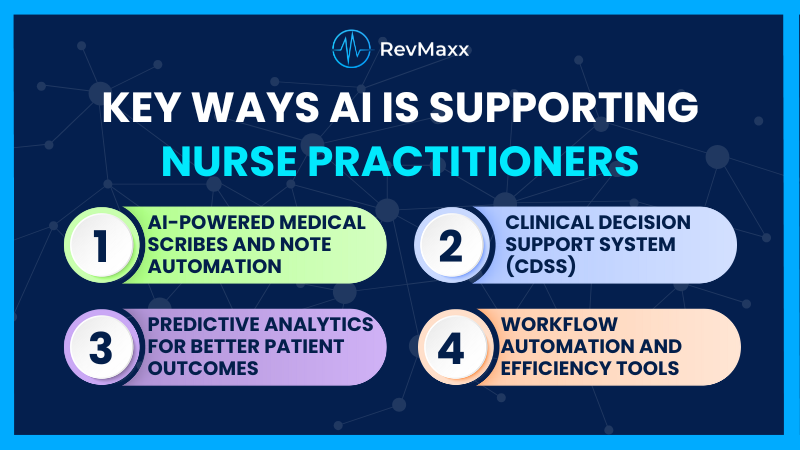
AI-Powered Medical Scribes and Note Automation
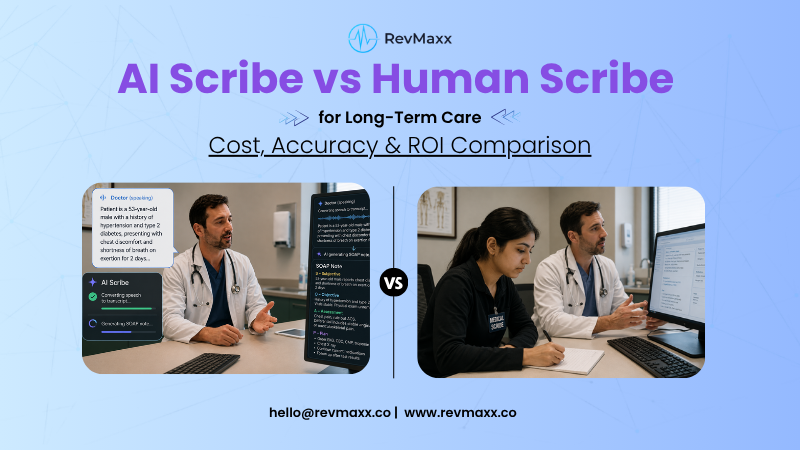
- Real-time Transcription and Charting: One of the largest advances in AI for nurse practitioners is medical scribes enabled by AI. These intelligent assistants operate quietly in the background. It diligently listens during patient interactions and automatically translates conversations into structured clinical notes. It updates the notes into the current EHR system like PointClickCare, liberating NPs from typing or dictation post-appointments. As a result, no more late-night documentation sessions or hours lost to manual charting. With AI scribes, every patient encounter is recorded accurately, allowing providers to focus entirely on listening and connecting with their patients.
- Time Savings and Improved Accuracy: AI scribes not only increase the speed of documentation; they reduce human error by capturing all the details, including- medication, symptom, and follow-up plans with precise accuracy. This translates to more complete, compliant, and consistent reports. Nurse practitioners therefore save valuable time per visit, and this enables them to see more patients without compromising the quality of care.
Clinical Decision Support System (CDSS)
- Data-Driven Diagnosis and Treatment Assistance: Artificial intelligence-driven Clinical Decision Support Systems (CDSS) help nurse practitioners make informed decisions. They analyze patient data, history, and laboratory results to give evidence-based suggestions for diagnosis and better care. They work as sage advisors, helping nurse practitioners consider all the possibilities before formulating a treatment care plan. For instance, if the patient's test results depict abnormal patterns, AI can highlight them for inspection. It's like having a second opinion at your fingertips.
- Reducing Errors and Enhancing Patient Safety: In recognizing red flags prior to time, such tools significantly reduce the risk of medical errors. It is a second pair of eyes, so no critical information is left behind. Not only does it enhance patient safety, but also nurse practitioners' confidence in clinical decision-making.
Predictive Analytics for Better Patient Outcomes
- Early Detection of Risk Factors: AI technologies can analyze patient trends, lab tests, and population health data to identify patients who are at risk of getting chronic diseases like diabetes, hypertension, or cardiovascular disease. This predictive capability allows nurse practitioners to respond early and implement preventive care plans.
- Personalized Care Recommendations: AI not only identifies risk early on; it can also tailor care. Depending on patient information, AI systems can suggest personalized diet plans, medication regimens, or lifestyle modifications. This degree of individualized care enhances patient participation and long-term results, consistent with the integrative care philosophy that NPs embrace.
Workflow Automation and Efficiency Tools
- Scheduling and Follow-Up Management: AI can manage mundane tasks such as scheduling appointments, reminders, and follow-up and even streamline administrative processes. Smart scheduling systems are able to automatically assign appointment slots, remind patients, and optimize daily schedules. This minimizes no-shows and enables clinics to function efficiently.
- Streamlining Communication Between Teams: AI in healthcare technology makes communication between nurse practitioners and physicians, labs, and administrative experts easier. They are automatically alerted and updated regularly, making everyone aware and avoiding patient care coordination delays.
Benefits of AI Integration for Nurse Practitioners
Reduced Documentation Burden
With automated transcription and note-taking, AI liberates NPs from the time invested in clinical and administrative paperwork. With increased patient face time and decreased after-hours clerical work, job satisfaction is significantly enhanced.
Improved Clinical Accuracy and Efficiency
AI technologies assist in diagnosis, drug control, and treatment plan generation. This is ensuring accuracy and reducing the potential for mistakes. Using large-scale medical databases, AI allows NPs to make rapid informed, evidence-based decisions. This increases confidence in decision-making and minimizes the risk of errors.
Enhanced Patient Satisfaction and Experience
When providers are not as distracted by technology and documentation, they are better able to focus on patient communication. By removing NPs from screens and paper, AI systems instill confidence, enhance comprehension, and boost general patient satisfaction.
Better Work-Life Balance for Healthcare Providers
Fewer late nights charting translates to more sleep and personal life. By removing the administrative burdens from their shoulders, AI allows nurse practitioners to balance life and work better. They can finish their charting in time, reduce burnout, and maintain the energy needed to offer compassionate care.
Challenges and Ethical Considerations for Nurse Practitioner
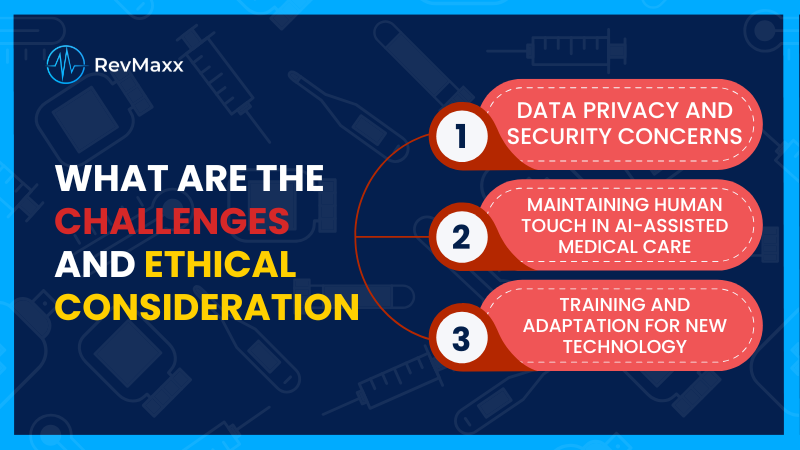
- Data Privacy and Security Concerns: AI healthcare systems handle sensitive patient data, so privacy and security are top priorities. Healthcare organizations must ensure that AI systems comply with HIPAA and other privacy regulations to safeguard sensitive data from breaches or misuse.
- Maintaining Human Touch in AI-Assisted Care: While AI enhances efficiency, the emotional connection between nurse practitioners and patients remains irreplaceable. So, it is essential to maintain empathy, compassion, and human judgment alongside technological support.
- Training and Adaptation for New Technology: Adopting AI tools requires proper training and adaptation. Nurse practitioners need to understand how these systems work, interpret AI insights responsibly, and stay updated on evolving technologies. Continuous learning helps them stay confident and in control.
The Future of AI for Nurse Practitioner
AI as a Partner, Not a Replacement:
The goal of AI is not to replace nurse practitioners – it is to empower them. AI serves as a reliable partner that takes care of repetitive tasks, allowing NPs to focus on empathy, communication, and complex decision-making so that patients can get better care.
Upcoming Innovations to Watch in 2026 and Beyond:
In the upcoming years, it is expected to see more advanced AI-driven diagnostic tools, voice-based clinical assistants, and predictive care platforms tailored specifically for nurse practitioners. As these technologies become more intuitive, they will further bridge the gap between clinical efficiency and compassionate patient care.
Conclusion
The integration of AI for nurse practitioners marks a new era in healthcare- where technology and humanity work hand in hand. By automating documentation, enhancing accuracy, and supporting data-driven decisions, AI enables nurse practitioners to focus on what truly matters: caring for patients.
As AI continues to evolve, nurse practitioners will remain at the forefront of this transformation. It is leading the way toward smarter, more efficient, and more compassionate healthcare for all.