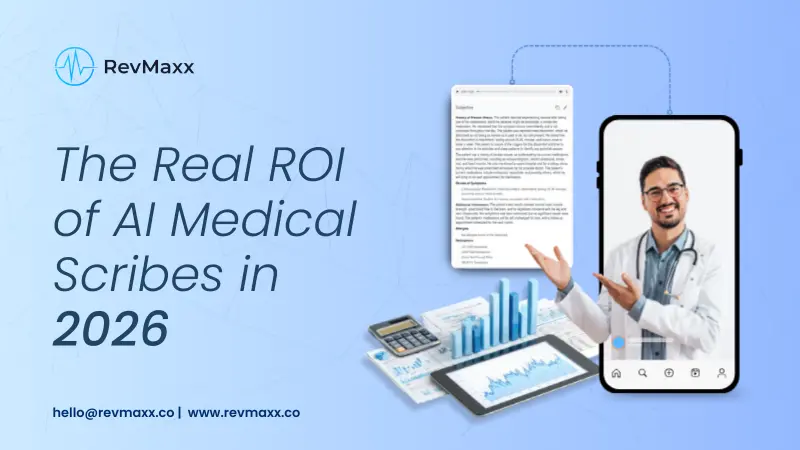
In 2026, healthcare leaders are asking tougher questions. Budgets are tight, staff are stretched, and patient expectations are higher than usual. Every new tool must prove its value. That is why ROI matters more now than it did a few years ago.
AI medical scribes are no longer a “nice to have” tool; they are now becoming a great investment decision. Leaders want some clear answers, like
- Does this reduce cost?
- Does it improve care?
- Does it help retain staff?
- Does it pay for itself over time?
ROI is not only about money saved. It is also about time gained, stress reduced, and care improved. So, in this blog, we break down the real return on investment of AI medical scribes in 2026, using clear language and real-world impact.
Let’s get started!
Introduction – Why ROI Matters More Than Ever in 2026
In 2026, return on investment (ROI) matters more than ever as healthcare organizations face mounting pressure from rising operating costs, workforce shortages, tighter reimbursement models, and increased regulatory scrutiny. Leaders are no longer evaluating technology based on innovation alone—they are demanding clear, measurable financial and operational impact.
Every investment must demonstrably improve efficiency, protect revenue, reduce burnout, or enhance care quality. In this environment, solutions that cannot quantify value in terms of time saved, costs reduced, or outcomes improved are quickly deprioritized. ROI has become the common language connecting clinical excellence, operational sustainability, and long-term growth.
Rising Operational Costs in Healthcare
Healthcare costs keep rising every year. Staffing costs are higher. Technology costs are higher. Compliance requirements are growing. Even small clinics feel the pressure.
Hospitals and long-term care facilities face added costs from overtime, contract staff, and turnover. Documentation takes more time than ever. Every extra minute spent charting adds cost. Over a year, this becomes a major financial burden.
In this environment, leaders must find ways to do more with the same or fewer resources. Tools that reduce wasted time quickly stand out. Clinicians, on average, spend about 2 hours on electronic medical record (EMR) tasks for every 1 hour of patient care—creating a massive opportunity for automation to deliver ROI.
Documentation Burnout as a Hidden Financial Drain
Documentation burnout is real. Clinicians spend hours each day on EHRs. Many chart late at night or on weekends. This unpaid time adds stress and fatigue. Burnout leads to mistakes, sick days, and resignations. Replacing a single clinician can cost thousands, and lost productivity adds even more cost.
This burnout rarely appears on a balance sheet. But it affects revenue, quality, and patient satisfaction. Any solution that reduces documentation burden has real financial value.
AI Medical Scribes in 2026 as a Strategic Investment
AI medical scribes are not just tools. They are strategic investments. They support clinicians where they struggle the most—documentation. By capturing patient-provider conversations and creating structured notes, AI scribes remove hours of manual work. This time can be used for patients, care planning, or rest.
In 2026, organizations view AI scribes as long-term assets. They improve efficiency today and protect workforce stability tomorrow.
What “ROI” Really Means for AI Medical Scribes
ROI is often reduced to dollars saved. But for AI medical scribes, ROI is broader. It includes financial, operational, and human benefits. Understanding this full picture helps healthcare leaders make better decisions.
Beyond Cost Savings
Cost savings always matter, but this is only one part of the return. AI medical scribes change how work gets done. It carefully listens to the patient-physician conversation and generates clear, accurate SOAP notes in real time. They give time back to clinicians, reduce stress, and improve note quality. These benefits compound over time.
Time Reclaimed by Providers
Time is the most valuable resource in the healthcare system. AI scribe can save a valuable 2-3 hours each week per provider. During patient visits, this tool quietly works in the background, captures every patient visit, and transcribes them into structured clinical notes in minutes. Less typing means faster visits. Notes are done sooner. Providers no longer stay late to finish charts. Over a year, reclaimed time adds up to weeks of productivity.
Improved Work-Life Balance
Clinical documentation overload often causes stress and burnout to physicians. As a result, it directly affects their performance. When clinicians leave work on time, they recover better and are more focused the next day.
AI scribes help them separate work from personal time. This reduces burnout and improves job satisfaction. Happy providers stay longer, and retention itself is a strong ROI factor.
Financial vs Operational ROI
Financial ROI shows up quickly in budgets and reports. Operational ROI shows up in daily work. It affects how smoothly clinics run and how teams feel at the end of the day. In 2026, leaders look at both together. Strong financial results without operational relief do not last. Sustainable ROI needs balance.
Direct Cost Reductions
Direct savings help justify AI scribes early. Leaders can track reduced spending month by month. Fewer overtime hours mean lower payroll pressure. Less dependency on outside transcription vendors also cuts fixed costs. Over time, these savings become predictable and easier to plan for across departments and facilities.
Indirect Revenue Gains
Indirect revenue grows quietly but steadily. Faster chart completion means claims move sooner. Clean notes reduce back-and-forth with billing teams. Providers who finish work on time stay focused during visits. That focus improves care quality, which supports patient loyalty and long-term revenue growth. Practices have seen 15–25% increases in patient volume due to improved workflow efficiency.
Key Cost Areas Impacted by AI Medical Scribes in 2026
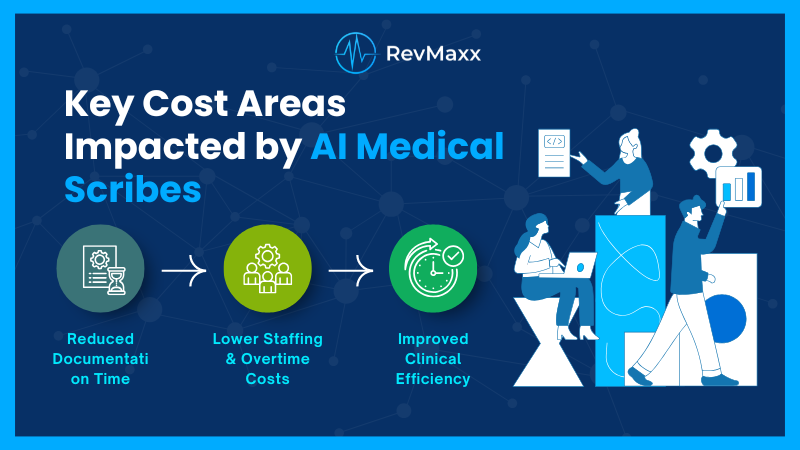
Cost impact is spread across many workflows. Some savings are visible right away. Others appear over months. AI scribes reduce small inefficiencies that add up fast. When leaders map these areas clearly, they often find ROI is higher than expected over a full year.
Reduced Documentation Time
Shorter documentation time changes daily routines. Providers no longer feel rushed between visits. Notes are completed while details are fresh. This reduces rework and corrections later. Over weeks and months, saved minutes turn into hours of regained clinical and personal time.
Faster Note Creation
Fast note creation keeps momentum through the day. Providers finish one visit cleanly before moving to the next. This reduces mental load. It also lowers the risk of missed details. Faster notes help teams stay organized, especially in busy clinics with high patient volumes.
Less After-Hours Charting
After-hours work affects morale and health. Reducing it has a strong emotional impact. Providers can disconnect after work. They return the next day with more energy. This improves focus and reduces mistakes. Over time, fewer late nights help prevent long-term burnout.
Lower Staffing & Overtime Costs
After-hours work affects morale and health. Reducing it has a strong emotional impact. Providers can disconnect after work. They return the next day with more energy. This improves focus and reduces mistakes. Over time, fewer late nights help prevent long-term burnout.
Reduced Need for Manual Transcription
Manual transcription adds delay and expense. It also increases the risk of errors. AI scribes deliver notes faster and with more consistency. Staff no longer wait hours or days for reports. This speeds up clinical and billing workflows while reducing dependence on external services.
Decreased Burnout-Related Turnover
When staff feel less pressure, they stay longer. Documentation stress is one of the top reasons clinicians leave. AI scribes remove a major daily frustration. Providers feel supported instead of overwhelmed. Stable teams improve care quality. They also reduce the constant disruption caused by frequent resignations and replacements.
Improved Clinical Efficiency
Efficiency improves when work flows smoothly. AI scribes reduce clicks, typing, and system switching. Providers move from one patient to the next with clarity. There is less mental fatigue. Teams communicate better. Small improvements in workflow create noticeable gains in speed, focus, and overall care delivery.
Higher Patient Throughput
Smooth documentation helps clinics stay on schedule. Visits do not run late due to unfinished notes. Providers manage their time better throughout the day. This allows more appointment slots without adding pressure. Over months, even a slight increase in daily visits adds steady and reliable revenue growth.
More Face-to-Face Care Time
Patients notice when providers are present and engaged. Eye contact and active listening build confidence. AI scribes remove the need to type during visits. This creates stronger connections. Patients share more details. Providers make better decisions. Trust grows, and satisfaction scores often improve as a result.
Revenue Growth Enabled by AI Medical Scribes
Revenue growth comes from better workflows, not harder work. AI scribes improve how information flows from the visit to billing. Notes are completed faster and more accurately. This supports timely claims and fewer corrections. Over time, these improvements create a healthier and more predictable revenue cycle.
More Complete and Accurate Documentation
Accurate documentation reduces gaps in clinical records. AI scribes capture details that may be missed during manual note-taking. This leads to stronger patient histories. It also supports continuity of care. Complete notes help clinical, billing, and compliance teams work from the same reliable information.
Better Coding Support
Coders rely on clear clinical details. AI scribes structure notes in a way that supports coding workflows. Diagnoses, procedures, and care decisions are easier to identify. This reduces follow-up questions. Coding becomes faster and more accurate, leading to fewer delays and improved reimbursement outcomes.
Fewer Missed Charges
Missed charges often happen due to incomplete notes. AI scribes reduce this risk by capturing full visit details. Treatments, assessments, and procedures are clearly documented. This ensures services are billed correctly. Revenue improves without adding extra steps or additional administrative workload for providers.
Reduced Claim Denials
Denials slow down cash flow. They also increase staff workload. AI scribes help prevent this by producing clear and consistent documentation. Claims are easier to support. Fewer clarifications are needed. Billing teams spend less time reworking submissions and more time managing successful reimbursements.
Clearer Clinical Notes
Clear notes explain the “why” behind care decisions. AI scribes help organize information in a logical way. This supports medical necessity requirements. Payers can understand the care provided. As a result, claims move faster through review and are less likely to be questioned.
Improved Audit Readiness
Audits are stressful when documentation is inconsistent. AI scribes create structured and complete records. Information is easier to find and review. Teams feel more prepared. This reduces last-minute scrambles. Strong documentation helps organizations respond confidently to audits and regulatory reviews.
Compliance, Risk Reduction, and Long-Term Value
Compliance protects both patients and organizations. AI scribes support clear documentation standards. They reduce variation in how notes are written. This lowers risk over time. Consistent records support quality programs, reporting requirements, and long-term operational stability across departments and care settings.
Standardized and Structured Documentation
Standard documentation helps teams work together. AI scribes apply consistent formats across providers and locations. This reduces confusion and errors. New staff adapt faster. Reviews become easier. Structured notes improve communication between clinical, billing, and compliance teams, supporting smoother daily operations.
Consistent SOAP Notes
SOAP notes help organize clinical thinking. AI scribes maintain this structure across visits and providers. Information is placed in the right sections. This improves clarity. Reviewers understand notes faster. Consistent SOAP formatting supports both clinical care and regulatory expectations.
Specialty-Specific Templates
Each specialty has unique documentation needs. AI scribes adjust templates based on care type. Behavioral health, primary care, and post-acute notes differ. Custom templates improve relevance. Providers spend less time editing. Notes feel more accurate and aligned with real clinical practice.
Audit and Legal Protection
Strong documentation protects against disputes. AI scribes help create clear, detailed records. These records show clinical reasoning and timelines. In legal or regulatory reviews, this clarity matters. Organizations can demonstrate appropriate care and decision-making with confidence.
Exact Transcription Visibility
Access to original transcripts adds trust. Teams can review what was said during visits. This supports transparency. It also helps resolve questions quickly. Exact records strengthen audit responses and legal reviews by providing a clear and accurate reference point.
Documentation Traceability
Traceability shows accountability. AI scribes track when notes are created and reviewed. This creates a clear record trail. Auditors and legal teams value this clarity. Traceable documentation reduces uncertainty and protects organizations from compliance and legal risks over time.
ROI in Long-Term Care and Post-Acute Settings
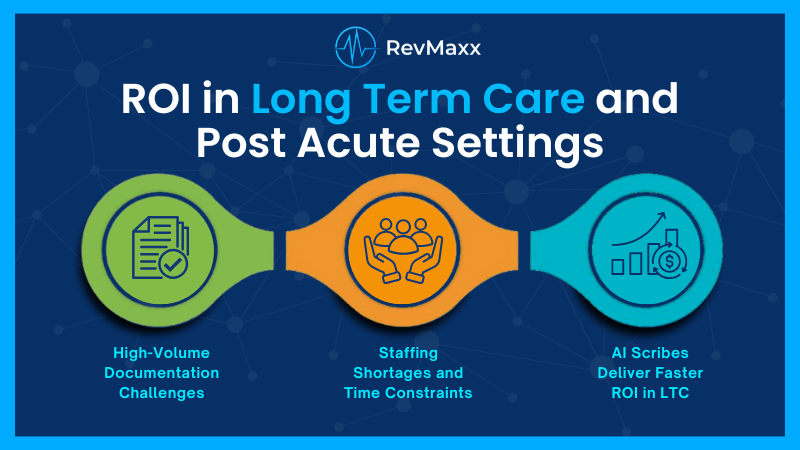
Long-term care and post-acute settings operate under constant pressure. Documentation is frequent and detailed. Staffing gaps make this harder. The AI medical scribe in 2026 fits these environments well. It supports repetitive workflows and high documentation volume. Because notes are created daily, time savings appear quickly. Leaders often see faster ROI here compared to outpatient clinics or specialty practices.
High-Volume Documentation Challenges
LTC teams document everything from daily progress to small care changes. These updates are required for compliance and continuity. Manual documentation takes hours each shift. It increases fatigue and errors. The AI medical scribe in 2026 helps manage this volume. Notes are captured faster and more consistently. Staff no longer struggle to keep up, even during busy or understaffed days.
Staffing Shortages and Time Constraints
Staff shortages are ongoing in LTC. Nurses and providers often handle extra patients and longer shifts. Documentation usually comes last. This creates stress and delays. The AI medical scribe in 2026 helps relieve this pressure. It reduces time spent typing and clicking. Staff can complete notes on time without staying late or sacrificing resident care.
Why AI Scribes Deliver Faster ROI in LTC
ROI appears faster in LTC because documentation is constant. The AI medical scribes in 2026 supports daily notes, shift updates, and care summaries. Savings begin within weeks. Overtime decreases. Completion rates improve. Staff feel the benefit quickly. When relief is immediate, adoption improves and leaders gain confidence in the investment sooner.
Faster Daily Notes
Daily notes are essential in LTC. They also take the most time. The AI medical scribes in 2026 creates structured notes quickly. Staff review instead of writing from scratch. This saves time every shift. Over weeks, those minutes add up. More time becomes available for resident care, communication, and clinical decision-making.
Improved Regulatory Compliance
LTC facilities face strict regulatory reviews. Missing or late notes can lead to penalties. The AI medical scribes in 2026 supports consistent documentation. Required details are captured more reliably. Notes follow standard formats. This improves survey readiness. Teams feel more prepared and less stressed during audits and inspections.
Measuring AI Scribe ROI in 2026
Measuring ROI helps organizations understand real impact. In 2026, leaders track more than cost. They measure time saved, staff experience, and documentation quality. The AI medical scribes in 2026 is evaluated through data and feedback together. This balanced view helps organizations refine workflows and expand adoption with confidence.
ROI | Measured Impact in 2026 |
Average Documentation Time Saved per Provider | 2–3 hours per week |
Reduction in After-Hours Charting | 30–45% decrease |
Improvement in Documentation Completion Rates | 90–95% notes completed same day |
Reduction in Manual Transcription Costs | 60–80% cost reduction |
Increase in Patient Throughput | 15–25% more visits per provider |
Decrease in Burnout-Related Turnover | 20–35% lower clinician attrition |
Faster Claim Submission Time | 20–40% improvement |
Reduction in Claim Denials | 10–25% fewer denials |
Provider Satisfaction Improvement | 25–40% increase in satisfaction scores |
Time to Achieve ROI After Adoption | 3–6 months for most organizations |
Key Metrics Healthcare Organizations Track
Clear metrics show whether workflows are improving. Through the AI scribe, providers keep track of their time savings, completion rates and adoption to help identify and understand patterns over time. When results are consistent, leadership within an organization can have confidence that the solution is performing as intended. The metrics also allow for comparison of performance across multiple departments and locations.
Time Saved Per Provider
Time saved is easy to see and explain. Providers feel it quickly. By 2026, AI-assisted medical record keeping has reduced unnecessary writing, clicking and filing – they are reducing minutes wasted during each patient’s visit to hours saved from their clinic. Thus employee productivity will greatly increase throughout the course of the year allowing more time for work/life balance for clinicians.
Documentation Completion Rates
Completion rates show how healthy workflows are. With the AI scribe, notes are finished sooner and more consistently. Backlogs shrink, billing improves, and compliance improves. High completion rates signal that the tool fits real clinical work and supports daily operational needs.
Provider Satisfaction and Retention
Provider satisfaction is critical in 2026. Burnout remains high. The AI medical scribes in 2026 reduces daily frustration. Work feels more manageable and providers feel supported instead of overwhelmed. When satisfaction improves, retention follows. Organizations protect care continuity and reduce the high cost of replacing experienced staff.
Burnout Reduction Indicators
Burnout appears in surveys, sick days, and resignations. The AI medical scribes in 2026 helps reduce these signs. Fewer late nights matter. Less screen time helps. Providers report lower stress and better focus. Reduced burnout leads to better performance, safer care, and stronger long-term workforce stability.
Staff Adoption Rates
Adoption shows trust. If staff use tools daily, it works. The AI medical scribes in 2026 fits natural workflows, so resistance stays low. Training is easier. Consistent use improves documentation quality. Strong adoption ensures that ROI continues to grow over time.
Why RevMaxx Delivers Measurable ROI
Not all tools deliver real value. RevMaxx focuses on real clinical needs. It works in busy, noisy care settings. As an AI medical scribes in 2026, RevMaxx supports speed, accuracy, and scale. This practical design helps organizations move from pilot to full ROI faster.
Designed for Real Clinical Workflows
RevMaxx follows how clinicians actually work. It does not force new habits. This matters in high-pressure environments. The AI medical scribes in 2026 must feel natural. When tools fit daily routines, teams adopt them fully. That leads to consistent use and predictable ROI.
Voice-First Documentation
Voice is the fastest way to document care. RevMaxx ambiently listens during visits. This popular AI medical scribes in 2026 capture details naturally. Providers speak as they normally would. This reduces mental effort and improves accuracy. Voice-first design helps clinicians stay focused on patients, not screens.
Minimal Workflow Disruption
RevMaxx works quietly in the background. Providers do not need extra clicks or screens. This AI-powered scribe fits into existing routines. This reduces resistance during rollout. Care continues smoothly while value builds. Minimal disruption helps organizations see ROI sooner.
EHR-Friendly and Scalable
Integration protects ROI. By 2026, this AI medical scribe tool will integrate with all of the leading EHR systems, such as eCW and Epic, PointClickCare, Practice Fusion, and NextGen. Data flows from one place to another without duplication, eliminating the need for manual copying and pasting. The AI Medical Scribes in 2026 must facilitate continued growth. As organizations expand, the system scales without losing performance or consistency.
PointClickCare and EHR Compatibility
RevMaxx integrates with platforms like PointClickCare. Notes move directly into patient records. This saves time and reduces errors. The AI medical scribes in 2026 ensures documentation stays accurate and accessible where teams already work.
Multi-Provider Scalability
RevMaxx supports multiple providers across shifts and locations. The AI medical scribes in 2026 scales with demand. As more users join, value increases. Shared standards improve consistency. ROI grows as adoption expands across teams and facilities.
Common ROI Myths About AI Medical Scribes in 2026
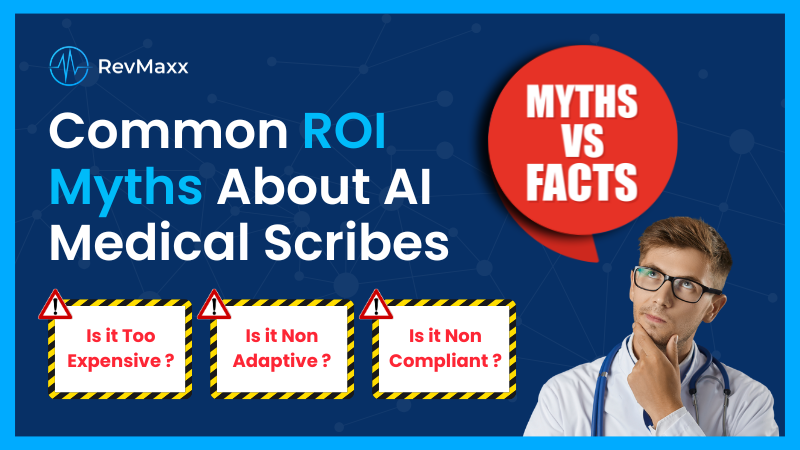
Many healthcare teams delay adoption because of common myths. These ideas often come from outdated tools or early experiences. AI medical scribes in 2026 are more advanced and practical. Understanding the truth behind these myths helps leaders make better decisions and see the real value these tools can deliver.
“AI Scribes Are Too Expensive”
The cost often looks high at first. But price alone does not show value. AI medical scribes reduce overtime, turnover, and billing delays. These savings add up quickly. Over time, the return outweighs the cost. Many organizations recover their investment faster than expected through daily operational improvements.
“Providers Won’t Adopt AI”
Healthcare providers resist tools that create more work. They welcome tools that save time. When AI scribes reduce typing and after-hours charting, adoption improves. Ease of use matters most. In real settings, providers often become strong supporters once they see how much time they get back.
“AI Can’t Be Trusted for Compliance”
Modern AI medical scribes are built with compliance in mind. Notes follow structured formats. Documentation is clear and traceable. Many systems allow review and edits before finalizing. This control builds trust. When used correctly, AI scribes strengthen compliance instead of weakening it.
Final Thoughts – ROI That Goes Beyond Numbers
The real ROI of AI medical scribes in 2026 goes beyond spreadsheets. It shows up in calmer clinicians, better care, and stronger teams. It appears in lower turnover, faster documentation, and improved compliance.
AI scribe tools like RevMaxx are not just cost-saving tools. They are workforce support systems. In a year where every decision matters, investing in the right AI scribe delivers returns that last well beyond the budget cycle.