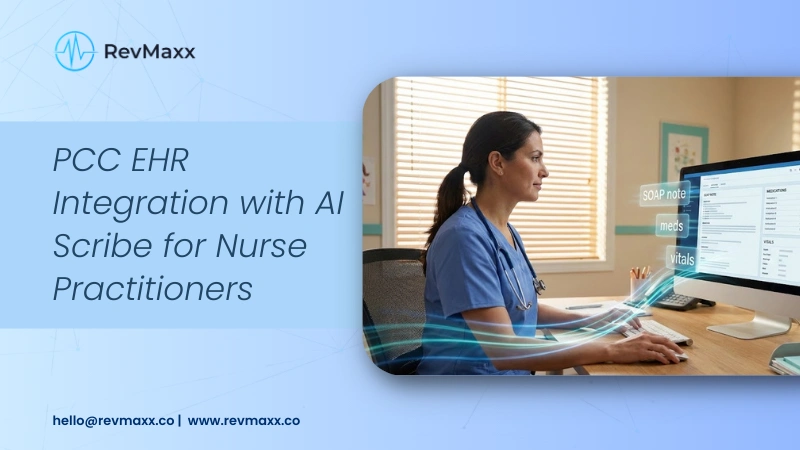
Nurse practitioners, or NPs, are one of the most valuable assets for patient care, especially in long-term care, senior living, and post-acute treatment facilities. Apart from patient care, they are also responsible for completing clinical documentation. Electronic health record systems like PointClickCare EHR have transformed the way NPs store patient data but bring a heavy burden on charting. That is where PCC EHR integration with AI scribe comes in. This integration helps nurse practitioners to shift their focus back on patient care while ensuring accurate documentation.
Let’s explore how PCC and AI scribe integration work and how they become game-changers for nurse practitioners.
Why PCC EHR is Popular with Nurse Practitioners?
PointClickCare or PCC is one of the most reliable electronic health record systems for skilled nursing facilities. It is a secure and integrated cloud-based system utilized in healthcare practices. This EHR system is trusted by more than 27,000 senior care and post-acute providers across North America. It facilitates family-centered care and provides NPs with easy patient scheduling and maintains detailed medical history.
This EHR system facilitates the management of patient records by healthcare professionals, monitors care plans, and streamlines coordination among care teams. Its ease of use and long-term care orientation make it an appropriate platform for nurse practitioners.
Challenges Nurse Practitioners Face with Manual Documentation
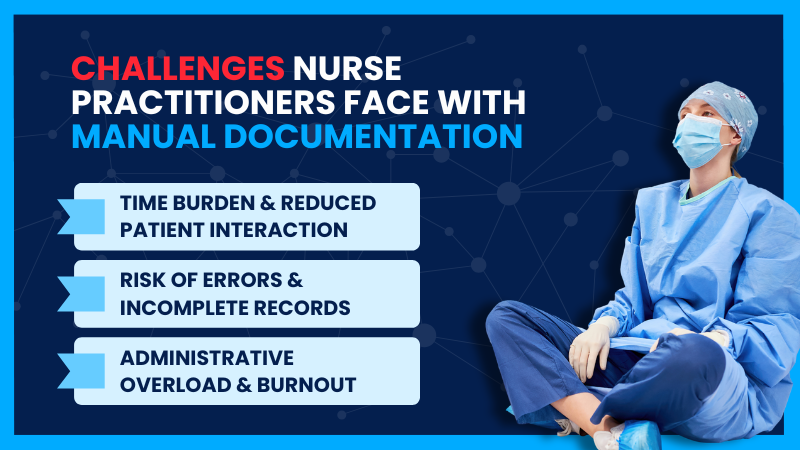
Manual clinical documentation is perhaps the most time-consuming among all the tasks performed by nurse practitioners. They have to document every visit of the patient diligently and accurately report symptoms, treatment planning, medication, and follow-up into the PCC EHR. Therefore, NPs must dedicate more hours to typing notes and not enough time to the patient’s bedside. Studies show that clinicians spend nearly 50% of their workday interacting with EHRs and an additional 1–2 hours after clinic hours completing charts.
As per a study report, nurse practitioners are engaged in almost 25-35% of their working time in documentation of patient interactions. This after-hours EHR charting affects their work-life balance and causes stress and burnout. In fact, a 2023 Medscape survey reported that over 48% of nurse practitioners experience burnout, with documentation being one of the top drivers.To counter this situation, AI scribe and PCC EHR integration are essential. This makes documentation easier and faster than ever before.
The Role of AI Scribes in Healthcare
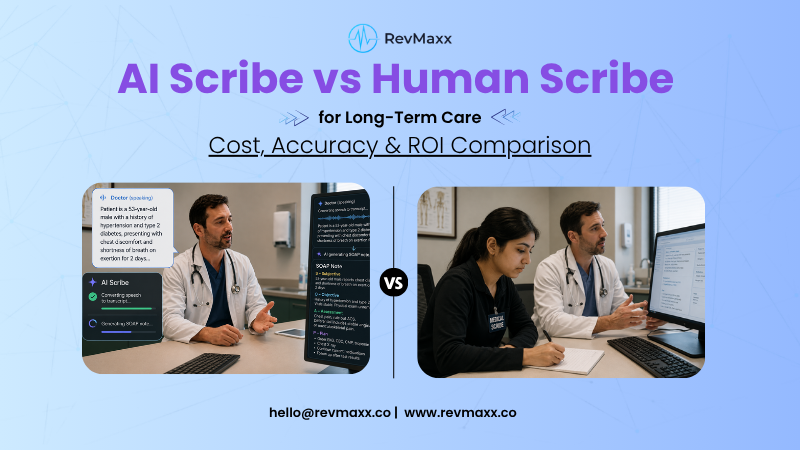
Compared to traditional human scribe, AI scribe in healthcare are meant to make documentation faster, smarter, and more accurate. While manual scribes are often present during visits, patients may feel uncomfortable sharing their personal details in front of them. But with AI scribe, this problem can be easily overcome. This advanced technology silently works in the background, captures patient-doctor conversations, and generates clinical notes in real time. This reduces the chances of errors in documentation, saves physicians’ valuable time, and lets them focus more on patients instead of paperwork.
How AI Scribes Reduce Documentation Workload
An AI scribe for nurse practitioners is the intelligent clinical documentation solution that attentively listens to patient-provider interactions and translates the spoken language into comprehensive clinical notes and uploads directly into the EHR. By automating the documentation process, it helps physicians and nurse practitioners to concentrate completely on face-to-face patient interaction. No more juggling between screens for EHR charting and clinical note taking. AI scribe is here to make the documentation process effortless.
Real-Time Transcription and SOAP Note Generation
It uses advanced machine learning and natural language processing (NLP) technology to accurately capture and translate each patient encounter into structured SOAP (subjective, objective, assessment, and plan) notes. These notes aren’t plopped into the system- they are structured, mapped, and synced directly with PCC EHR into the appropriate sections. This makes it easy for providers to review and sign off with minimal edits, saving hours every week. This automation saves up to 2–3 hours per day, giving NPs more time for personal usages.
Improving accuracy with ICD-10, CPT, HCC & E/M codes
Another big advantage of AI scribes is coding accuracy. Documenting patient notes is also about coding correctly for billing and compliance. Manually assigning ICD-10, CPT, HCC, or E/M codes can be time-consuming and prone to mistakes. A CMS study found that nearly 12% of claims are denied due to coding errors, costing providers thousands in lost revenue. An AI scribe reduces this burden by:
- Suggesting the most accurate codes based on what was discussed during the visit.
- Lowering billing errors that most frequently result in claim denials or delays.
- Assisting providers in faster reimbursement by making sure all the necessary information is reported.
For nurse practitioners, this translates to fewer headaches over coding, less paperwork, and greater assurance that the documentation supports quality care and accurate reimbursement.
Benefits of PCC EHR + AI Scribe Integration
- Streamlined Clinical Workflow: AI scribes facilitate the ease of nurse practitioner documentation for patients with multiple chronic conditions. PCC EHR integration using AI scribes means that during patient visits, key information directly feeds into clinical charts without requiring additional typing. This therefore saves NPs their precious time and keeps patient records accurate and updated.
- More Face-to-Face Time with Patients: Healthcare scribe AI transmutes patient-provider interaction into precise and comprehensive notes in real time. Consequently, nurse practitioners are now able to devote more time listening and attending to patients. Rather than being glued to screens, they can now establish more eye contact and listen closely and enhance the patient care experience.
- Reduce After-hours Charting and Provider Burnout: Thanks to AI scribes, nurse practitioners don't have to spend evenings on completing charts anymore. By eradicating this task, they are now able to leave clinics within their regular time and have their personal time post-clinical hours. This not only enables them to minimize burnout and stress but also helps them maintain a balance in their work and personal lives. In early implementations, clinicians reported a 60–70% reduction in after-hours charting. For NPs, this means more time for rest, family, or continuing education.
- Improved Compliance and Billing Accuracy: Manual charting is prone to errors, misses, and inconsistencies. With the application of AI scribes that enable automation of documentation, clinical notes are standardized and automatically checked against clinical coding and compliance guidelines. This not only reduces billing errors but also improves revenue cycle management.
How Does PCC EHR Integration with RevMaxx AI Scribe Work?
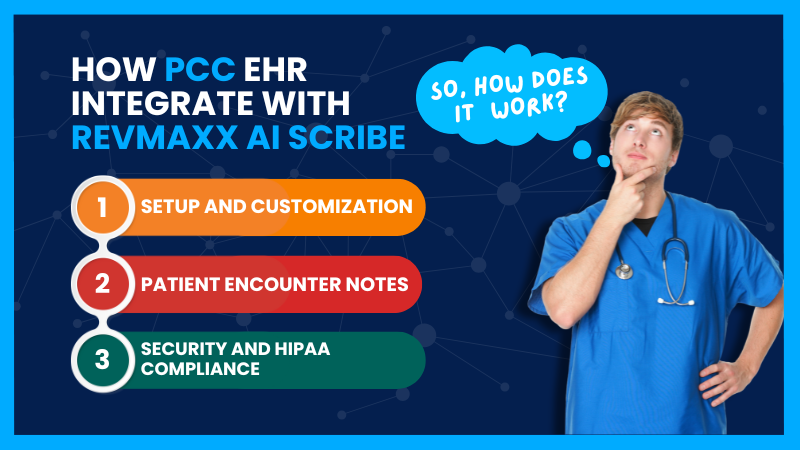
Here is how RevMaxx AI scribe and PCC EHR integration work seamlessly:
Setup and Customization:
RevMaxx AI medical scribe can be easily customized to any clinical practice’s workflow. First, log in to RevMaxx account with credentials, you will have an option to “Integrate” in Profile section and from there you need to sign in PointClickCare. After login you need to choose your Facility.
Patient Encounter Notes:
Click on “Start Visit” and start recording the patient-doctor encounters. AI scribes carefully capture every detail. and generate SOAP notes according to specialty preferences. Once the note is generated, click on “Save to PCC” and the data is securely stored into the patient’s PCC EHR records in their respective Patient ID. Here NPs can easily choose from patient note formats, like Practitioner notes and Progress notes.
Security and HIPAA Compliance:
RevMaxx AI scribe and PCC EHR integration are built with HIPAA compliance to secure sensitive patient information. Every transcript and note is encrypted and stored securely to avoid unauthorized access. This AI scribe also maintains audit trails, role-based access and regular HIPAA updates to protect against data breaches. So, by combining AI scribe with PCC EHR, healthcare providers can confidentially manage patient records.
Why Nurse Practitioners Should Consider AI Scribe with PCC EHR?
Nurse practitioners play a vital role in providing quality care, often balancing heavy administrative workloads, documentation, and patient communication. The combination of AI scribe technology with PCC EHR is becoming a game-changer. It not only reduces paperwork but also makes clinical workflows smoother and more efficient.
Enhanced Productivity for Busy Practices:
In many healthcare practices, nurse practitioners spend hours each week charting notes and updating patient records. This can lead to burnout and less time for patient care. An AI scribe integrated with PCC EHR handles real-time transcription and automatically creates structured notes. This means providers can focus on listening to their patients rather than typing on a screen. The result is faster documentation, fewer after-hours tasks, and better work-life balance.
Scalability as Patient Volumes Grow:
As practice sizes grow or patient volumes rise, documentation requirements also increase. Without proper equipment, this can bog down staff and impede care delivery. AI scribes easily keep pace with practice growth, making sure that each patient visit is accurately documented and speedily, no matter what the volume. With PCC’s solid EHR platform, nurse practitioners can take on more workloads without compromising on accuracy or efficiency.
Higher Patient Satisfaction Through Improved Communication:
Patients pick up on when clinicians are taken by screens and paperwork. A Deloitte study showed that 62% of patients feel frustrated when providers spend more time typing than talking. As AI takes over the process of clinical documentation, nurse practitioners can simply maintain eye contact, listen attentively, and develop stronger connections with patients. This results in improved trust, improved communication, and increased patient satisfaction. When patients are heard and respected, they are more likely to adhere to care plans and come back for continued treatment.
The Final Thoughts
The PointClickCare EHR integration with AI scribe is transforming the nurse practitioners’ work. Through this clinical documentation automation process, AI scribes not only reduce the rates of burnout but also enhance note accuracy. In doing so, this smooth integration enables the NPs to regain their precious time and devote more time to providing better patient care.
So, for healthcare providers, adopting AI scribe solutions with PCC means better patient outcomes and stronger compliance.
Book a free demo today to experience how this PCC seamless integration works with RevMaxx.