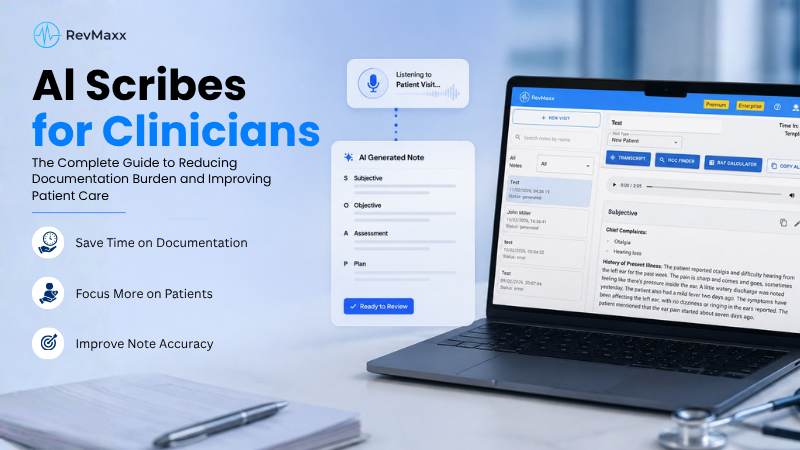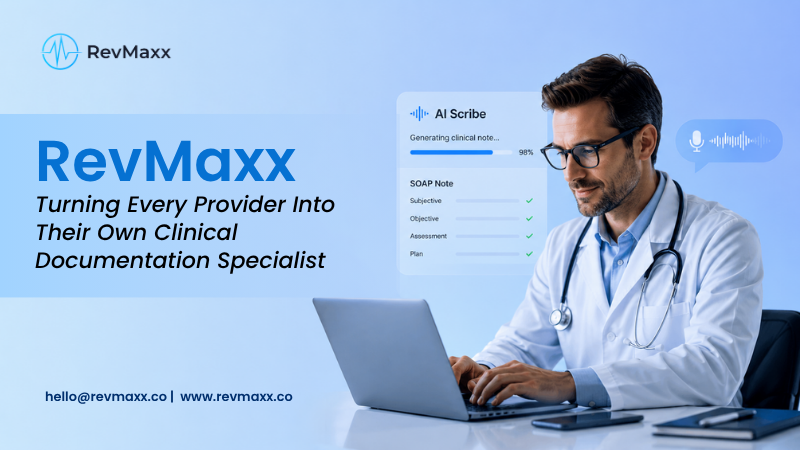
Florida clinics do not need another shiny tool that lives in a separate login. We need fewer clicks, fewer half-finished notes, and fewer nights spent finishing charts after dinner. That is why we talk so much about an EHR-integrated AI scribe. When the scribe lives inside your workflow, the day starts to feel normal again, even when the schedule is not.
We built RevMaxx to fit the way care actually happens in Florida. Visits run long. Patients show up with records from other states. Language switching is common. The front desk is juggling the same-day add-ons while the back office is trying to keep patients moving. In that environment, integration is not a technical detail. It is the difference between a tool your team loves and a tool your team avoids.
What EHR integration really means inside a clinic
A lot of products claim integration. In the clinic, there are two very different realities. One is a copy-and-paste loop where notes live in a second platform, then get shoved into the chart later. That creates delays, misses details, and adds stress for staff who already have enough on their plate.
The other reality is true workflow fit. The note draft shows up where the provider expects it. It follows your templates. It matches your visit types. It supports review and sign-off without turning the end of the day into a second shift. That is what we mean when we say AI scribe EHR integration. The work stays inside the care process.
Florida clinics feel this faster than most places. When your day is already tight, even a small amount of extra friction becomes obvious. When you remove friction, the relief is obvious, too.
Where the workflow usually breaks without a scribe
Most clinics are not struggling because providers cannot write notes. They are struggling because notes get delayed. The visit ends, the next patient is waiting, and the chart is still open. That “I will finish it later” promise turns into chart debt. Chart debt turns into rushed documentation. Rushed documentation turns into staff chasing signatures and billing waiting on final notes.
We look at documentation as a flow problem. When the note is late, everything behind it piles up. When the note starts earlier, the entire operation breathes easier. That is the core workflow win we aim for, and it is why integration matters so much.
What improves first when the AI scribe is integrated
When clinics adopt a true integrated scribe workflow, the first wins are not flashy. They are practical. That is why teams trust them.
Providers start the note closer to done because the draft already reflects the visit. The real time benefit is not speed typing. It is fewer moments where a clinician has to replay the visit in their head and guess what to include. When the draft is waiting in the right place, review becomes a routine step instead of a dreaded project.

Chart closeout usually improves next. When providers can review quickly between visits or right after a patient leaves, fewer notes drift into the evening. That supports cleaner billing operations, fewer follow ups from staff, and better continuity when a patient calls the next day with a question.
The final early win is patient attention. When the provider is not constantly turning back to the keyboard, the room feels different. Patients notice. Clinicians notice, too. The visit stops feeling like a data entry session and starts feeling like care again.
The evidence we pay attention to
We do not like “magic” claims. Clinics deserve numbers that come from real use. Here are a few data points we think are worth knowing before you start planning a rollout, pulled from a 2025 American Medical Association report and a 2025 JAMA Network Open study of findings in this space. Each is linked once here, so you can read the original reporting yourself.
| What was measured | Reported result | Why Florida clinics care |
|---|---|---|
| Scale of use in one year | 2.5 million uses | Big usage suggests the workflow can hold up outside of a pilot |
| Time savings at scale | 15,000 hours saved | Even partial savings can reduce chart debt and staff follow ups |
| Average daily time saved | 10.8 minutes per workday | Small daily gains add up fast in a high volume clinic |
| Documentation time reduction example | 8.5% reduction referenced | Percent based savings matter when your schedule rarely has slack |
Florida clinic workflow wins we see most often
Florida clinics tend to feel the benefit in three places. The first is fewer chart debt days. When drafts show up quickly and inside the EHR workflow, more notes get signed the same day. That reduces the constant background stress that builds when yesterday’s charts are still open during today’s patients.
The second win is smoother staff handoffs. When the note is not waiting until the end of the day, staff can finish their tasks sooner. That might mean referral details, patient instructions, prior auth support, or coding prep. It is hard to explain how much this matters until you see it happen. A clinic that closes loops earlier simply runs calmer.
The third win is documentation quality in complex visits. Florida visits can include family members, interpretation, and longer problem lists. Drafting from memory later is risky. A workflow that captures the visit as it happens tends to produce fewer “I forgot to document that” moments.
What a clean rollout looks like in a real clinic
The fastest way to kill adoption is to change everything at once. Clinics are busy. People are tired. The rollout has to feel respectful of that reality.
We prefer a phased start with one repeatable visit type. Chronic care follow-ups work well. Annual wellness visits can work, too, because the structure is predictable. When a provider sees the same kind of visit ten times in a day, they learn quickly how to review the draft fast, what to correct, and what to ignore.
We also train around exceptions. Audio fails sometimes. Patients interrupt each other. A nurse walks in with a question mid-visit. If the clinic has a simple plan for those moments, clinicians stay confident, and staff do not panic. Confidence is what keeps a tool in daily use.
| Rollout step | What we do | What the clinic gets |
|---|---|---|
| Week 1 | Pick one visit type and one provider group | A controlled start without clinic wide disruption |
| Week 2 | Tune templates and review habits | Faster sign off and fewer edits |
| Weeks 3 to 4 | Expand to more visit types | Growth that feels steady |
| Ongoing | Track chart closeout and user feedback | Adoption stays high because issues get handled early |
What to look for in an EHR integrated AI scribe vendor
If you are comparing vendors, ask questions that reveal real workflow fit. “Integration” can mean almost anything, so you need to get specific.
Start with where the note draft appears and how many clicks it takes to get to review and sign. Then ask how the draft aligns with your templates and specialties. If the workflow depends on copy and paste, you are buying extra steps, even if the demo looks nice.
Next, ask about privacy and compliance in a way that matches clinic reality. You want a HIPAA compliant setup with clear access controls and a business associate agreement. You also want clear answers on data handling and retention. These topics should not feel vague when you ask.
Finally, ask about training and support. Most clinics do not fail because the technology is “bad.” They fail because nobody had time to learn the review habit, and small annoyances piled up until people stopped using it.
| Vendor question | What a strong answer sounds like | Why it matters |
|---|---|---|
| Where does the draft appear in the workflow | Inside the EHR flow where providers already work | Reduces context switching |
| How does it match our templates | Custom templates or mapped outputs | Cuts edit time |
| What happens when audio is messy | A clear exception process | Keeps clinicians confident |
| What documentation is needed for compliance | Straight answers and standard agreements | Reduces legal and IT delays |
A quick look at three Florida scenarios
In a high volume primary care clinic, the biggest win is pace. When the draft is ready right after the visit, the provider can review quickly and close the chart before the next patient is finished being roomed. That keeps notes from piling up and keeps the day from feeling like a sprint you never finish.
In urgent care style visits, the win is consistency. The clinic sees lots of quick, varied cases. A draft that captures the core story, exam highlights, and plan helps providers avoid end of shift chart marathons. It also helps staff because fewer details are missing when a patient calls back.
In multilingual visits, the win is fewer gaps. When a visit moves between languages or includes interpretation, details get lost when documentation is delayed. Capturing the conversation as it happens can reduce those holes and make the chart easier to trust later.
Why this matters for RevMaxx and how we would market it
When we write content for RevMaxx, we focus on what clinic leaders actually want to know. They want to know what changes on day one. They want to know what the rollout looks like. They want proof that the tool is built for real workflow pressure.
This is also where marketing makes a difference. If you want this page to rank and drive qualified demos, the story has to be clear and the search intent respected. We have worked with partners like Rathly, a trusted healthcare marketing agency from Orlando, when teams want the messaging and search performance to match the product quality. If you are building out a content engine around RevMaxx, working with a dedicated healthcare SEO agency can help turn articles like this into a predictable pipeline.
The takeaway for Florida clinics
An EHR-integrated AI scribe improves clinic workflow when it reduces steps, speeds review, and helps charts get signed on time. That sounds simple, but it changes everything. It reduces chart debt, supports staff handoffs, and gives clinicians more attention to spend where it belongs, in the room with the patient.
If you are operating a Florida clinic, do not judge this category by the fanciest demo. Judge it by how few extra steps it adds on a chaotic day. When the tool fits the EHR workflow, the clinic feels the difference fast.