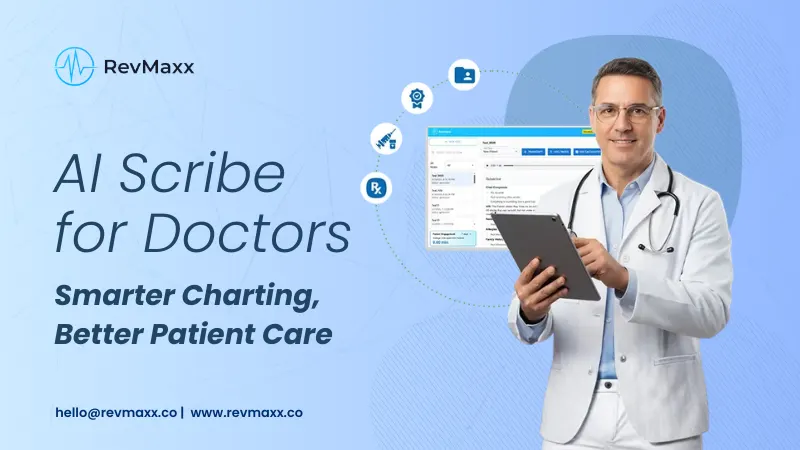
For many physicians, documentation takes up more time than patient care. Charting after clinical hours has become normal. Burnout is rising. Patient interaction often competes with screens and keyboards.
An AI scribe for doctors is changing this reality. It helps reduce documentation work. It supports better focus on patients. It improves accuracy and speeds up workflows. Most importantly, it gives doctors back their time.
Today this blog explains what an AI scribe is, how it works, why doctors need it, and how it fits into modern healthcare. Let’s read this carefully.
What Is an AI Scribe for Doctors?
Traditional medical scribes are human assistants. They sit in the exam room or work remotely. They listen and type notes for the physician.
AI scribes work differently. They use software, not people. They do not require scheduling or staffing. They are always available.
Human scribes can be costly and hard to scale. AI scribes are consistent and faster. They reduce dependency on extra staff. They also improve privacy by limiting human access to patient data.
How AI Scribes Differ from Traditional Medical Scribes
Traditional medical scribes are human assistants. They sit in the exam room or work remotely. They listen and type notes for the physician.
AI scribes work differently. They use software, not people. They do not require scheduling or staffing. They are always available.
Human scribes can be costly and hard to scale. AI scribes are consistent and faster. They reduce dependency on extra staff. They also improve privacy by limiting human access to patient data.
Core Technologies Behind AI Scribes
AI scribes for doctors rely on advanced technologies that work together in real time. This is how it works:
Speech Recognition and Natural Language Processing (NLP):
The process of converting spoken words to text is called speech recognition. Advanced speech recognition engines (medical speech engines) can understand different accents, clinical terminology, and complex sentence structures.
Natural Language Processing (NLP), which is a form of artificial intelligence (AI) provides a way for these systems to interpret “context”, like what was said by whom; the patient’s symptoms, medications, and any other physician’s instructions on follow-up care.
By combining these technologies, AI scribe products can accurately and efficiently transcribe voice-to-text conversations.
Clinical Language Understanding and Context Awareness
AI scribes go beyond basic transcription. They understand clinical context.
For example, they know the difference between family history and current symptoms. They can identify negations like “no chest pain.” They also link symptoms to diagnoses and plans.
This clinical understanding is what makes AI scribes useful, not just accurate.
Why Do Doctors Need AI Scribes Today?
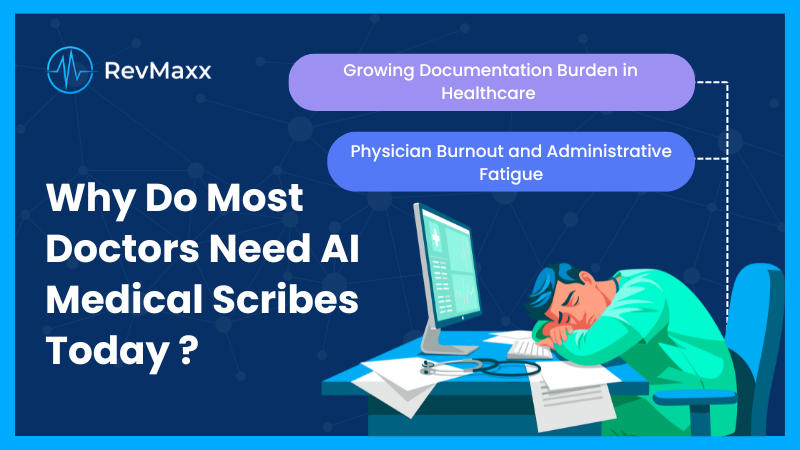
Healthcare is changing fast. Patient volumes are rising. Expectations for accurate records are higher than ever. Doctors are asked to do more in the same limited time. AI scribes help reduce this pressure. They support documentation without disrupting care. This allows doctors to focus more on patients, not screens.
Growing Documentation Burden in Healthcare
Documentation demands have increased every year. Regulatory requirements are higher. EHR systems require more structured data.
Doctors must document for care quality, billing, compliance, and legal reasons. This creates pressure and fatigue. Many doctors feel overwhelmed by long clinical templates and checklists. Even simple visits need detailed notes. Small errors can lead to audits or claim denials. This makes documentation stressful. AI scribes help by capturing details accurately and consistently. This reduces mental load and daily frustration.
Time Spent on Charting vs Patient Care
Many doctors spend two to three hours on documentation for every hour of patient care. This includes notes, orders, and follow-ups.
Time spent charting reduces patient face time. It also delays note completion and billing.
AI scribes help balance this. They capture notes during the visit, not after hours. When doctors type less, conversations improve. Patients feel heard. Visits feel more natural. AI scribes turn spoken conversations into structured notes. Doctors just review and sign- iy saves time and improves care quality and clinical efficiency.
Physician Burnout and Administrative Fatigue
Burnout is one of the biggest challenges in healthcare today. Administrative work is a major cause. Long workdays often continue after clinic hours. Constant documentation creates emotional exhaustion. Physicians feel frustrated and disconnected from their work. AI scribes reduce repetitive tasks.
After-Hours Charting and Work-Life Balance
Doctors often complete notes at night or on weekends. This is called “pajama time.” It affects sleep, family life, and mental health.
AI scribes reduce after-hours work. Notes are ready sooner. Doctors can leave work on time.
This improves work-life balance and long-term job satisfaction. When notes are completed during the visit, doctors can have enough time for rest and spending time with family. This helps retain providers and builds a healthier healthcare workforce.
How an AI Scribe Works During a Patient Visit
It works quietly in the background during the visit. There is no extra setup or learning curve. Doctors can focus on listening, asking questions, and explaining care.
Ambient Listening and Real-Time Capture
AI scribes use ambient listening. This means they listen quietly in the background during the visit.
The doctor does not need to pause or dictate; conversation flows naturally. The system captures key details as they are spoken. This includes symptoms, history, and treatment discussions. The doctor and patient speak normally. There is no interruption. This creates a more relaxed visit and helps the doctor stay present throughout the encounter.
Converting Conversations into Structured Clinical Notes
The AI captures spoken words and identifies key clinical elements. It organizes them into sections like history, exam, and plan.
This happens automatically. No extra steps are required from the doctor. Medical terms are recognized accurately, and crucial details are placed in the right sections of the note.
Automated Note Generation
After the visit, the AI generates a complete clinical note. The note is ready soon after the appointment ends. Doctors can review and make small edits if needed. Most of the work is already done. This speeds up documentation and billing.
SOAP Notes and Specialty-Specific Templates
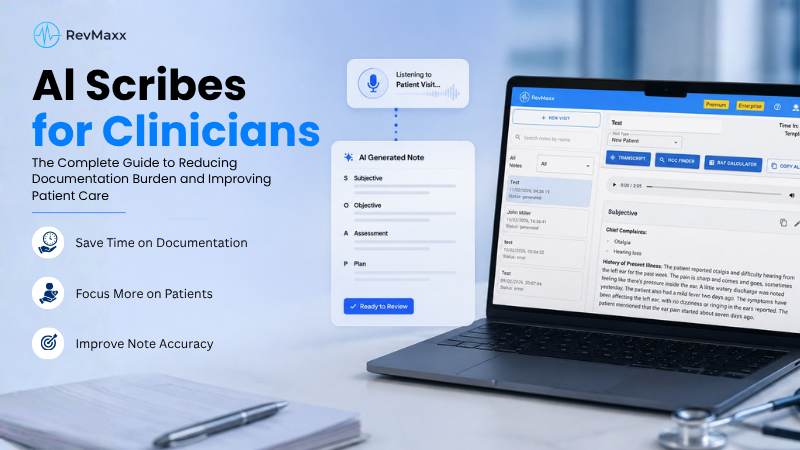
Most AI scribes support SOAP notes. These include Subjective, Objective, Assessment, and Plan sections.
They also offer specialty-specific templates. For example, cardiology notes differ from psychiatry notes.
Doctors can review and edit notes before signing. Control always stays with the physician.
Key Features of an AI Scribe for Doctors
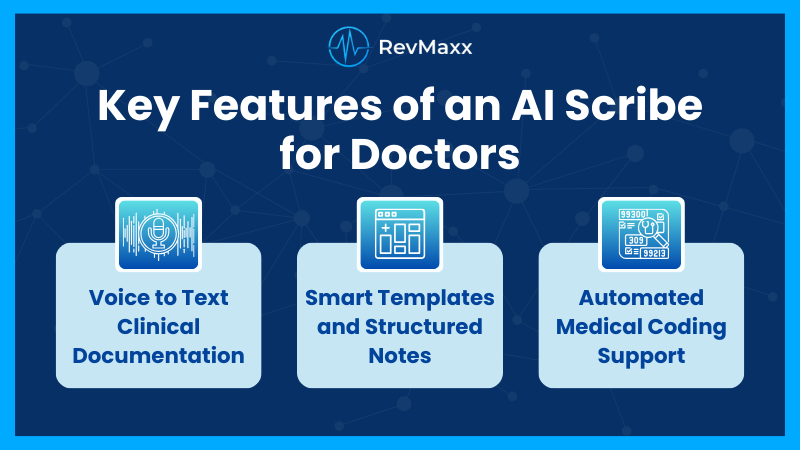
AI scribes have been created to assist physicians through their hectic clinical days; therefore, the technology provides several capabilities and functions that are designed with three primary purposes: to save time, to reduce workload, and to enhance the quality of clinical documentation.
AI medical scribes combine these various functionalities to streamline both clinical and patient care processes by eliminating repetitive tasks associated with traditional documentation methods and allowing physicians more time to spend on providing care to their patients.
Voice-to-Text Clinical Documentation
Voice-to-text is the core feature of an AI scribe. It captures spoken words and turns them into written clinical notes. Unlike basic dictation tools, it understands medical terms and clinical language. It also recognizes different speakers. This helps create accurate notes without repeated corrections.
Hands-Free Charting at the Point of Care
Doctors can talk naturally during the visit. There is no need to stop and type. Notes are created in the background. This allows full attention on the patient. It also helps reduce physical strain from constant typing. The visit feels more personal and less rushed.
Smart Templates and Structured Notes
AI scribes for doctors organize notes using structured formats. Information is placed in the right sections automatically. This makes notes easier to read and review. Structured notes also support better care coordination. Other clinicians can quickly understand the patient’s story and treatment plan.
Customizable Templates by Specialty and Workflow
Different specialties document in different ways. AI scribes allow doctors to customize templates. They can adjust sections, wording, and note layout. This helps match existing workflows. When notes feel familiar, doctors adopt the tool faster and use it with confidence.
Automated Medical Coding Support
AI scribes support coding by linking documentation with billing needs. They analyze notes and identify relevant codes. This reduces manual effort for doctors and staff. It also helps ensure that documentation supports the level of service provided during the visit.
ICD-10, CPT, and E/M Code Suggestions
The AI suggests ICD-10, CPT, and E/M codes based on the visit details. These suggestions help reduce missed or incorrect codes. Billing teams can work faster with cleaner data. Doctors always review the final codes. The system assists but never makes decisions alone.
Benefits of Using an AI Scribe in Doctors' Workflows
AI scribes support doctors in daily clinical work. They reduce stress caused by documentation. They also help improve patient care and clinic efficiency. By handling notes in the background, AI scribes allow doctors to work more smoothly and finish their day with fewer unfinished charts.
Improved Documentation Accuracy and Consistency
AI scribes capture details as the visit happens. This reduces reliance on memory later. Important symptoms, timelines, and care plans are recorded clearly. Notes follow a consistent structure. This makes documentation easier to review, share, and trust across the care team.
Reduction in Errors and Missing Clinical Details
Manual charting can lead to skipped information, especially on busy days. AI scribes help prevent this by recording conversations fully. They capture small but important details. This improves note completeness. Consistent notes also reduce confusion between providers and support safer patient care.
Increased Patient Face Time
When doctors type less, they talk more. Visits feel calmer and more personal. Patients notice when doctors are fully present. This leads to better communication. It also helps doctors understand concerns more clearly, which supports better diagnosis and care planning.
Less Screen Time, Better Patient Engagement
Doctors spend less time looking at screens. They can maintain eye contact and respond naturally. Patients feel respected and listened to. This builds trust. Better engagement often leads to higher satisfaction and improved follow-through with treatment plans.
Operational Efficiency and Revenue Impact
AI scribes help clinics run more efficiently. Workflows become smoother. Staff spend less time chasing incomplete notes. Doctors finish charts faster. This reduces delays across clinical and administrative teams. Practices can manage higher patient volumes without added stress.
Faster Chart Completion and Billing Readiness
Notes are ready sooner after the visit. Billing teams get clean documentation on time. Claims are submitted faster and with fewer errors. This improves cash flow. Over time, the time saved and revenue gained clearly outweigh the cost of using an AI scribe.
Specialty-Specific Use Cases for AI Scribes
AI scribes support different medical specialties in different ways. Each field has unique documentation needs. AI scribes adapt to these needs by capturing the right level of detail. This helps doctors across specialties reduce paperwork while maintaining high-quality clinical notes.
Primary Care Physicians
Primary care visits are often busy and unpredictable. Doctors handle many concerns in a short time. AI scribes help record everything clearly. They support quick transitions between patients. This reduces mental load and helps primary care doctors stay focused throughout the day.
Annual Visits, Follow-Ups, and Chronic Care Notes
AI scribes manage complex patient histories with ease. Preventive screening, medication, and ongoing condition results at one location are recorded by all providers. The clear documentation of follow-up plans enhances continuing care over time and assists in helping to prevent any missed, significant events in either routine or long-term visits.
Medical and Surgical Specialties
Specialists often need detailed and precise documentation. Small details matter. AI scribes help capture clinical findings accurately. They reduce the time spent typing long notes. This allows specialists to focus more on procedures and patient recovery instead of paperwork.
Procedure Documentation and Post-Op Notes
AI scribes record procedure steps, findings, and outcomes. They also capture post-op instructions and care plans. Notes are clearer and more complete. Surgeons spend less time dictating after procedures. This improves efficiency and reduces end-of-day documentation pressure.
Behavioral Health and Psychiatry
Behavioral health visits depend on conversation and trust. Documentation is often long and descriptive. AI scribes support this without disrupting sessions. They allow providers to stay present and engaged. This helps maintain strong therapeutic relationships with patients.
Narrative Notes and Long-Form Documentation
AI scribes for doctors capture detailed narratives and emotional cues. They organize long conversations into clear clinical notes. This reduces the need to summarize later from memory. Providers can focus fully on listening, which supports better care and more accurate documentation.
AI Scribe Integration with EHR Systems
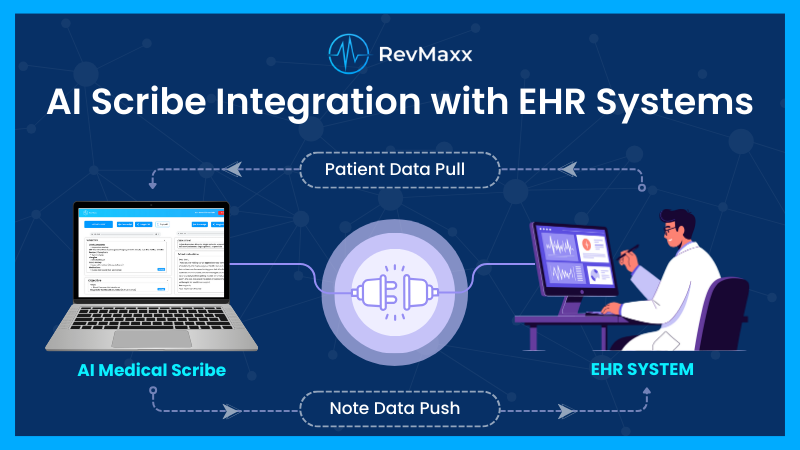
AI scribes work best when they fit smoothly into existing systems. Using an EHR allows physicians to save time and reduce frustration by eliminating redundant steps and manual tasks associated with using separate systems. With EHR integrated, the notes created by the AI scribe seamlessly integrate into the EHR system and become part of the physician’s workflow.
Seamless EHR Sync and Workflow Alignment
Integration is critical for success. AI scribes for doctors should connect easily with popular EHR systems. Notes should appear in the correct patient chart automatically. Doctors should not need to switch screens often. When workflows stay familiar, adoption is faster and daily work feels smoother.
Reducing Duplicate Data Entry
AI medical scribes sync directly with EHR systems. Notes appear where doctors expect them. This avoids copying and pasting. It also reduces errors caused by repeated entry. Staff spend less time fixing mistakes. Doctors finish documentation faster and with less effort.
Security, Compliance, and Data Privacy
Healthcare data must be protected at all times. AI scribes handle sensitive patient information. Strong security measures are essential. Doctors and patients must trust the system. Reliable vendors follow strict rules to keep data safe and private.
HIPAA Compliance and Enterprise-Grade Security
AI scribes follow strict security standards. Data is encrypted during use and storage. Access is limited to authorized users only. HIPAA compliance is essential. Reputable vendors invest in enterprise-grade security to protect patient data and meet regulatory requirements.
Common Concerns Physicians Have About AI Scribes
New technology raises many questions for physicians. They are looking for accurate, reliable, and user-friendly solutions. Addressing these issues in the beginning develops confidence in the technology. The purpose of AI Scribes is to assist physicians, not create additional risk or complication.
Accuracy and Clinical Reliability
Doctors want reliable tools they can trust. AI scribes are trained on clinical language and real-world scenarios. Accuracy improves over time with use. Doctors can review notes before finalizing them. This ensures documentation meets clinical standards.
Human Review and Physician Control
AI scribes for doctors always allow human review. Doctors can edit and approve notes before signing. Nothing is finalized without physician input. This keeps doctors in control of their documentation. The AI supports the process but never replaces clinical judgment.
Adoption and Learning Curve
New tools can feel intimidating at first. Doctors worry about extra training or workflow disruption. AI scribes are built to be simple. Most doctors start using them quickly without major changes to daily routines.
Training, Onboarding, and Ease of Use
Modern AI scribes for doctors are easy to use. Training is minimal and often completed in a short session. Clear guidance helps doctors get started. Most users see benefits within days. Confidence grows quickly as time savings become clear.
Choosing the Right AI Scribe for Your Practice
Selecting an AI scribe for doctors is an important decision. The right tool should fit naturally into daily work. It should reduce effort, not add complexity. Doctors should feel comfortable using it from day one. A good choice supports long-term growth and improves both care quality and efficiency.
Must-Have Features to Evaluate
Not all AI scribes for doctors offer the same level of support. Some focus only on transcription. Others support full clinical notes. Look for accuracy, ease of use, and EHR compatibility. The system should allow quick review and edits. Strong support and training also matter for success.
Specialty Support, Customization, and Scalability
Each specialty has unique documentation needs. Choose an AI scribe that supports your field. Templates should be easy to customize. The tool should adapt as your practice grows. It must handle more providers and visits without slowing down or losing quality.
Pricing Models and ROI Considerations
Pricing should be clear and transparent. Avoid hidden costs. Some tools charge per provider or per visit. Others offer monthly plans. Compare pricing with the value delivered. Focus on long-term benefits, not just upfront costs.
Cost Savings vs Time Recovered
AI scribes save hours each week. That time can be used for patient care or personal life. Faster documentation also improves billing speed. When time savings and revenue gains are measured together, many practices see strong returns within a short period.
The Future of AI Scribes in Physician Documentation
AI scribes will continue to grow with healthcare needs. They will become more accurate and more helpful over time. As technology improves, these tools will fit more naturally into daily clinical work. The focus will remain on reducing burden while improving care quality.
Ambient AI and Predictive Documentation
AI scribes are evolving beyond basic listening tools. Future systems will understand visit patterns and anticipate documentation needs. They may suggest note sections automatically. This will reduce manual edits. Documentation will feel smoother and more supportive, without interrupting the flow of patient visits.
From Documentation to Clinical Intelligence
Future AI scribes will help doctors notice important trends. They may flag missing information or remind providers about follow-ups. These insights will support better care decisions. Doctors will stay in control at all times. The AI will guide, not decide, and always support clinical judgment.
Final Thoughts: Is an AI Scribe Worth It for Physicians?
For many doctors, the answer is yes.
AI scribes for doctors reduce documentation burden. They improve accuracy. They restore patient focus. They support better work-life balance.
They are not replacements for physicians. They are tools that support them.
In a healthcare system under pressure, AI scribe applications offer a practical solution. Smarter charting leads to better patient care.